
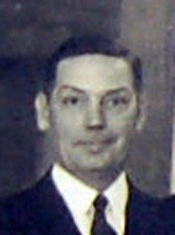
Historical · U.S. House · Illinois · District 22
Edwin Schaefer
Former U.S. Representative · Illinois District 22 · 1933–1943 · Democratic
Edwin Schaefer represented Illinois's District 22 in the United States House of Representatives (1933–1943) for the Democratic party. The page below collects sourced biographical facts, term history, committee roles, and provenance for Schaefer.
Bioguide ID: S000110
Key facts
- Full name
- Edwin Schaefer
- State
- Illinois
- District
- District 22
- Party
- Democratic
- House service
- 1933–1943
- First House term
- 1933
- Status
- Left office
- Current term ends
- —
- Born
- 1887
- Bioguide ID
- S000110
- Committee assignments
- —
- Dataset version
- 1.20260605
Biographical narrative
960 words · sourced from the Wikipedia REST extract
Edwin Schaefer was a prominent figure in American politics during the early to mid-20th century, serving as a U.S. Representative for Illinois's 22nd congressional district. A member of the Democratic Party, Schaefer's congressional career spanned a decade, during which he was elected to five consecutive terms in the House of Representatives. His tenure in Congress was marked by the significant political and social changes occurring in the United States during the Great Depression and World War II. Schaefer's background as a chemical engineer and his involvement in local government provided him with a unique perspective that he brought to his legislative work.
Early life and career
Edwin Martin Schaefer was born on May 14, 1887, in Belleville, St. Clair County, Illinois. He grew up in a region that would later become a significant part of his political base. Schaefer's early education took place in the public school system, where he laid the groundwork for his future academic pursuits. He attended the Western Military Academy located in Alton, Illinois, which provided him with a disciplined educational environment. Following his time at the military academy, he enrolled at the University of Illinois, where he furthered his studies before graduating from Washington University in St. Louis, Missouri, in 1910.
After completing his education, Schaefer began his professional career in the private sector as a chemical engineer. He worked for Morris & Co., a prominent packing company based in East St. Louis, Illinois. His tenure with the company lasted from 1913 to 1916, during which he gained valuable experience in management and operations. Schaefer's career progressed as he took on increasingly responsible roles, moving from a chemical engineer to assistant general superintendent from 1916 to 1918, and ultimately becoming the general superintendent from 1919 to 1928. This experience in the business world equipped him with skills that would later prove beneficial in his political career.
In addition to his work in the private sector, Schaefer became involved in local government. He served as the assistant recorder of deeds for St. Clair County from 1928 to 1930, a position that allowed him to engage with the community and understand the workings of local governance. Following this role, he was elected as the county treasurer of St. Clair County, serving from 1930 to 1932. His involvement in local politics and his connections within the Democratic Party led him to become a delegate to the Democratic State conventions in 1928, 1932, and 1936. These experiences laid the foundation for his subsequent election to the U.S. House of Representatives.
House tenure
Edwin Schaefer was elected to the U.S. House of Representatives in 1933, beginning his first term on March 4 of that year. He represented Illinois's 22nd congressional district, a position he held for five consecutive terms until January 3, 1943. His election came during a tumultuous period in American history, as the nation was grappling with the economic challenges of the Great Depression. Schaefer's alignment with the Democratic Party positioned him to support the New Deal policies implemented by President Franklin D. Roosevelt, which aimed to provide relief and recovery to struggling Americans.
Throughout his congressional career, Schaefer participated in various legislative initiatives and discussions that were critical to addressing the economic and social issues of the time. His tenure coincided with significant events, including the lead-up to World War II, which influenced many of the legislative priorities during the late 1930s and early 1940s. Schaefer's ability to navigate the complexities of national politics during this era was indicative of his commitment to his constituents and his party's platform.
Schaefer chose not to seek renomination in 1942, concluding his congressional service after a decade of representation. His decision not to run again marked the end of an era for his political career, but he remained active in various capacities following his time in Congress.
Legislative focus and committees
During his time in the House of Representatives, Edwin Schaefer's legislative focus reflected the pressing needs of his constituents and the broader national context. While specific details regarding the bills he sponsored or supported are not provided, it can be inferred that his background as a chemical engineer and his experience in local government informed his approach to policy-making. Schaefer's professional expertise likely influenced his interest in issues related to industry, labor, and economic recovery, particularly during the challenging years of the Great Depression.
Schaefer's involvement in various committees would have also played a significant role in shaping his legislative priorities. Although the specific committees on which he served are not detailed, members of Congress typically engage in committees that align with their interests and the needs of their constituents. Given Schaefer's background, it is reasonable to assume that he may have been involved in committees related to commerce, labor, or public works, which were critical areas of focus during his time in office.
In addition to his legislative work, Schaefer's participation in the Democratic State conventions demonstrated his commitment to the party and its platform. His engagement at the state level allowed him to influence party policies and support candidates aligned with his vision for Illinois and the nation.
After leaving Congress, Schaefer continued to be involved in the business community, serving on the board of directors for the Griesediech-Western Brewery Co. in Belleville, Illinois. This role indicated his ongoing connection to the local economy and his interest in business affairs.
Edwin Schaefer passed away on November 8, 1950, in St. Louis, Missouri. His contributions to American politics, particularly during a transformative period in U.S. history, remain part of the legacy of the Democratic Party in Illinois. He was interred in Walnut Hill Cemetery in Belleville, Illinois, leaving behind a record of public service that spanned over a decade in the U.S. House of Representatives.
Notable legislation
Sponsored and co-sponsored legislation for Edwin Schaefer is pending operator curation. The biographical narrative above carries the same provenance trail until per-bill rows are written.
Sources
- [1]https://en.wikipedia.org/wiki/Edwin_M._SchaeferWikipedia · retrieved 2026-06-05
Notable quotes
Sourced quotes for Edwin Schaefer are pending operator curation. Narrative-scope provenance remains attached below.
Sources
- [1]https://en.wikipedia.org/wiki/Edwin_M._SchaeferWikipedia · retrieved 2026-06-05
Key positions
Curated policy positions for Edwin Schaefer are pending operator review. The biographical narrative above carries the same provenance trail until per-topic positions are written.
Sources
- [1]https://en.wikipedia.org/wiki/Edwin_M._SchaeferWikipedia · retrieved 2026-06-05
Terms served
- 1933–1935U.S. House · Term 1 · Democratic
- 1935–1937U.S. House · Term 2 · Democratic
- 1937–1939U.S. House · Term 3 · Democratic
- 1939–1941U.S. House · Term 4 · Democratic
- 1941–1943U.S. House · Term 5 · Democratic
Sources & provenance
Every attributable claim above carries a per-section [N] marker that resolves to the corresponding URL below. Each entry records the upstream provider, the canonical URL, and the timestamp at which the source was retrieved by the ingest pipeline.
Key facts
- https://bioguide.congress.gov/search/bio/S000110bioguide · retrieved 2026-06-05
- https://www.govtrack.us/congress/members/409619govtrack · retrieved 2026-06-05
Biographical narrative
- https://en.wikipedia.org/wiki/Edwin_M._Schaeferwikipedia · retrieved 2026-06-05
Find your representative
Every U.S. state elects representatives by district. Browse Illinois’s delegation, the full former-representative roster, or explore the role and term length.
Related on The Candidate
- Preceded by Charles KarchEarlier holder of the Illinois District 22 House seat · Democratic.Open
- Succeeded by Calvin JohnsonLater holder of the Illinois District 22 House seat · Republican.Open
- Abner TaylorFormer U.S. Representative · Illinois District 1 · RepublicanOpen
- Adam SnyderFormer U.S. Representative · Illinois District 1 · DemocraticOpen
- Arthur MitchellFormer U.S. Representative · Illinois District 1 · DemocraticOpen
- Bennett StewartFormer U.S. Representative · Illinois District 1 · DemocraticOpen