
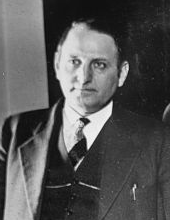
Historical · U.S. House · Illinois · District 24
Claude Parsons
Former U.S. Representative · Illinois District 24 · 1929–1941 · Democratic
Claude Parsons represented Illinois's District 24 in the United States House of Representatives (1929–1941) for the Democratic party. The page below collects sourced biographical facts, term history, committee roles, and provenance for Parsons.
Bioguide ID: P000086
Key facts
- Full name
- Claude Parsons
- State
- Illinois
- District
- District 24
- Party
- Democratic
- House service
- 1929–1941
- First House term
- 1929
- Status
- Left office
- Current term ends
- —
- Born
- 1895
- Bioguide ID
- P000086
- Committee assignments
- —
- Dataset version
- 1.20260605
Biographical narrative
825 words · sourced from the Wikipedia REST extract
Claude Parsons was a U.S. Representative from Illinois, serving in the House of Representatives as a member of the Democratic Party. His political career spanned over a decade, during which he represented Illinois's 24th congressional district. Parsons was born on October 7, 1895, and his tenure in Congress lasted from 1930 until early 1941. He played a significant role in the legislative processes of his time and was involved in various initiatives until his untimely death in 1941.
Early life and career
Claude Parsons was born on a farm near McCormick in Pope County, Illinois. His early education took place in the public schools of the area, where he laid the foundation for his future endeavors. After completing his schooling, Parsons began a career in education, teaching in the rural schools of Pope County from 1914 until 1922. This experience in education likely influenced his later political career, as he became deeply involved in issues related to education and public service.
In 1923, Parsons graduated from Southern Illinois State Normal School at Carbondale, further enhancing his qualifications in the field of education. Following his graduation, he moved to Golconda, Illinois, in 1922, where he took on the role of county superintendent of schools. In this position, he was responsible for overseeing the educational system in Pope County, a role he held until 1930. His tenure as superintendent allowed him to gain valuable insights into the challenges and needs of the educational system, which would later inform his legislative priorities.
In addition to his work in education, Parsons was also active in the media. From 1924 to 1930, he engaged in editing and publishing a newspaper, which provided him with a platform to communicate with the public and address local issues. This experience in journalism likely contributed to his understanding of public opinion and the importance of effective communication in politics.
House tenure
Parsons's political career in the U.S. House of Representatives began when he was elected on November 4, 1930. He filled the vacancy left by the resignation of Thomas S. Williams and was simultaneously elected to the Seventy-second Congress on the same day. His initial election marked the start of a significant legislative career, as he was subsequently reelected to the Seventy-third Congress and three additional Congresses thereafter. Throughout his time in office, Parsons served a total of six terms in the House, representing the interests of his constituents in Illinois's 24th congressional district.
During his tenure, Parsons participated in various legislative activities and contributed to discussions on a wide range of issues. His experience as an educator and county superintendent likely informed his approach to education-related legislation, as well as other social issues affecting his district. Parsons's time in Congress coincided with significant events in American history, including the Great Depression and the early years of World War II, which shaped the legislative landscape and the priorities of lawmakers.
Despite his accomplishments, Parsons faced challenges in his political career. He was an unsuccessful candidate for reelection in 1940 to the Seventy-seventh Congress, marking the end of his time in the House. His defeat came during a period of political change and shifting voter sentiments, which impacted many incumbents across the country.
Legislative focus and committees
Throughout his time in Congress, Claude Parsons was involved in various legislative initiatives and committee assignments that reflected his interests and the needs of his constituents. While specific details about his committee assignments are not provided, it is reasonable to infer that his background in education likely led him to focus on issues related to education policy, public welfare, and community development.
Parsons's legislative work occurred during a time when the federal government was increasingly involved in economic and social issues, particularly in response to the challenges posed by the Great Depression. As a member of the Democratic Party, he aligned with the broader goals of the New Deal, which aimed to provide relief and recovery for struggling Americans. His role in Congress would have involved engaging with various pieces of legislation aimed at addressing unemployment, economic recovery, and social welfare programs.
In addition to his work on education and social issues, Parsons's legislative focus may have also extended to housing and urban development. After leaving Congress, he was appointed as the first assistant administrator of the United States Housing Authority in February 1941, a position he held until his death later that year. This role underscored his ongoing commitment to addressing housing issues and improving living conditions for Americans, particularly in the wake of the economic challenges of the time.
Claude Parsons passed away on May 23, 1941, in Washington, D.C. His contributions to American politics and his service to the people of Illinois's 24th congressional district are remembered through his legislative work and the impact he had on his community. He was interred in Zion Church Cemetery, located near Ozark, Illinois, where he is commemorated for his dedication to public service and education.
Notable legislation
Sponsored and co-sponsored legislation for Claude Parsons is pending operator curation. The biographical narrative above carries the same provenance trail until per-bill rows are written.
Sources
- [1]https://en.wikipedia.org/wiki/Claude_V._ParsonsWikipedia · retrieved 2026-06-05
Notable quotes
Sourced quotes for Claude Parsons are pending operator curation. Narrative-scope provenance remains attached below.
Sources
- [1]https://en.wikipedia.org/wiki/Claude_V._ParsonsWikipedia · retrieved 2026-06-05
Key positions
Curated policy positions for Claude Parsons are pending operator review. The biographical narrative above carries the same provenance trail until per-topic positions are written.
Sources
- [1]https://en.wikipedia.org/wiki/Claude_V._ParsonsWikipedia · retrieved 2026-06-05
Terms served
- 1929–1931U.S. House · Term 1 · Democratic
- 1931–1933U.S. House · Term 2 · Democratic
- 1933–1935U.S. House · Term 3 · Democratic
- 1935–1937U.S. House · Term 4 · Democratic
- 1937–1939U.S. House · Term 5 · Democratic
- 1939–1941U.S. House · Term 6 · Democratic
Sources & provenance
Every attributable claim above carries a per-section [N] marker that resolves to the corresponding URL below. Each entry records the upstream provider, the canonical URL, and the timestamp at which the source was retrieved by the ingest pipeline.
Key facts
- https://bioguide.congress.gov/search/bio/P000086bioguide · retrieved 2026-06-05
- https://www.govtrack.us/congress/members/408496govtrack · retrieved 2026-06-05
Biographical narrative
- https://en.wikipedia.org/wiki/Claude_V._Parsonswikipedia · retrieved 2026-06-05
Find your representative
Every U.S. state elects representatives by district. Browse Illinois’s delegation, the full former-representative roster, or explore the role and term length.
Related on The Candidate
- Preceded by Hiram FowlerEarlier holder of the Illinois District 24 House seat · Democratic.Open
- Succeeded by James HeidingerLater holder of the Illinois District 24 House seat · Republican.Open
- Abner TaylorFormer U.S. Representative · Illinois District 1 · RepublicanOpen
- Adam SnyderFormer U.S. Representative · Illinois District 1 · DemocraticOpen
- Arthur MitchellFormer U.S. Representative · Illinois District 1 · DemocraticOpen
- Bennett StewartFormer U.S. Representative · Illinois District 1 · DemocraticOpen