
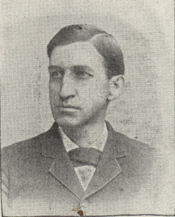
Historical · U.S. House · Illinois · District 24
James Williams
Former U.S. Representative · Illinois District 24 · 1889–1905 · Democratic
James Williams represented Illinois's District 24 in the United States House of Representatives (1889–1905) for the Democratic party. The page below collects sourced biographical facts, term history, committee roles, and provenance for Williams.
Bioguide ID: W000508
Key facts
- Full name
- James Williams
- State
- Illinois
- District
- District 24
- Party
- Democratic
- House service
- 1889–1905
- First House term
- 1889
- Status
- Left office
- Current term ends
- —
- Born
- 1850
- Bioguide ID
- W000508
- Committee assignments
- —
- Dataset version
- 1.20260606
Biographical narrative
842 words · sourced from the Wikipedia REST extract
James Williams was a prominent U.S. Representative from Illinois, serving six terms in the House of Representatives during the late 19th and early 20th centuries. A member of the Democratic Party, he played a significant role in Illinois politics and was involved in various legislative activities throughout his tenure. His career was marked by his close association with notable political figures of his time, including William Jennings Bryan, and he was considered a potential candidate for higher office, including the presidency and vice-presidency.
Early life and career
James Williams was born on December 27, 1850, in Carmi, Illinois. He received his early education in local common schools before pursuing higher education at Indiana University, where he graduated in 1875. During his time at Indiana University, he became a member of the Phi Kappa Psi fraternity, which is known for fostering leadership and academic excellence among its members. Following his graduation, Williams continued his legal education at the Union College of Law in Chicago, Illinois, completing his studies in 1876. Shortly thereafter, he was admitted to the bar and returned to his hometown of Carmi to begin his legal practice.
Williams's legal career included various roles that showcased his expertise and commitment to public service. From 1880 to 1882, he served as a master in chancery, a position that involved overseeing the administration of justice in civil cases. Subsequently, he was elected as the county judge of White County, a role he held from 1882 until 1886. His judicial experience provided him with a strong foundation in legal matters, which would later inform his legislative work in Congress.
House tenure
Williams's political career in the U.S. House of Representatives began when he was elected as a Democrat to the Fifty-first Congress, filling a vacancy created by the death of fellow Congressman Richard W. Townshend. His first term commenced on December 2, 1889, and he was subsequently reelected to serve in the Fifty-second and Fifty-third Congresses, remaining in office until March 3, 1895. During this initial period, Williams established himself as a dedicated legislator, actively participating in the legislative process and representing the interests of his constituents in Illinois.
After a brief hiatus from Congress, Williams returned to the House by winning elections to the Fifty-sixth, Fifty-seventh, and Fifty-eighth Congresses, serving from March 4, 1899, until March 3, 1905. His tenure in the House was characterized by his engagement in various legislative initiatives and his collaboration with other Democratic leaders. Notably, Williams maintained a close friendship with William Jennings Bryan, a prominent figure in the Democratic Party. This connection was significant enough that Bryan made a whistle-stop visit to Carmi in 1896 to deliver a campaign speech during his presidential run.
Throughout his time in Congress, Williams was recognized for his potential as a national political figure. In 1902, the Chicago Chronicle suggested that he was being groomed for a presidential run, and in 1903, the Chicago Evening Post featured a headline proclaiming "Bob Williams for President." Although he did not secure the presidential nomination, his political aspirations were evident. In the same year, he was nominated by Illinois Democrats for the United States Senate, though he did not win the election. His political ambitions continued to be recognized, as he was presented as a candidate for vice president at the 1904 National Convention in St. Louis, where he finished second in the voting for the nomination.
Despite his political successes, Williams faced challenges in his career. He was defeated in his bid for reelection in 1904 by Pleasant T. Chapman, marking the end of his congressional tenure. Following his departure from the House, he returned to his legal practice, continuing to contribute to his community and the legal profession.
Legislative focus and committees
During his time in the House of Representatives, Williams was involved in various legislative matters, although specific details regarding the bills he sponsored or the committees he served on are not extensively documented. His legislative focus likely reflected the interests and needs of his constituents in Illinois, as well as the broader priorities of the Democratic Party during his tenure. Given the political climate of the late 19th and early 20th centuries, issues such as economic development, labor rights, and social reforms were likely significant areas of concern for Williams and his colleagues.
Williams's association with William Jennings Bryan, a leading advocate for progressive reforms and populist policies, suggests that his legislative priorities may have aligned with the broader goals of the Democratic Party during this period. Bryan's influence on Williams's political career was notable, as their friendship and collaboration in political campaigns highlighted the interconnectedness of their political aspirations.
After leaving Congress, Williams continued to engage in legal practice until his death on November 8, 1923, in Loma Linda, California. He was interred in Maple Ridge Cemetery in Carmi, Illinois, where he had spent much of his life. His legacy as a U.S. Representative is marked by his contributions to Illinois politics and his involvement in the Democratic Party during a transformative era in American history.
Notable legislation
Sponsored and co-sponsored legislation for James Williams is pending operator curation. The biographical narrative above carries the same provenance trail until per-bill rows are written.
Sources
- [1]https://en.wikipedia.org/wiki/James_R._Williams_(politician)Wikipedia · retrieved 2026-06-06
Notable quotes
Sourced quotes for James Williams are pending operator curation. Narrative-scope provenance remains attached below.
Sources
- [1]https://en.wikipedia.org/wiki/James_R._Williams_(politician)Wikipedia · retrieved 2026-06-06
Key positions
Curated policy positions for James Williams are pending operator review. The biographical narrative above carries the same provenance trail until per-topic positions are written.
Sources
- [1]https://en.wikipedia.org/wiki/James_R._Williams_(politician)Wikipedia · retrieved 2026-06-06
Terms served
- 1889–1891U.S. House · Term 1 · Democratic
- 1891–1893U.S. House · Term 2 · Democratic
- 1893–1895U.S. House · Term 3 · Democratic
- 1899–1901U.S. House · Term 4 · Democratic
- 1901–1903U.S. House · Term 5 · Democratic
- 1903–1905U.S. House · Term 6 · Democratic
Sources & provenance
Every attributable claim above carries a per-section [N] marker that resolves to the corresponding URL below. Each entry records the upstream provider, the canonical URL, and the timestamp at which the source was retrieved by the ingest pipeline.
Key facts
- https://bioguide.congress.gov/search/bio/W000508bioguide · retrieved 2026-06-06
- https://www.govtrack.us/congress/members/411665govtrack · retrieved 2026-06-06
Biographical narrative
- https://en.wikipedia.org/wiki/James_R._Williams_(politician)wikipedia · retrieved 2026-06-06
Find your representative
Every U.S. state elects representatives by district. Browse Illinois’s delegation, the full former-representative roster, or explore the role and term length.
Related on The Candidate
- Succeeded by Pleasant ChapmanLater holder of the Illinois District 24 House seat · Republican.Open
- Abner TaylorFormer U.S. Representative · Illinois District 1 · RepublicanOpen
- Adam SnyderFormer U.S. Representative · Illinois District 1 · DemocraticOpen
- Arthur MitchellFormer U.S. Representative · Illinois District 1 · DemocraticOpen
- Bennett StewartFormer U.S. Representative · Illinois District 1 · DemocraticOpen
- Democratic PartyFederal candidates and office holders on the Democratic line.Open