
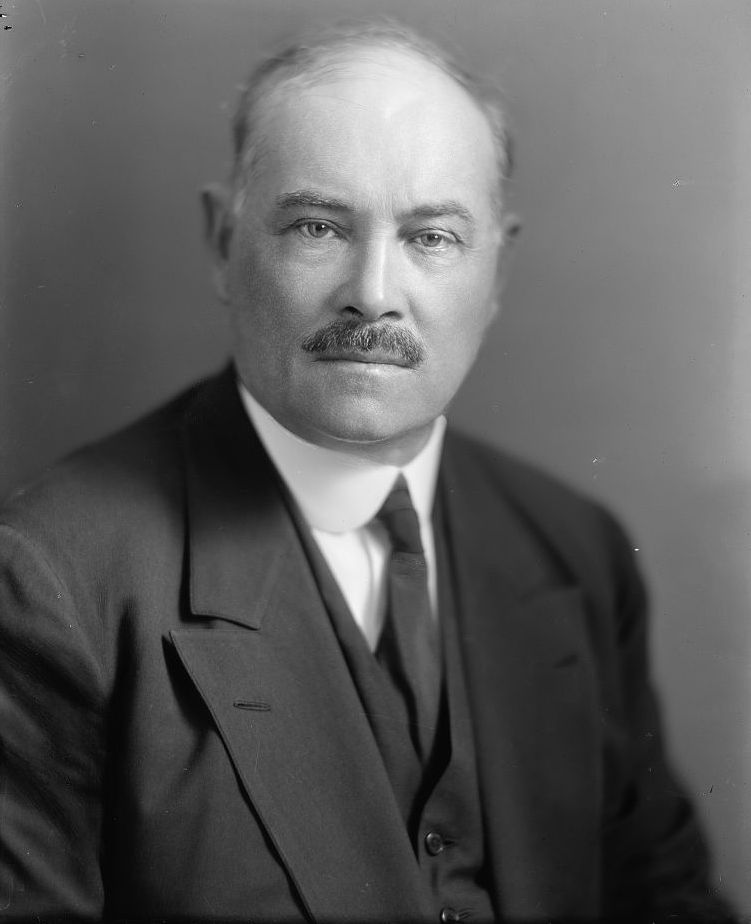
Historical · U.S. House · Illinois · District 24
Thomas Williams
Former U.S. Representative · Illinois District 24 · 1915–1931 · Republican
Thomas Williams represented Illinois's District 24 in the United States House of Representatives (1915–1931) for the Republican party. The page below collects sourced biographical facts, term history, committee roles, and provenance for Williams.
Bioguide ID: W000542
Key facts
- Full name
- Thomas Williams
- State
- Illinois
- District
- District 24
- Party
- Republican
- House service
- 1915–1931
- First House term
- 1915
- Status
- Left office
- Current term ends
- —
- Born
- 1872
- Bioguide ID
- W000542
- Committee assignments
- —
- Dataset version
- 1.20260606
Biographical narrative
1,017 words · sourced from the Wikipedia REST extract
Thomas Sutler Williams was a prominent figure in early 20th-century American politics, serving as a U.S. Representative from Illinois and later as a judge on the Court of Claims. A member of the Republican Party, Williams held office in the U.S. House of Representatives for over a decade, during which he was involved in various legislative activities and served on important committees. His career also included significant roles in local government and the legal profession, reflecting a commitment to public service that spanned multiple decades.
Early life and career
Thomas Williams was born on February 14, 1872, in Louisville, a small town located in Clay County, Illinois. His early education took place at the Willis district school and Louisville High School, where he laid the groundwork for his future academic and professional pursuits. Following his graduation from high school, Williams attended Austin College in Effingham, Illinois, where he completed his studies in 1896. This educational background provided him with the foundational skills necessary for his subsequent career in law and politics.
After completing his education, Williams began practicing law in Louisville in 1896. His legal career was marked by a series of public service roles that showcased his dedication to his community. He served as the city attorney for Louisville from 1897 to 1899, a position that allowed him to gain valuable experience in municipal law and governance. Following this role, he was elected to the Illinois House of Representatives, where he served from 1899 to 1901. This early legislative experience would later inform his work in Congress.
In addition to his legislative duties, Williams held the position of Mayor of Louisville from 1907 to 1909, further solidifying his reputation as a committed public servant. His tenure as mayor involved addressing local issues and implementing policies that would benefit the residents of his community. After his time as mayor, he continued to serve as a prosecutor for Clay County from 1908 until 1915, which further enhanced his legal expertise and public profile.
In 1920, Williams expanded his professional endeavors by becoming the owner and publisher of the Clay County Republican, a local newspaper in Louisville. This role allowed him to influence public opinion and engage with the political landscape of his region. In 1926, he relocated to Harrisburg in Saline County, Illinois, marking a new chapter in his life and career.
House tenure
Williams's political career took a significant turn when he was elected as a Republican to the United States House of Representatives. He began his first term on March 4, 1915, as a member of the 64th Congress. Over the course of his congressional career, he was re-elected to seven consecutive terms, demonstrating a consistent level of support from his constituents. His tenure in the House lasted until his resignation on November 11, 1929, which marked the end of his time in federal office.
During his time in Congress, Williams was involved in various legislative initiatives and discussions, contributing to the shaping of national policy during a period of significant change in the United States. His role as a Congressman coincided with the events of World War I and the subsequent social and economic transformations of the 1920s. Williams's legislative work was characterized by his commitment to the Republican Party's principles and the interests of his constituents in Illinois.
One notable aspect of his congressional service was his position as Chairman of the Committee on Expenditures in the Department of Commerce during the 66th Congress. This role placed him at the forefront of discussions regarding government spending and oversight, particularly in relation to the Department of Commerce. His leadership in this committee allowed him to influence budgetary decisions and advocate for fiscal responsibility within the federal government.
Williams's time in the House of Representatives was marked by a focus on issues relevant to his constituents and the broader national landscape. His legislative efforts were reflective of the priorities of the Republican Party during this era, which included a focus on economic growth, infrastructure development, and government efficiency.
Legislative focus and committees
Throughout his tenure in the House, Williams's legislative focus encompassed a range of issues that were pertinent to his constituents and the nation as a whole. As a member of the Republican Party, he aligned with the party's goals and priorities, which often included promoting business interests, advocating for economic development, and ensuring efficient government operations.
In addition to his role as Chairman of the Committee on Expenditures in the Department of Commerce, Williams participated in various other committees that shaped his legislative agenda. His involvement in these committees provided him with the opportunity to engage with a wide array of issues, from commerce and trade to fiscal policy and government accountability. His work in these committees allowed him to advocate for policies that aligned with the interests of his constituents in Illinois, as well as the broader goals of the Republican Party.
Williams's legislative contributions were set against the backdrop of significant national events, including the economic challenges of the Great Depression that began in the late 1920s. His experience as a lawyer and public servant informed his understanding of the complexities of governance during this tumultuous period. After resigning from Congress, Williams transitioned to a judicial role, which further expanded his influence in public service.
In 1929, Williams was nominated by President Herbert Hoover to serve on the Court of Claims, a position that marked a significant shift in his career. His confirmation by the Senate and subsequent service on the court allowed him to engage with legal issues at a higher level, furthering his commitment to public service until his death in 1940. His judicial career included notable cases, such as Williams v. United States, which addressed important constitutional questions regarding judicial salaries.
In summary, Thomas Williams's career spanned various roles in public service, including significant contributions as a U.S. Representative and later as a judge. His work in both legislative and judicial capacities reflected a commitment to the principles of governance and the welfare of his constituents, marking him as a notable figure in Illinois's political history.
Notable legislation
Sponsored and co-sponsored legislation for Thomas Williams is pending operator curation. The biographical narrative above carries the same provenance trail until per-bill rows are written.
Sources
- [1]https://en.wikipedia.org/wiki/Thomas_Sutler_WilliamsWikipedia · retrieved 2026-06-06
Notable quotes
Sourced quotes for Thomas Williams are pending operator curation. Narrative-scope provenance remains attached below.
Sources
- [1]https://en.wikipedia.org/wiki/Thomas_Sutler_WilliamsWikipedia · retrieved 2026-06-06
Key positions
Curated policy positions for Thomas Williams are pending operator review. The biographical narrative above carries the same provenance trail until per-topic positions are written.
Sources
- [1]https://en.wikipedia.org/wiki/Thomas_Sutler_WilliamsWikipedia · retrieved 2026-06-06
Terms served
- 1915–1917U.S. House · Term 1 · Republican
- 1917–1919U.S. House · Term 2 · Republican
- 1919–1921U.S. House · Term 3 · Republican
- 1921–1923U.S. House · Term 4 · Republican
- 1923–1925U.S. House · Term 5 · Republican
- 1925–1927U.S. House · Term 6 · Republican
- 1927–1929U.S. House · Term 7 · Republican
- 1929–1931U.S. House · Term 8 · Republican
Sources & provenance
Every attributable claim above carries a per-section [N] marker that resolves to the corresponding URL below. Each entry records the upstream provider, the canonical URL, and the timestamp at which the source was retrieved by the ingest pipeline.
Key facts
- https://bioguide.congress.gov/search/bio/W000542bioguide · retrieved 2026-06-06
- https://www.govtrack.us/congress/members/411698govtrack · retrieved 2026-06-06
Biographical narrative
- https://en.wikipedia.org/wiki/Thomas_Sutler_Williamswikipedia · retrieved 2026-06-06
Find your representative
Every U.S. state elects representatives by district. Browse Illinois’s delegation, the full former-representative roster, or explore the role and term length.
Related on The Candidate
- Preceded by Hiram FowlerEarlier holder of the Illinois District 24 House seat · Democratic.Open
- Succeeded by James HeidingerLater holder of the Illinois District 24 House seat · Republican.Open
- Abner TaylorFormer U.S. Representative · Illinois District 1 · RepublicanOpen
- Adam SnyderFormer U.S. Representative · Illinois District 1 · DemocraticOpen
- Arthur MitchellFormer U.S. Representative · Illinois District 1 · DemocraticOpen
- Bennett StewartFormer U.S. Representative · Illinois District 1 · DemocraticOpen