
Historical · U.S. House · Illinois · District 3
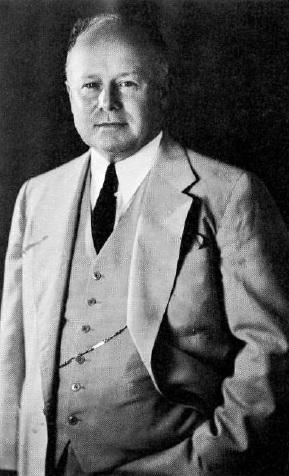
Edward Kelly
Former U.S. Representative · Illinois District 3 · 1931–1947 · Democratic
Edward Kelly represented Illinois's District 3 in the United States House of Representatives (1931–1947) for the Democratic party. The page below collects sourced biographical facts, term history, committee roles, and provenance for Kelly.
Bioguide ID: K000071
Key facts
- Full name
- Edward Kelly
- State
- Illinois
- District
- District 3
- Party
- Democratic
- House service
- 1931–1947
- First House term
- 1931
- Status
- Left office
- Current term ends
- —
- Born
- 1892
- Bioguide ID
- K000071
- Committee assignments
- —
- Dataset version
- 1.20260605
Biographical narrative
899 words · sourced from the Wikipedia REST extract
Edward Kelly was a prominent American businessman and politician who served as a U.S. Representative for Illinois's 3rd congressional district. A member of the Democratic Party, Kelly's congressional career spanned from 1931 to 1943 and again from 1945 to 1947. His tenure in the House of Representatives was marked by significant political activity during a transformative period in American history, encompassing the Great Depression and World War II.
Early life and career
Edward Austin Kelly was born on April 3, 1892, in Chicago, Illinois, to John J. Kelly and Nellie O'Connor Kelly. He grew up in a city that was rapidly industrializing and becoming a hub for commerce and culture. Kelly attended public schools in Chicago, including Longfellow School and Lake High School, where he received a foundational education that would serve him throughout his life. In 1911, he graduated from Orr's Business College, a decision that likely equipped him with valuable skills for his future endeavors in business and politics.
Before entering politics, Kelly pursued a career in semi-professional baseball, playing for various teams in Chicago and surrounding areas from 1912 to 1916. His athletic pursuits were part of a broader engagement with his community, reflecting a spirit of camaraderie and competition. However, his career in sports was interrupted by World War I, during which he served in the United States Army. Kelly was a member of Battery D, 332nd Field Artillery Regiment, part of the 86th Division, and he attained the rank of sergeant during his service from 1917 to 1919.
After returning from military service, Kelly transitioned into the business world, working as an accountant for the Illinois Steel Corporation from 1916 to 1920. Following this role, he became the owner and operator of E. A. Kelly Co., focusing on real estate and insurance. His business acumen and local engagement laid the groundwork for his entry into politics. Kelly became involved in local Democratic politics and was elected president of the 32nd Ward Democratic Association, a position that helped him build connections within the party and the community.
House tenure
Kelly's political career in the U.S. House of Representatives began when he was elected in 1930. He officially took office on March 4, 1931, and served for a total of seven terms. His initial tenure lasted until January 3, 1943, during which he was reelected five times. Kelly's time in office coincided with significant national events, including the Great Depression, which had profound effects on American society and governance. His legislative efforts during this period were likely influenced by the economic challenges facing his constituents and the nation at large.
Despite his successful political career, Kelly faced challenges, including an unsuccessful bid for reelection in 1942. After leaving Congress, he continued to be active in public service, working as an executive assistant to the chief justice of the Chicago municipal court. Additionally, he served on the Chicago Planning Commission, contributing to the development and planning of the city.
In 1944, Kelly returned to Congress after winning election to the House once more. He served a single term from January 3, 1945, to January 3, 1947. His second stint in the House came during the post-war period, a time of significant change and adjustment for the United States as it emerged from World War II. However, he was again unsuccessful in his bid for reelection in 1946, marking the end of his congressional career.
Legislative focus and committees
Throughout his time in the House of Representatives, Edward Kelly's legislative focus was shaped by the pressing issues of his era. While specific details of the bills he sponsored or supported are not provided, it can be inferred that his work would have been influenced by the economic conditions of the Great Depression and the social changes brought about by the war. As a member of the Democratic Party, he likely aligned with initiatives aimed at economic recovery, social welfare, and infrastructure development, which were central to the party's platform during those years.
In addition to his legislative work, Kelly's involvement in various committees would have played a crucial role in shaping his contributions to Congress. Committees are essential for reviewing proposed legislation, conducting hearings, and overseeing government agencies. Although the specific committees he served on are not detailed, it is common for representatives to be involved in committees that align with their interests and the needs of their constituents.
After his congressional career, Kelly remained engaged in public life and continued to influence local politics. He was involved with the Democratic National Committee, although he eventually stepped down from this position in 1948. His departure was reportedly influenced by the political dynamics of the time, particularly the rise of Richard J. Daley in Chicago politics. Kelly's support for President Harry Truman during the 1948 presidential election further illustrates his ongoing involvement in the political landscape.
Edward Kelly passed away on August 30, 1969, in Chicago, Illinois. He was interred at Saint Mary Catholic Cemetery in Evergreen Park, Illinois. His legacy as a public servant and businessman reflects a life dedicated to both his community and his country. He is remembered for his contributions to Chicago and his role in the U.S. Congress during a pivotal time in American history. Kelly's family included his wife, RoseMay R. Eulert, whom he married in 1922, and their three children: Edward A. Kelly Jr., Robert J. Kelly, and Rosemary.
Notable legislation
Sponsored and co-sponsored legislation for Edward Kelly is pending operator curation. The biographical narrative above carries the same provenance trail until per-bill rows are written.
Sources
- [1]https://en.wikipedia.org/wiki/Edward_A._KellyWikipedia · retrieved 2026-06-05
Notable quotes
Sourced quotes for Edward Kelly are pending operator curation. Narrative-scope provenance remains attached below.
Sources
- [1]https://en.wikipedia.org/wiki/Edward_A._KellyWikipedia · retrieved 2026-06-05
Key positions
Curated policy positions for Edward Kelly are pending operator review. The biographical narrative above carries the same provenance trail until per-topic positions are written.
Sources
- [1]https://en.wikipedia.org/wiki/Edward_A._KellyWikipedia · retrieved 2026-06-05
Terms served
- 1931–1933U.S. House · Term 1 · Democratic
- 1933–1935U.S. House · Term 2 · Democratic
- 1935–1937U.S. House · Term 3 · Democratic
- 1937–1939U.S. House · Term 4 · Democratic
- 1939–1941U.S. House · Term 5 · Democratic
- 1941–1943U.S. House · Term 6 · Democratic
- 1945–1947U.S. House · Term 7 · Democratic
Sources & provenance
Every attributable claim above carries a per-section [N] marker that resolves to the corresponding URL below. Each entry records the upstream provider, the canonical URL, and the timestamp at which the source was retrieved by the ingest pipeline.
Key facts
- https://bioguide.congress.gov/search/bio/K000071bioguide · retrieved 2026-06-05
- https://www.govtrack.us/congress/members/406241govtrack · retrieved 2026-06-05
Biographical narrative
- https://en.wikipedia.org/wiki/Edward_A._Kellywikipedia · retrieved 2026-06-05
Find your representative
Every U.S. state elects representatives by district. Browse Illinois’s delegation, the full former-representative roster, or explore the role and term length.
Related on The Candidate
- Preceded by Elliott SproulEarlier holder of the Illinois District 3 House seat · Republican.Open
- Succeeded by Neil LinehanLater holder of the Illinois District 3 House seat · Democratic.Open
- Abner TaylorFormer U.S. Representative · Illinois District 1 · RepublicanOpen
- Adam SnyderFormer U.S. Representative · Illinois District 1 · DemocraticOpen
- Arthur MitchellFormer U.S. Representative · Illinois District 1 · DemocraticOpen
- Bennett StewartFormer U.S. Representative · Illinois District 1 · DemocraticOpen