
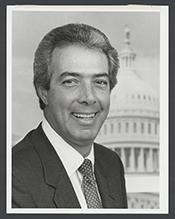
Historical · U.S. House · Illinois · District 3
Martin Russo
Former U.S. Representative · Illinois District 3 · 1975–1993 · Democratic
Martin Russo represented Illinois's District 3 in the United States House of Representatives (1975–1993) for the Democratic party. The page below collects sourced biographical facts, term history, committee roles, and provenance for Russo.
Bioguide ID: R000543
Key facts
- Full name
- Martin Russo
- State
- Illinois
- District
- District 3
- Party
- Democratic
- House service
- 1975–1993
- First House term
- 1975
- Status
- Left office
- Current term ends
- —
- Born
- 1944
- Bioguide ID
- R000543
- Committee assignments
- —
- Dataset version
- 1.20260605
Biographical narrative
1,045 words · sourced from the Wikipedia REST extract
Martin A. Russo is a former American politician, lawyer, and lobbyist who served as a U.S. Representative for Illinois's 3rd congressional district from 1975 until 1993. A member of the Democratic Party, Russo's tenure in Congress was marked by his involvement in significant legislative efforts, particularly in the areas of health care and tax reform. Following his departure from Congress, he transitioned into a successful lobbying career, where he continued to influence policy and legislative matters.
Early life and career
Martin Anthony Russo was born on January 23, 1944. He grew up in Chicago, Illinois, where he attended St. Ignatius College Prep, graduating in 1961. His educational journey continued at DePaul University, where he earned a Bachelor of Arts degree in 1965, followed by a Juris Doctor degree in 1967. This legal background provided a foundation for his future political career, equipping him with the skills necessary for navigating the complexities of law and governance.
After completing his education, Russo began his professional career in the legal field. He served as an Assistant State Attorney for Cook County, Illinois, from 1971 to 1973. This role allowed him to gain valuable experience in the legal system and public service, further shaping his understanding of the law and its implications for the community. His work as an Assistant State Attorney likely contributed to his growing interest in politics and public policy, leading him to seek a position in the U.S. Congress.
House tenure
Russo's political career took a significant turn when he was elected to the United States House of Representatives as a Democrat in 1974. He officially took office on January 3, 1975, representing Illinois's 3rd congressional district. Over the course of his nine terms in office, Russo became known for his active participation in various legislative initiatives and his commitment to addressing the needs of his constituents.
During his time in Congress, Russo served on the influential Ways and Means Committee from 1979 to 1992. This committee plays a critical role in shaping tax policy and overseeing social programs, making it a key platform for Russo to advocate for issues that were important to him and his constituents. From 1981 through 1994, the committee was chaired by Dan Rostenkowski, a fellow Chicagoan, which provided Russo with opportunities to collaborate on significant legislative efforts.
One of the most notable achievements during Russo's tenure was his involvement in the Tax Reform Act of 1986, a landmark piece of legislation that aimed to simplify the tax code and reduce tax rates for individuals and businesses. This act was a significant milestone in U.S. tax policy and demonstrated Russo's ability to engage in complex legislative negotiations.
In addition to his work on tax policy, Russo was a strong advocate for health care reform. He served as Vice Chairman of the Subcommittee on Health and was the Chairman of the Task Force on Income Security. His commitment to affordable health care for all Americans was evident in his authorship of the Universal Health Care Act of 1991, also known as H.R. 1300. This proposal sought to establish a single-payer health care system, gaining national attention and support. Russo's advocacy for health care reform highlighted his dedication to addressing the pressing needs of the American public and his belief in the importance of accessible health care.
Despite his accomplishments, Russo faced challenges in his political career. Following the 1990 redistricting, his congressional district was merged with the neighboring 5th District, which was represented by fellow Democrat Bill Lipinski. This reconfiguration of districts created a competitive political landscape, and Russo lost the Democratic primary on March 17, 1992, to Lipinski. The primary results reflected the complexities of navigating changing political boundaries and the challenges incumbents can face in maintaining their positions.
Legislative focus and committees
Throughout his time in the House of Representatives, Russo's legislative focus was characterized by his commitment to social issues, particularly health care and economic policies. His role on the Ways and Means Committee allowed him to engage deeply with tax legislation and social programs, making significant contributions to discussions surrounding economic equity and access to essential services.
As a member of the Ways and Means Committee, Russo was involved in shaping policies that affected millions of Americans. His participation in the Tax Reform Act of 1986 exemplified his focus on creating a fairer tax system that would benefit a broad range of constituents. The act aimed to simplify the tax code, eliminate numerous tax shelters, and reduce tax rates, which were critical issues during the 1980s.
Russo's advocacy for health care reform was perhaps one of the defining aspects of his legislative career. As Vice Chairman of the Subcommittee on Health, he worked tirelessly to promote policies that would ensure affordable health care access for all Americans. His authorship of the Universal Health Care Act of 1991 was a bold initiative that sought to create a comprehensive health care system funded by the government. This proposal garnered significant attention and support, reflecting the growing national discourse on health care reform during that period.
In addition to his legislative work, Russo's leadership roles within the House, including his chairmanship of the Task Force on Income Security, allowed him to influence policies related to social safety nets and economic security for vulnerable populations. His focus on income security demonstrated his commitment to addressing issues of poverty and inequality, which were critical concerns for many of his constituents.
After leaving Congress in 1993, Russo transitioned to a career in lobbying, where he continued to engage with policy matters and influence legislative outcomes. He joined the lobbying firm Cassidy & Associates, eventually rising to the position of CEO. His experience in Congress provided him with a unique perspective on the legislative process, allowing him to navigate the complexities of advocacy effectively. Russo remained with the firm until 2010, further solidifying his role in shaping public policy beyond his time in elected office.
In summary, Martin A. Russo's career as a U.S. Representative was marked by significant legislative contributions, particularly in the areas of health care and tax reform. His commitment to social issues and economic equity defined his tenure in Congress, while his subsequent work in lobbying allowed him to continue influencing policy long after leaving public office.
Notable legislation
Sponsored and co-sponsored legislation for Martin Russo is pending operator curation. The biographical narrative above carries the same provenance trail until per-bill rows are written.
Sources
- [1]https://en.wikipedia.org/wiki/Marty_RussoWikipedia · retrieved 2026-06-05
Notable quotes
Sourced quotes for Martin Russo are pending operator curation. Narrative-scope provenance remains attached below.
Sources
- [1]https://en.wikipedia.org/wiki/Marty_RussoWikipedia · retrieved 2026-06-05
Key positions
Curated policy positions for Martin Russo are pending operator review. The biographical narrative above carries the same provenance trail until per-topic positions are written.
Sources
- [1]https://en.wikipedia.org/wiki/Marty_RussoWikipedia · retrieved 2026-06-05
Terms served
- 1975–1977U.S. House · Term 1 · Democratic
- 1977–1979U.S. House · Term 2 · Democratic
- 1979–1981U.S. House · Term 3 · Democratic
- 1981–1983U.S. House · Term 4 · Democratic
- 1983–1985U.S. House · Term 5 · Democratic
- 1985–1987U.S. House · Term 6 · Democratic
- 1987–1989U.S. House · Term 7 · Democratic
- 1989–1991U.S. House · Term 8 · Democratic
- 1991–1993U.S. House · Term 9 · Democratic
Sources & provenance
Every attributable claim above carries a per-section [N] marker that resolves to the corresponding URL below. Each entry records the upstream provider, the canonical URL, and the timestamp at which the source was retrieved by the ingest pipeline.
Key facts
- https://bioguide.congress.gov/search/bio/R000543bioguide · retrieved 2026-06-05
- https://www.govtrack.us/congress/members/409500govtrack · retrieved 2026-06-05
Biographical narrative
- https://en.wikipedia.org/wiki/Marty_Russowikipedia · retrieved 2026-06-05
Find your representative
Every U.S. state elects representatives by district. Browse Illinois’s delegation, the full former-representative roster, or explore the role and term length.
Related on The Candidate
- Preceded by Robert HanrahanEarlier holder of the Illinois District 3 House seat · Republican.Open
- Succeeded by Daniel LipinskiLater holder of the Illinois District 3 House seat · Democratic.Open
- Abner TaylorFormer U.S. Representative · Illinois District 1 · RepublicanOpen
- Adam SnyderFormer U.S. Representative · Illinois District 1 · DemocraticOpen
- Arthur MitchellFormer U.S. Representative · Illinois District 1 · DemocraticOpen
- Bennett StewartFormer U.S. Representative · Illinois District 1 · DemocraticOpen