
Historical · U.S. House · Illinois · District 3
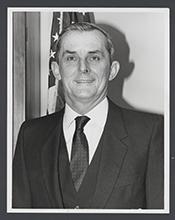
William Lipinski
Former U.S. Representative · Illinois District 3 · 1983–2005 · Democratic
William Lipinski represented Illinois's District 3 in the United States House of Representatives (1983–2005) for the Democratic party. The page below collects sourced biographical facts, term history, committee roles, and provenance for Lipinski.
Bioguide ID: L000342
Key facts
- Full name
- William Lipinski
- State
- Illinois
- District
- District 3
- Party
- Democratic
- House service
- 1983–2005
- First House term
- 1983
- Status
- Left office
- Current term ends
- —
- Born
- 1937
- Bioguide ID
- L000342
- Committee assignments
- —
- Dataset version
- 1.20260605
Biographical narrative
897 words · sourced from the Wikipedia REST extract
William O. Lipinski is a former American politician who served as a Democratic member of the United States House of Representatives from 1983 until 2005, representing Illinois's 3rd congressional district. His tenure in Congress spanned over two decades, during which he was involved in various legislative initiatives and served on important committees. Lipinski's political career was marked by his strong ties to the Chicago political landscape and his conservative stance within the Democratic Party.
Early life and career
William Oliver Lipinski was born on December 22, 1937, in Chicago, Illinois. He pursued his education at Loras College, located in Dubuque, Iowa. Following his studies, Lipinski served in the United States Army Reserve from 1961 to 1967, an experience that contributed to his understanding of military and veteran affairs. After his military service, he began his professional career in local government, securing a patronage position as a public administrator with the Chicago Park District.
In 1975, Lipinski was appointed by Mayor Richard J. Daley as the Democratic committeeman for Chicago's 23rd Ward, a role that allowed him to establish significant political connections within the city. That same year, he was elected to the Chicago City Council, representing the 23rd Ward. Lipinski's tenure as an alderman lasted until he transitioned to federal office in 1983, during which he gained valuable experience in local governance and community issues.
House tenure
Lipinski's congressional career began in 1983 when he successfully challenged incumbent Democrat John G. Fary in the primary for Illinois's 5th congressional district, which encompassed much of southwestern Chicago. His victory was largely attributed to his strong support within his city council district, which helped him secure a decisive win in the general election later that year.
Throughout his time in Congress, Lipinski was known for his ability to navigate the political landscape effectively. He was a mentor to several young politicians, including James Laski, who later became the City Clerk of Chicago. Lipinski played a pivotal role in securing federal funding for significant infrastructure projects, including the Chicago Transit Authority's Orange Line, which enhanced public transportation in the region.
Lipinski was reelected multiple times from the 5th Congressional District with relative ease. However, following the 1990 census, his district was merged with the 3rd district, which was represented by his longtime friend Marty Russo. In a notable primary election in 1992, Lipinski defeated Russo, leveraging his strong base in the Chicago portion of the newly drawn district. This victory set the stage for his continued service in Congress, where he was reelected five additional times, facing serious opposition only once in 1994.
During his tenure in the House, Lipinski served on the Transportation Committee, reflecting the significance of transportation issues in his district, which included Midway Airport and a high number of railroad crossings. His work on this committee was instrumental in addressing the transportation needs of his constituents and advocating for funding and policy changes that would benefit the region.
Lipinski's political ideology was characterized as conservative by national Democratic standards. He held strong anti-abortion views and identified as a staunch conservative on foreign policy matters. He was also a member of the Blue Dog Coalition, a group of moderate and conservative Democrats in Congress. In 2000, he endorsed Bill Bradley for the Democratic presidential nomination, aligning himself with the centrist faction of the party.
As the 2004 election cycle approached, Lipinski won his primary election with relative ease, positioning himself for what would have been his 12th term in Congress. However, on August 13, 2004, he announced his decision to withdraw from the November general election, indicating his intention to retire at the end of his 11th term, which concluded on January 3, 2005. In a strategic move, Lipinski utilized his influence as the 23rd Ward committeeman to persuade state Democratic leaders to nominate his son, Dan Lipinski, to replace him on the ballot. Dan Lipinski subsequently won the election and continued to serve in Congress until 2020.
Legislative focus and committees
Throughout his congressional career, William Lipinski's legislative focus was heavily centered on transportation and infrastructure, reflecting the needs of his constituents in a district that included significant transportation hubs. His role on the Transportation Committee allowed him to advocate for funding and policies that would enhance public transit and improve transportation safety.
Lipinski's involvement in transportation issues was particularly relevant given the high number of railroad crossings in his district, which necessitated ongoing attention to safety and infrastructure improvements. His efforts in securing federal funding for projects like the CTA Orange Line demonstrated his commitment to enhancing public transportation options for residents of Chicago.
In addition to transportation, Lipinski's conservative positions on social issues distinguished him within the Democratic Party. His strong opposition to abortion and conservative foreign policy views contributed to his identity as a member of the Blue Dog Coalition, which sought to represent moderate and fiscally conservative perspectives within the party.
Lipinski's legislative contributions and committee work reflected his dedication to addressing the needs of his constituents while navigating the complexities of party politics. His ability to maintain a strong electoral base and influence within the Democratic Party allowed him to serve effectively for over two decades in the House of Representatives. After retiring from Congress, Lipinski transitioned to a lobbying career, where he continued to engage with transportation-related issues, leveraging his extensive experience and connections within the field.
Notable legislation
Sponsored and co-sponsored legislation for William Lipinski is pending operator curation. The biographical narrative above carries the same provenance trail until per-bill rows are written.
Sources
- [1]https://en.wikipedia.org/wiki/Bill_LipinskiWikipedia · retrieved 2026-06-05
Notable quotes
Sourced quotes for William Lipinski are pending operator curation. Narrative-scope provenance remains attached below.
Sources
- [1]https://en.wikipedia.org/wiki/Bill_LipinskiWikipedia · retrieved 2026-06-05
Key positions
Curated policy positions for William Lipinski are pending operator review. The biographical narrative above carries the same provenance trail until per-topic positions are written.
Sources
- [1]https://en.wikipedia.org/wiki/Bill_LipinskiWikipedia · retrieved 2026-06-05
Terms served
- 1983–1985U.S. House · Term 1 · Democratic
- 1985–1987U.S. House · Term 2 · Democratic
- 1987–1989U.S. House · Term 3 · Democratic
- 1989–1991U.S. House · Term 4 · Democratic
- 1991–1993U.S. House · Term 5 · Democratic
- 1993–1995U.S. House · Term 6 · Democratic
- 1995–1997U.S. House · Term 7 · Democratic
- 1997–1999U.S. House · Term 8 · Democratic
- 1999–2001U.S. House · Term 9 · Democratic
- 2001–2003U.S. House · Term 10 · Democratic
- 2003–2005U.S. House · Term 11 · Democratic
Sources & provenance
Every attributable claim above carries a per-section [N] marker that resolves to the corresponding URL below. Each entry records the upstream provider, the canonical URL, and the timestamp at which the source was retrieved by the ingest pipeline.
Key facts
- https://bioguide.congress.gov/search/bio/L000342bioguide · retrieved 2026-06-05
- http://www.house.gov/lipinskihouse.gov · retrieved 2026-06-05
Biographical narrative
- https://en.wikipedia.org/wiki/Bill_Lipinskiwikipedia · retrieved 2026-06-05
Find your representative
Every U.S. state elects representatives by district. Browse Illinois’s delegation, the full former-representative roster, or explore the role and term length.
Related on The Candidate
- Preceded by Robert HanrahanEarlier holder of the Illinois District 3 House seat · Republican.Open
- Succeeded by Daniel LipinskiLater holder of the Illinois District 3 House seat · Democratic.Open
- Abner TaylorFormer U.S. Representative · Illinois District 1 · RepublicanOpen
- Adam SnyderFormer U.S. Representative · Illinois District 1 · DemocraticOpen
- Arthur MitchellFormer U.S. Representative · Illinois District 1 · DemocraticOpen
- Bennett StewartFormer U.S. Representative · Illinois District 1 · DemocraticOpen