
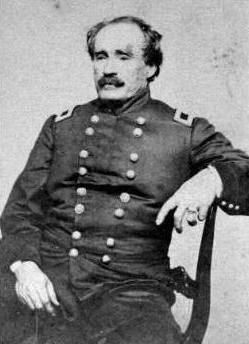
Historical · U.S. House · Illinois · District 4
Abner Harding
Former U.S. Representative · Illinois District 4 · 1865–1869 · Republican
Abner Harding represented Illinois's District 4 in the United States House of Representatives (1865–1869) for the Republican party. The page below collects sourced biographical facts, term history, committee roles, and provenance for Harding.
Bioguide ID: H000188
Key facts
- Full name
- Abner Harding
- State
- Illinois
- District
- District 4
- Party
- Republican
- House service
- 1865–1869
- First House term
- 1865
- Status
- Left office
- Current term ends
- —
- Born
- 1807
- Bioguide ID
- H000188
- Committee assignments
- —
- Dataset version
- 1.20260606
Biographical narrative
986 words · sourced from the Wikipedia REST extract
Abner Harding was a prominent figure in American history, serving as a U.S. Representative from Illinois and achieving the rank of Brigadier General in the Union Army during the Civil War. His political and military careers were marked by significant contributions to both the state of Illinois and the nation during a tumultuous period in American history. Harding's legacy includes his service in Congress, his military leadership, and his involvement in local education and infrastructure development.
Early life and career
Abner Harding was born on February 10, 1807, in East Hampton, Connecticut. He grew up in a region that was experiencing significant social and political changes, which would influence his later career. After completing his early education, Harding pursued higher education at Hamilton College in Clinton, New York. There, he studied law, a field that would become the foundation of his professional life. Upon his admission to the bar around 1827, he began practicing law in Oneida County, New York, where he gained valuable experience in legal matters and developed a reputation as a capable attorney.
In 1838, seeking new opportunities, Harding relocated to Monmouth, Illinois. This move was part of a broader trend during the 19th century, as many individuals sought to establish themselves in the expanding western territories of the United States. In Monmouth, Harding continued his legal practice and became actively involved in local governance and civic affairs. His commitment to public service was evident when he participated in the Illinois State Constitutional Convention in 1848, a significant event that aimed to address the legal and political framework of the state.
Later that same year, Harding was elected to the Illinois House of Representatives, where he served until 1850. His tenure in the state legislature allowed him to engage directly with the political issues of the time, including those related to state governance, infrastructure, and the growing tensions surrounding slavery. These experiences would later inform his perspectives and actions as a member of Congress.
House tenure
Abner Harding's congressional career began in 1865 when he was elected as a Republican to represent Illinois's 4th congressional district. His election came during a critical period in American history, as the nation was grappling with the aftermath of the Civil War. Harding served two terms in the U.S. House of Representatives, concluding his service in 1869. During his time in Congress, he was involved in various legislative activities that reflected the priorities of the Republican Party and the needs of his constituents.
In the 39th Congress, Harding was appointed as Chairman of the Committee on the Militia. This position was particularly significant given the context of the Civil War and the ongoing discussions about military readiness and national defense. As Chairman, Harding played a role in shaping policies related to the organization and funding of military forces, which were crucial for the Union's efforts during the war and for post-war reconstruction.
Harding's legislative focus was likely influenced by his military background, as he had firsthand experience of the challenges faced by soldiers and the complexities of military organization. His contributions during this period were part of a broader Republican agenda that sought to strengthen the military and ensure the nation's security in the wake of the conflict.
Despite his active role in Congress, Harding did not seek re-election in 1868 after completing his second term. His decision to step away from political office may have been influenced by personal considerations or a desire to pursue other interests. Following his congressional tenure, he shifted his focus to banking and railroad development, sectors that were integral to the economic growth of the United States during the post-war era. This transition marked a new chapter in Harding's professional life, as he applied his leadership skills and experience to the burgeoning infrastructure projects of the time.
Legislative focus and committees
During his time in the House of Representatives, Abner Harding's legislative focus was shaped by the pressing issues of the day, particularly those related to military affairs and the reconstruction of the nation. As Chairman of the Committee on the Militia, he was at the forefront of discussions regarding the organization and funding of military forces, which were essential for maintaining order and security in a nation still reeling from the effects of the Civil War.
Harding's military experience undoubtedly informed his approach to these issues. Having served as a Brigadier General in the Union Army, he understood the complexities of military logistics and the importance of a well-prepared and adequately funded military. His leadership in this committee allowed him to advocate for policies that would enhance the capabilities of the armed forces and ensure that the lessons learned during the war were applied to future military planning.
In addition to his work on military matters, Harding's broader legislative efforts likely reflected the Republican Party's commitment to reconstruction and the integration of formerly Confederate states back into the Union. The post-war period was marked by significant political and social challenges, including the need to address civil rights and the reintegration of Southern states. While specific details of Harding's legislative initiatives are not documented, it can be inferred that his role in Congress involved navigating these complex issues.
After concluding his congressional service, Harding continued to be active in his community and the region. He became a founder and trustee of Monmouth College, reflecting his commitment to education and the development of future leaders. His involvement in banking and railroad construction further demonstrated his dedication to economic development and infrastructure improvement in Illinois.
Abner Harding passed away on July 19, 1874, in Monmouth, Illinois. His contributions to both the military and political spheres, as well as his commitment to education and community development, left a lasting impact on the region he served. He was interred in Monmouth Cemetery, where his legacy continues to be remembered as part of the rich tapestry of American history during a transformative period.
Notable legislation
Sponsored and co-sponsored legislation for Abner Harding is pending operator curation. The biographical narrative above carries the same provenance trail until per-bill rows are written.
Sources
- [1]https://en.wikipedia.org/wiki/Abner_C._HardingWikipedia · retrieved 2026-06-06
Notable quotes
Sourced quotes for Abner Harding are pending operator curation. Narrative-scope provenance remains attached below.
Sources
- [1]https://en.wikipedia.org/wiki/Abner_C._HardingWikipedia · retrieved 2026-06-06
Key positions
Curated policy positions for Abner Harding are pending operator review. The biographical narrative above carries the same provenance trail until per-topic positions are written.
Sources
- [1]https://en.wikipedia.org/wiki/Abner_C._HardingWikipedia · retrieved 2026-06-06
Terms served
- 1865–1867U.S. House · Term 1 · Republican
- 1867–1869U.S. House · Term 2 · Republican
Sources & provenance
Every attributable claim above carries a per-section [N] marker that resolves to the corresponding URL below. Each entry records the upstream provider, the canonical URL, and the timestamp at which the source was retrieved by the ingest pipeline.
Key facts
- https://bioguide.congress.gov/search/bio/H000188bioguide · retrieved 2026-06-06
- https://www.govtrack.us/congress/members/405069govtrack · retrieved 2026-06-06
Biographical narrative
- https://en.wikipedia.org/wiki/Abner_C._Hardingwikipedia · retrieved 2026-06-06
Find your representative
Every U.S. state elects representatives by district. Browse Illinois’s delegation, the full former-representative roster, or explore the role and term length.
Related on The Candidate
- Preceded by Charles HarrisEarlier holder of the Illinois District 4 House seat · Democratic.Open
- Succeeded by Stephen HurlbutLater holder of the Illinois District 4 House seat · Republican.Open
- Abner TaylorFormer U.S. Representative · Illinois District 1 · RepublicanOpen
- Adam SnyderFormer U.S. Representative · Illinois District 1 · DemocraticOpen
- Arthur MitchellFormer U.S. Representative · Illinois District 1 · DemocraticOpen
- Bennett StewartFormer U.S. Representative · Illinois District 1 · DemocraticOpen