
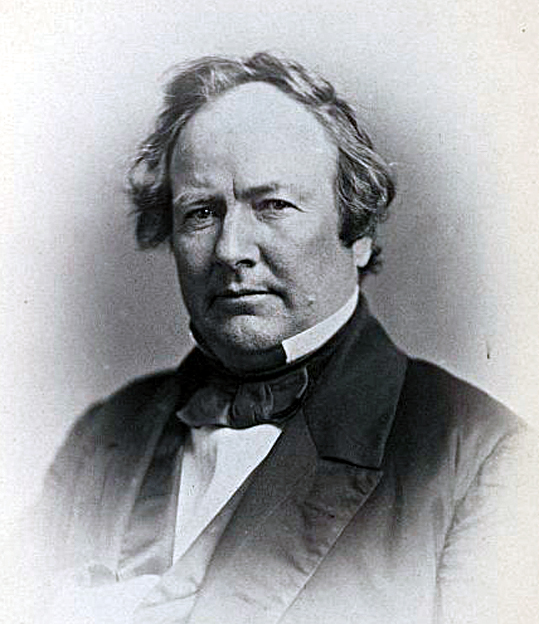
Historical · U.S. House · Illinois · District 4
William Kellogg
Former U.S. Representative · Illinois District 4 · 1857–1863 · Republican
William Kellogg represented Illinois's District 4 in the United States House of Representatives (1857–1863) for the Republican party. The page below collects sourced biographical facts, term history, committee roles, and provenance for Kellogg.
Bioguide ID: K000068
Key facts
- Full name
- William Kellogg
- State
- Illinois
- District
- District 4
- Party
- Republican
- House service
- 1857–1863
- First House term
- 1857
- Status
- Left office
- Current term ends
- —
- Born
- 1814
- Bioguide ID
- K000068
- Committee assignments
- —
- Dataset version
- 1.20260606
Biographical narrative
885 words · sourced from the Wikipedia REST extract
William Kellogg was a prominent U.S. Representative from Illinois, serving in the House of Representatives during a tumultuous period in American history. A member of the Republican Party, Kellogg's congressional tenure spanned from 1857 to 1863, during which he engaged in significant legislative discussions surrounding the American Civil War. In addition to his political career, Kellogg had a background in law, having practiced as an attorney and served as a judge prior to his election to Congress. His post-congressional career included a notable appointment as chief justice of the Territorial Supreme Court of the Nebraska Territory.
Early life and career
William Kellogg was born on July 8, 1814, in Ashtabula County, Ohio. He received his early education in local public schools before pursuing a career in law. After studying law, he was admitted to the bar and began his legal practice. In approximately 1839, Kellogg relocated to Canton, Illinois, where he established a law practice in partnership with Asa Lee Davidson. The firm specialized in criminal law, and among its notable students was Leonard F. Ross, who later gained recognition as a brigadier general during the American Civil War.
On December 21, 1843, Kellogg married Lucinda Caroline Ross in Fulton County, Illinois. Lucinda was notable for being the first white child born in Fulton County. The couple had five children: William, Jr., and John, both of whom pursued careers in law, as well as twins Emma and Lucinda, and a daughter named Paulina.
Kellogg's early political career included service in the Illinois House of Representatives, where he served in 1849 and 1850. Following his time in the state legislature, he was appointed as a judge of the Illinois tenth circuit court, a position he held from 1850 to 1852. His legal and political experiences laid the groundwork for his subsequent election to the U.S. Congress.
House tenure
William Kellogg was elected to the U.S. House of Representatives as a Republican, beginning his first term on March 4, 1857. He was re-elected to serve in the Thirty-sixth and Thirty-seventh Congresses, concluding his service on March 3, 1863. Throughout his time in Congress, Kellogg was an active participant in legislative discussions, particularly those related to the escalating tensions leading up to the Civil War.
In December 1860, Kellogg was appointed to the Committee of Thirty-Three, a bipartisan group tasked with finding a compromise to prevent civil conflict following the election of Abraham Lincoln. This committee included one representative from each state and aimed to address the growing divisions within the country. Kellogg played a significant role in this effort, presenting a proposal to the House in February 1861 that sought to modify existing compromises regarding slavery. His proposal, which was influenced by discussions with Lincoln, aimed to maintain the institution of slavery in certain territories, a stance that garnered criticism from both fellow Republicans and his constituents.
During his congressional tenure, Kellogg also addressed issues related to the Civil War. In May 1862, he supported legislation aimed at confiscating the property of rebels and freeing enslaved individuals. His involvement in these critical discussions reflected the complex political landscape of the time and the challenges faced by lawmakers in navigating the issues of slavery and rebellion.
Kellogg served on the House Committee on the Judiciary during the Thirty-sixth and Thirty-seventh Congresses. In January 1863, he submitted a report to this committee that supported the postmaster general's authority to restrict the transmission of certain newspapers deemed treasonous. This report highlighted Kellogg's engagement with issues of national security and the limits of free expression during wartime.
Legislative focus and committees
Throughout his time in the House of Representatives, Kellogg's legislative focus was heavily influenced by the national crisis of the Civil War. His involvement in the Committee of Thirty-Three and his proposals concerning slavery demonstrate his commitment to seeking solutions to the pressing issues of his time. Kellogg's approach to legislation was characterized by a willingness to engage in compromise, even when such positions were met with resistance from his party and constituents.
His service on the House Committee on the Judiciary allowed him to delve into significant legal and constitutional matters, particularly those related to civil liberties during the war. Kellogg's report regarding the transmission of newspapers through the mail illustrated the tension between national security and civil rights, a theme that would resonate throughout American history.
After his congressional career, Kellogg continued to be active in public service. He was nominated by President Abraham Lincoln to serve as Minister to Guatemala, although he declined the appointment. Instead, he was appointed as chief justice of the Territorial Supreme Court of the Nebraska Territory, a position he held from 1865 to 1867 after his nomination was confirmed by the U.S. Senate. Following his judicial service, Kellogg was appointed collector of internal revenue for the Peoria district, a role he maintained from 1867 to 1869.
William Kellogg's life came to an end on December 20, 1872, in Peoria, Illinois, where he was interred. His legacy includes his contributions to the legal and political landscape of Illinois and the broader national context during a critical period in American history. His family continued to be active in public service, with his son William, Jr., serving as a state's attorney and his daughter Paulina marrying a prominent Illinois lawyer and judge.
Notable legislation
Sponsored and co-sponsored legislation for William Kellogg is pending operator curation. The biographical narrative above carries the same provenance trail until per-bill rows are written.
Sources
- [1]https://en.wikipedia.org/wiki/William_Kellogg_(Illinois_politician)Wikipedia · retrieved 2026-06-06
Notable quotes
Sourced quotes for William Kellogg are pending operator curation. Narrative-scope provenance remains attached below.
Sources
- [1]https://en.wikipedia.org/wiki/William_Kellogg_(Illinois_politician)Wikipedia · retrieved 2026-06-06
Key positions
Curated policy positions for William Kellogg are pending operator review. The biographical narrative above carries the same provenance trail until per-topic positions are written.
Sources
- [1]https://en.wikipedia.org/wiki/William_Kellogg_(Illinois_politician)Wikipedia · retrieved 2026-06-06
Terms served
- 1857–1859U.S. House · Term 1 · Republican
- 1859–1861U.S. House · Term 2 · Republican
- 1861–1863U.S. House · Term 3 · Republican
Sources & provenance
Every attributable claim above carries a per-section [N] marker that resolves to the corresponding URL below. Each entry records the upstream provider, the canonical URL, and the timestamp at which the source was retrieved by the ingest pipeline.
Key facts
- https://bioguide.congress.gov/search/bio/K000068bioguide · retrieved 2026-06-06
- https://www.govtrack.us/congress/members/406238govtrack · retrieved 2026-06-06
Biographical narrative
- https://en.wikipedia.org/wiki/William_Kellogg_(Illinois_politician)wikipedia · retrieved 2026-06-06
Find your representative
Every U.S. state elects representatives by district. Browse Illinois’s delegation, the full former-representative roster, or explore the role and term length.
Related on The Candidate
- Preceded by James KnoxEarlier holder of the Illinois District 4 House seat · Ind. Republican-Democrat.Open
- Succeeded by Charles HarrisLater holder of the Illinois District 4 House seat · Democratic.Open
- Abner TaylorFormer U.S. Representative · Illinois District 1 · RepublicanOpen
- Adam SnyderFormer U.S. Representative · Illinois District 1 · DemocraticOpen
- Arthur MitchellFormer U.S. Representative · Illinois District 1 · DemocraticOpen
- Bennett StewartFormer U.S. Representative · Illinois District 1 · DemocraticOpen