
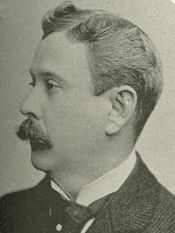
Historical · U.S. House · Illinois · District 5
George White
Former U.S. Representative · Illinois District 5 · 1895–1899 · Republican
George White represented Illinois's District 5 in the United States House of Representatives (1895–1899) for the Republican party. The page below collects sourced biographical facts, term history, committee roles, and provenance for White.
Bioguide ID: W000371
Key facts
- Full name
- George White
- State
- Illinois
- District
- District 5
- Party
- Republican
- House service
- 1895–1899
- First House term
- 1895
- Status
- Left office
- Current term ends
- —
- Born
- 1848
- Bioguide ID
- W000371
- Committee assignments
- —
- Dataset version
- 1.20260606
Biographical narrative
929 words · sourced from the Wikipedia REST extract
George White was a U.S. Representative from Illinois who served in the House of Representatives during the late 19th century. A member of the Republican Party, White's congressional career spanned two terms from 1895 to 1899. His professional background included significant involvement in both the lumber and banking industries, and he held various public offices prior to his election to Congress. Following his congressional tenure, White returned to his business pursuits in Chicago, where he continued to engage in the lumber industry until his passing in 1935.
Early life and career
George White was born on March 7, 1848, in Millbury, Massachusetts. His early education took place in the public schools of his hometown, where he laid the groundwork for his future endeavors. The backdrop of the American Civil War significantly influenced his life; during this tumultuous period, White enlisted as a private in the Fifty-seventh Regiment of the Massachusetts Veteran Volunteers. This experience not only shaped his character but also instilled in him a sense of duty and commitment to public service.
After the conclusion of the Civil War, White pursued further education by attending a commercial college in Worcester, Massachusetts. This educational experience equipped him with the skills necessary for a successful career in business. In 1867, seeking new opportunities, he relocated to Chicago, Illinois. In Chicago, White initially engaged in the lumber business, which would become a significant aspect of his professional life. His involvement in this industry allowed him to establish a reputation as a businessman and contributed to his understanding of the economic landscape of the region.
In addition to his work in the lumber sector, White developed an interest in banking, further diversifying his professional portfolio. His business acumen and community involvement led him to enter public service. He served on the board of aldermen in Chicago, where he was able to influence local governance and address the needs of his constituents. His political career continued to advance when he was elected to the Illinois State Senate, where he served from 1878 to 1886. This tenure in the state legislature provided him with valuable experience in legislative processes and public policy, which would later inform his work in Congress.
House tenure
White's congressional career began when he was elected as a Republican to the Fifty-fourth Congress, which commenced on March 4, 1895. He was subsequently re-elected to the Fifty-fifth Congress, serving until March 3, 1899. During his time in the House of Representatives, White participated in various legislative activities and contributed to discussions on issues pertinent to his constituents and the nation as a whole. His election to Congress represented a culmination of his prior political experience and business background, allowing him to advocate for policies that aligned with his party's platform and the interests of his district.
While specific details regarding the legislation he supported or the committees he served on during his congressional tenure are not provided, it is evident that White's experience in the Illinois State Senate and his business background would have informed his approach to governance. His dual focus on both business and public service likely influenced his perspectives on economic development, infrastructure, and community needs.
Despite his efforts and contributions, White faced challenges in securing a third term. He was an unsuccessful candidate for re-election in 1898 to the Fifty-sixth Congress, which marked the end of his formal legislative career. Following his departure from Congress, White returned to Chicago, where he resumed his previous business pursuits. He took on a leadership role as president of the White Lumber Company, continuing to engage in the industry that had been a significant part of his professional life.
Legislative focus and committees
While specific details about George White's legislative focus and committee assignments during his time in the House of Representatives are not documented, it is reasonable to infer that his background in business and previous political experience would have influenced his priorities as a legislator. Given the economic context of the late 19th century, issues related to commerce, trade, and infrastructure development were likely prominent on the national agenda. As a representative from Illinois, a state that was experiencing significant industrial growth during this period, White may have been particularly attuned to the needs of businesses and the workforce in his district.
His experience in the lumber industry could have provided him with insights into the challenges faced by that sector, including issues related to trade regulations, labor relations, and economic policy. Additionally, his tenure in the Illinois State Senate would have equipped him with a nuanced understanding of state-level concerns, which he could advocate for at the federal level.
Following his congressional career, White continued to play a role in the business community in Chicago. His leadership of the White Lumber Company allowed him to maintain a connection to the industry that had initially brought him success. This ongoing involvement in business likely kept him engaged with the economic issues that were central to his work as a legislator.
George White passed away on May 17, 1935, in Chicago, Illinois. His contributions to both the business sector and public service are remembered as part of his legacy. He was interred in a mausoleum at Rosehill Cemetery, a testament to his long life and the impact he had on his community and the state of Illinois. White's journey from a private in the Civil War to a U.S. Representative illustrates a path of dedication to both his country and his constituents, reflecting the interconnected nature of business and politics during a transformative period in American history.
Notable legislation
Sponsored and co-sponsored legislation for George White is pending operator curation. The biographical narrative above carries the same provenance trail until per-bill rows are written.
Sources
- [1]https://en.wikipedia.org/wiki/George_E._White_(politician)Wikipedia · retrieved 2026-06-06
Notable quotes
Sourced quotes for George White are pending operator curation. Narrative-scope provenance remains attached below.
Sources
- [1]https://en.wikipedia.org/wiki/George_E._White_(politician)Wikipedia · retrieved 2026-06-06
Key positions
Curated policy positions for George White are pending operator review. The biographical narrative above carries the same provenance trail until per-topic positions are written.
Sources
- [1]https://en.wikipedia.org/wiki/George_E._White_(politician)Wikipedia · retrieved 2026-06-06
Terms served
- 1895–1897U.S. House · Term 1 · Republican
- 1897–1899U.S. House · Term 2 · Republican
Sources & provenance
Every attributable claim above carries a per-section [N] marker that resolves to the corresponding URL below. Each entry records the upstream provider, the canonical URL, and the timestamp at which the source was retrieved by the ingest pipeline.
Key facts
- https://bioguide.congress.gov/search/bio/W000371bioguide · retrieved 2026-06-06
- https://www.govtrack.us/congress/members/411532govtrack · retrieved 2026-06-06
Biographical narrative
- https://en.wikipedia.org/wiki/George_E._White_(politician)wikipedia · retrieved 2026-06-06
Find your representative
Every U.S. state elects representatives by district. Browse Illinois’s delegation, the full former-representative roster, or explore the role and term length.
Related on The Candidate
- Preceded by Reuben EllwoodEarlier holder of the Illinois District 5 House seat · Republican.Open
- Succeeded by Edward NoonanLater holder of the Illinois District 5 House seat · Democratic.Open
- Abner TaylorFormer U.S. Representative · Illinois District 1 · RepublicanOpen
- Adam SnyderFormer U.S. Representative · Illinois District 1 · DemocraticOpen
- Arthur MitchellFormer U.S. Representative · Illinois District 1 · DemocraticOpen
- Bennett StewartFormer U.S. Representative · Illinois District 1 · DemocraticOpen