
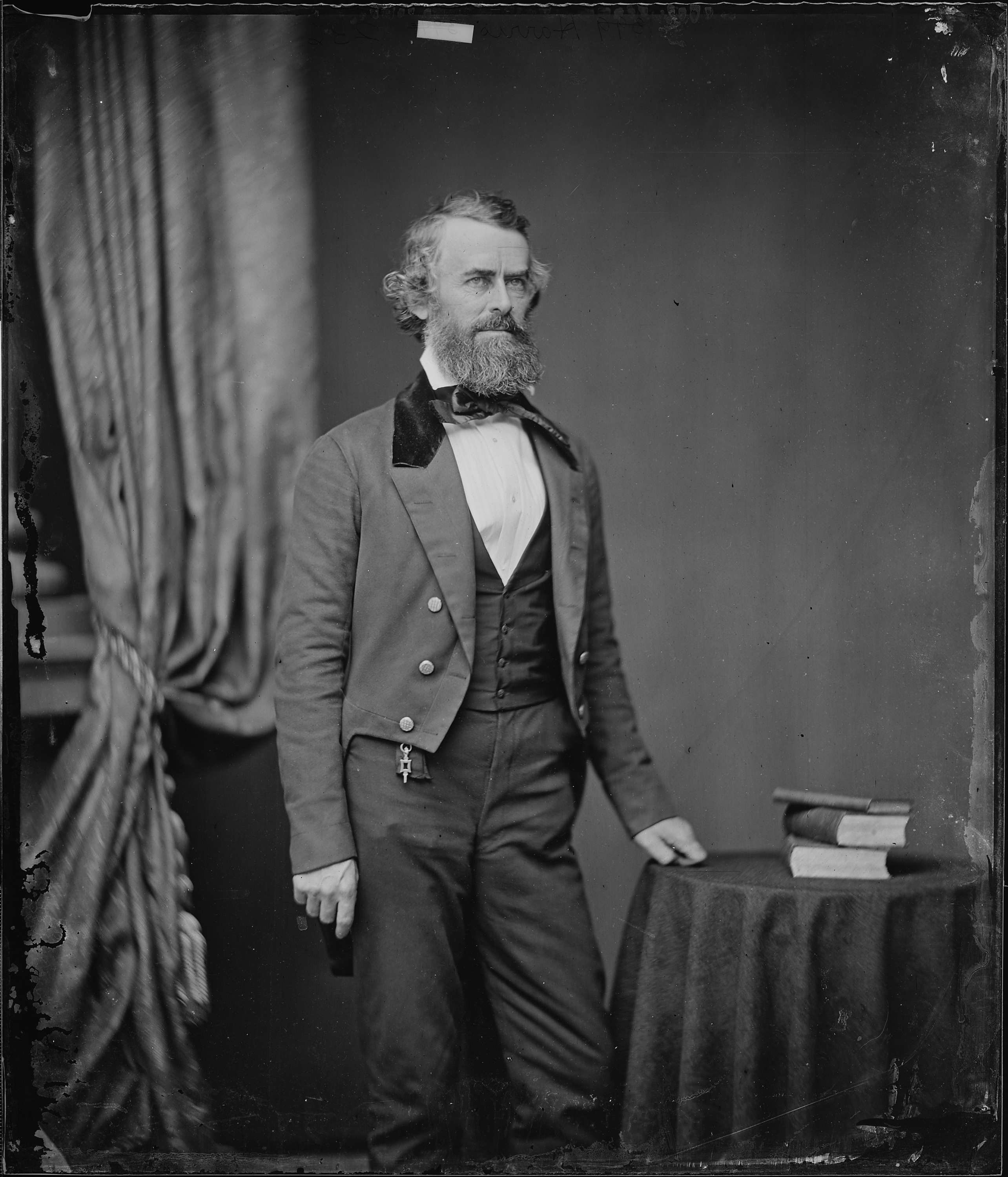
Historical · U.S. House · Illinois · District 6
Thomas Harris
Former U.S. Representative · Illinois District 6 · 1849–1859 · Democratic
Thomas Harris represented Illinois's District 6 in the United States House of Representatives (1849–1859) for the Democratic party. The page below collects sourced biographical facts, term history, committee roles, and provenance for Harris.
Bioguide ID: H000255
Key facts
- Full name
- Thomas Harris
- State
- Illinois
- District
- District 6
- Party
- Democratic
- House service
- 1849–1859
- First House term
- 1849
- Status
- Left office
- Current term ends
- —
- Born
- 1816
- Bioguide ID
- H000255
- Committee assignments
- —
- Dataset version
- 1.20260606
Biographical narrative
842 words · sourced from the Wikipedia REST extract
Thomas Harris was an American lawyer and politician who served as a U.S. Representative from Illinois during the mid-19th century. A member of the Democratic Party, Harris was elected to three terms in the House of Representatives, where he was involved in various legislative committees and contributed to the political landscape of his time. His career was marked by military service during the Mexican-American War, where he earned recognition for his bravery. Harris's political legacy includes the naming of Harristown Township and the Village of Harristown in Illinois in his honor.
Early life and career
Thomas Harris was born on October 29, 1816, in Norwich, Connecticut. He pursued a classical education and graduated from Washington College, now known as Trinity College, located in Hartford, Connecticut, in 1841. Following his graduation, Harris studied law and was admitted to the bar in 1842, allowing him to begin his legal practice in Petersburg, Illinois. His early career included a role as the School Commissioner for Menard County, a position he held starting in 1845, which demonstrated his commitment to education and local governance.
Harris's military service began during the Mexican-American War, a conflict that arose from territorial disputes between the United States and Mexico. He raised and commanded a company that joined the Fourth Regiment of the Illinois Volunteer Infantry. His leadership and bravery during the war, particularly at the Battle of Cerro Gordo, earned him a commendation from the State of Illinois in the form of a sword. His military experience not only shaped his character but also significantly influenced his later political career.
House tenure
Harris's political career in the U.S. House of Representatives began when he was elected as a Democrat to the Thirty-first Congress, serving from March 4, 1849, to March 3, 1851. He succeeded Abraham Lincoln, who chose not to seek re-election after his first term. Harris's initial term in Congress was followed by a period of political inactivity, as he was unsuccessful in his bid for re-election to the Thirty-second Congress in 1850. After not running for office in 1852, he returned to Congress by winning election to the Thirty-fourth and Thirty-fifth Congresses, serving from March 4, 1855, until his death in 1858.
During his time in the House, Harris was involved in various legislative activities and held significant positions within congressional committees. He served as the chairman of the Committee on Expenditures in the Department of the Navy during the Thirty-fourth Congress, where he oversaw budgetary and expenditure matters related to naval operations. In the Thirty-fifth Congress, he took on the role of chairman of the Committee on Elections, which dealt with issues surrounding the electoral process and the integrity of elections. His involvement in these committees reflects his engagement with critical issues of governance and public policy during a tumultuous period in American history.
Harris's tenure in Congress was marked by the political tensions leading up to the Civil War, as debates over slavery and states' rights intensified. Although specific legislative achievements during his terms are not detailed, his roles in significant committees suggest that he was an active participant in the legislative process during a pivotal time in the nation's development.
Legislative focus and committees
Throughout his congressional career, Thomas Harris was involved in various legislative matters that were pertinent to his time. His committee assignments indicate a focus on issues related to military expenditures and election integrity, both of which were critical as the nation faced internal divisions and external conflicts. As chairman of the Committee on Expenditures in the Department of the Navy, Harris played a role in overseeing the financial aspects of naval operations, a responsibility that was especially important during a period characterized by military engagements and the expansion of U.S. naval power.
In addition to his work on naval expenditures, Harris's leadership on the Committee on Elections during the Thirty-fifth Congress highlights his engagement with the electoral process. This committee was responsible for addressing issues related to the conduct of elections, which were increasingly contentious in the lead-up to the Civil War. The political climate of the time necessitated careful oversight of electoral integrity, and Harris's involvement in this committee underscores his commitment to ensuring fair and transparent elections.
Harris's legislative focus and committee work reflect the broader challenges faced by the United States in the mid-19th century, including debates over governance, military readiness, and the electoral process. His contributions to these areas demonstrate his active participation in shaping policy and addressing the pressing issues of his day.
Thomas Harris passed away on November 24, 1858, in Springfield, Illinois. He is interred in Rose Hill Cemetery in Petersburg, Illinois, and is remembered for his service to the nation both as a soldier and as a legislator. His legacy continues in part through the naming of Harristown Township and the Village of Harristown in Illinois, which honor his contributions to the state and the country. Harris's life and career exemplify the complexities of American politics during a transformative era, marked by both conflict and the pursuit of democratic governance.
Notable legislation
Sponsored and co-sponsored legislation for Thomas Harris is pending operator curation. The biographical narrative above carries the same provenance trail until per-bill rows are written.
Sources
- [1]https://en.wikipedia.org/wiki/Thomas_L._HarrisWikipedia · retrieved 2026-06-06
Notable quotes
Sourced quotes for Thomas Harris are pending operator curation. Narrative-scope provenance remains attached below.
Sources
- [1]https://en.wikipedia.org/wiki/Thomas_L._HarrisWikipedia · retrieved 2026-06-06
Key positions
Curated policy positions for Thomas Harris are pending operator review. The biographical narrative above carries the same provenance trail until per-topic positions are written.
Sources
- [1]https://en.wikipedia.org/wiki/Thomas_L._HarrisWikipedia · retrieved 2026-06-06
Terms served
- 1849–1851U.S. House · Term 1 · Democratic
- 1855–1857U.S. House · Term 2 · Democratic
- 1857–1859U.S. House · Term 3 · Democratic
Sources & provenance
Every attributable claim above carries a per-section [N] marker that resolves to the corresponding URL below. Each entry records the upstream provider, the canonical URL, and the timestamp at which the source was retrieved by the ingest pipeline.
Key facts
- https://bioguide.congress.gov/search/bio/H000255bioguide · retrieved 2026-06-06
- https://www.govtrack.us/congress/members/405132govtrack · retrieved 2026-06-06
Biographical narrative
- https://en.wikipedia.org/wiki/Thomas_L._Harriswikipedia · retrieved 2026-06-06
Find your representative
Every U.S. state elects representatives by district. Browse Illinois’s delegation, the full former-representative roster, or explore the role and term length.
Related on The Candidate
- Preceded by Thomas TurnerEarlier holder of the Illinois District 6 House seat · Democratic.Open
- Succeeded by Burton CookLater holder of the Illinois District 6 House seat · Republican.Open
- Abner TaylorFormer U.S. Representative · Illinois District 1 · RepublicanOpen
- Adam SnyderFormer U.S. Representative · Illinois District 1 · DemocraticOpen
- Arthur MitchellFormer U.S. Representative · Illinois District 1 · DemocraticOpen
- Bennett StewartFormer U.S. Representative · Illinois District 1 · DemocraticOpen