
Historical · U.S. House · Illinois · District 7
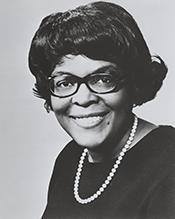
Cardiss Collins
Former U.S. Representative · Illinois District 7 · 1973–1997 · Democratic
Cardiss Collins represented Illinois's District 7 in the United States House of Representatives (1973–1997) for the Democratic party. The page below collects sourced biographical facts, term history, committee roles, and provenance for Collins.
Bioguide ID: C000634
Key facts
- Full name
- Cardiss Collins
- State
- Illinois
- District
- District 7
- Party
- Democratic
- House service
- 1973–1997
- First House term
- 1973
- Status
- Left office
- Current term ends
- —
- Born
- 1931
- Bioguide ID
- C000634
- Committee assignments
- —
- Dataset version
- 1.20260605
Biographical narrative
1,032 words · sourced from the Wikipedia REST extract
Cardiss Collins was an influential American politician who served as a U.S. Representative for Illinois's 7th congressional district from 1973 until 1997. A member of the Democratic Party, she was notable for being the fourth African-American woman to serve in Congress and the first to represent the Midwest. Collins's congressional career began following the tragic death of her husband, George Collins, who had been elected to Congress shortly before his passing in a plane crash. Throughout her twelve terms in office, Collins was recognized for her advocacy on women's health issues and her leadership within the Congressional Black Caucus.
Early life and career
Cardiss Hortense Collins was born on September 24, 1931. Before entering politics, she built a career as an accountant, holding various positions within state government. Her professional background in finance and public service provided her with a foundation for her future political endeavors. Collins's entry into politics was marked by a personal tragedy; she was elected to the U.S. House of Representatives in a special election on June 5, 1973, to fill the vacancy left by her husband, George Collins, who had died in a plane crash in December 1972. This election was significant not only for its personal implications but also because it marked a shift in representation for Illinois's 7th district, which had been redrawn to include the Loop area of Chicago.
Collins's election was a pivotal moment in her life, as she transitioned from a private citizen to a public servant. Her tenure in Congress began amidst a changing political landscape, and she quickly established herself as a dedicated advocate for her constituents. As one of the few African-American women in Congress at the time, Collins faced unique challenges and opportunities, navigating a predominantly male political environment while championing issues that affected women and minority communities.
House tenure
Collins's congressional career spanned over two decades, during which she served a total of twelve terms in the House of Representatives. Her legislative work was characterized by a strong commitment to women's health and welfare issues. One of her notable achievements came in 1975 when she successfully advocated for changes to Medicare regulations, ensuring that post-mastectomy breast prostheses were covered by the program. This change was significant as it recognized the medical necessity of such devices rather than categorizing them as cosmetic.
In 1979, Collins was elected chairwoman of the Congressional Black Caucus, a role that allowed her to influence policy discussions and advocate for the interests of African Americans in Congress. During her time as chairwoman, she occasionally voiced criticism of President Jimmy Carter's administration, reflecting her commitment to holding leaders accountable for their policies. Collins later served as the vice chair of the caucus, further solidifying her leadership role within this influential group.
Throughout the 1980s, Collins faced challenges from primary opponents, notably Alderman Danny K. Davis, who would eventually succeed her in Congress after she chose not to seek re-election in 1996. Despite these challenges, Collins remained a prominent figure in Illinois politics, known for her resilience and dedication to her constituents.
In 1991, Collins was appointed chair of the Energy and Commerce Subcommittee on Commerce, Consumer Protection, and Competitiveness. This position allowed her to address a range of issues, including consumer rights and public health. Her legislative interests were broad, encompassing universal health insurance, gender equity in college sports, and reforms in federal child care facilities. Collins gained national attention in 1993 when she chaired a congressional committee investigating college sports, particularly focusing on the practices of the NCAA. Her work in this area highlighted her commitment to ensuring fairness and accountability in athletics.
Collins's tenure also included significant debates, such as her discussions with Representative Henry Hyde regarding Medicaid funding for abortion services. These debates underscored her advocacy for women's reproductive rights and her willingness to engage in contentious discussions on critical issues.
During her final term in Congress from 1995 to 1997, Collins served as the ranking member of the Government Reform and Oversight Committee. Her experience and leadership were instrumental in shaping the committee's agenda and addressing various governmental issues.
Legislative focus and committees
Throughout her time in Congress, Collins's legislative focus was deeply rooted in issues affecting women, health care, and civil rights. She was a staunch advocate for women's health, working to ensure that women's medical needs were recognized and addressed within federal programs. Her efforts to revise Medicare regulations to include coverage for post-mastectomy breast prostheses exemplified her commitment to improving health care access for women.
Collins's leadership roles within the Congressional Black Caucus and various committees allowed her to influence policy on a broader scale. As chair of the Energy and Commerce Subcommittee, she played a key role in addressing consumer protection issues and advocating for equitable treatment in various sectors. Her work on health care reform, particularly in the context of universal health insurance, demonstrated her dedication to expanding access to medical services for all Americans.
In addition to her focus on health care, Collins was also involved in initiatives aimed at promoting gender equity in sports. Her advocacy for equal opportunities for women in athletics reflected her broader commitment to social justice and equality. Collins's participation in forming the African-American Women for Reproductive Freedom in 1990 further illustrated her dedication to advancing the rights of women, particularly in the context of reproductive health.
Collins's influence extended beyond her legislative achievements; she was a role model for many, particularly women and minorities aspiring to enter public service. Her retirement in 1996 marked the end of a significant chapter in her life, as she was recognized as the longest-serving Black female member of Congress at that time. Following her departure from Congress, she continued to engage in public service, including her appointment to lead a task force examining the representation of African Americans in television ratings.
Cardiss Collins passed away on February 3, 2013, leaving behind a legacy of advocacy and public service. In recognition of her contributions, the United States Postal Service named the Cardiss Collins Processing and Distribution Center in Chicago in her honor. This facility serves as a testament to her impact on her community and the nation as a whole.
Notable legislation
Sponsored and co-sponsored legislation for Cardiss Collins is pending operator curation. The biographical narrative above carries the same provenance trail until per-bill rows are written.
Sources
- [1]https://en.wikipedia.org/wiki/Cardiss_CollinsWikipedia · retrieved 2026-06-05
Notable quotes
Sourced quotes for Cardiss Collins are pending operator curation. Narrative-scope provenance remains attached below.
Sources
- [1]https://en.wikipedia.org/wiki/Cardiss_CollinsWikipedia · retrieved 2026-06-05
Key positions
Curated policy positions for Cardiss Collins are pending operator review. The biographical narrative above carries the same provenance trail until per-topic positions are written.
Sources
- [1]https://en.wikipedia.org/wiki/Cardiss_CollinsWikipedia · retrieved 2026-06-05
Terms served
- 1973–1975U.S. House · Term 1 · Democratic
- 1975–1977U.S. House · Term 2 · Democratic
- 1977–1979U.S. House · Term 3 · Democratic
- 1979–1981U.S. House · Term 4 · Democratic
- 1981–1983U.S. House · Term 5 · Democratic
- 1983–1985U.S. House · Term 6 · Democratic
- 1985–1987U.S. House · Term 7 · Democratic
- 1987–1989U.S. House · Term 8 · Democratic
- 1989–1991U.S. House · Term 9 · Democratic
- 1991–1993U.S. House · Term 10 · Democratic
- 1993–1995U.S. House · Term 11 · Democratic
- 1995–1997U.S. House · Term 12 · Democratic
Sources & provenance
Every attributable claim above carries a per-section [N] marker that resolves to the corresponding URL below. Each entry records the upstream provider, the canonical URL, and the timestamp at which the source was retrieved by the ingest pipeline.
Key facts
- https://bioguide.congress.gov/search/bio/C000634bioguide · retrieved 2026-06-05
- https://www.govtrack.us/congress/members/402763govtrack · retrieved 2026-06-05
Biographical narrative
- https://en.wikipedia.org/wiki/Cardiss_Collinswikipedia · retrieved 2026-06-05
Find your representative
Every U.S. state elects representatives by district. Browse Illinois’s delegation, the full former-representative roster, or explore the role and term length.
Related on The Candidate
- Preceded by Roland LibonatiEarlier holder of the Illinois District 7 House seat · Democratic.Open
- Abner TaylorFormer U.S. Representative · Illinois District 1 · RepublicanOpen
- Adam SnyderFormer U.S. Representative · Illinois District 1 · DemocraticOpen
- Arthur MitchellFormer U.S. Representative · Illinois District 1 · DemocraticOpen
- Bennett StewartFormer U.S. Representative · Illinois District 1 · DemocraticOpen
- Democratic PartyFederal candidates and office holders on the Democratic line.Open