
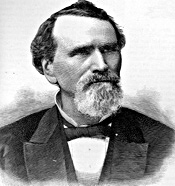
Historical · U.S. House · Illinois · District 7
Thomas Henderson
Former U.S. Representative · Illinois District 7 · 1875–1895 · Republican
Thomas Henderson represented Illinois's District 7 in the United States House of Representatives (1875–1895) for the Republican party. The page below collects sourced biographical facts, term history, committee roles, and provenance for Henderson.
Bioguide ID: H000489
Key facts
- Full name
- Thomas Henderson
- State
- Illinois
- District
- District 7
- Party
- Republican
- House service
- 1875–1895
- First House term
- 1875
- Status
- Left office
- Current term ends
- —
- Born
- 1824
- Bioguide ID
- H000489
- Committee assignments
- —
- Dataset version
- 1.20260606
Biographical narrative
966 words · sourced from the Wikipedia REST extract
Thomas Henderson was a prominent U.S. Representative from Illinois, serving in the House of Representatives for a total of ten terms from 1875 to 1895. A member of the Republican Party, Henderson's political career was preceded by significant military service during the American Civil War, where he rose to the rank of brigadier general. His contributions to both state and national politics were marked by his leadership roles in various congressional committees, particularly those focused on military and infrastructure issues.
Early life and career
Thomas Henderson was born on November 29, 1824, in Brownsville, Tennessee. At the age of eleven, he relocated with his family to Illinois, where he would later establish his career in law and politics. His early professional life included serving as the clerk of the Board of Commissioners of Stark County from 1847 to 1849, followed by a role as the clerk of the court in Stark County from 1849 to 1853. During this period, Henderson began to study law, and he was admitted to the bar in 1852, subsequently starting his legal practice in Toulon, Illinois.
Henderson's political career began in earnest when he was elected to the Illinois House of Representatives in 1855, serving until 1856. He then moved to the Illinois Senate, where he served from 1857 to 1860. His early involvement in state politics laid the groundwork for his later national political career.
With the onset of the Civil War, Henderson joined the Union Army in 1862, taking command as colonel of the 112th Illinois Volunteer Infantry Regiment. His military service included participation in significant battles and campaigns, such as the siege of Knoxville and the Atlanta campaign. He was wounded at the Battle of Resaca and later commanded the 3rd Brigade, 3rd Division, XXIII Corps. In recognition of his service, he was brevetted to the rank of brigadier general in January 1865 and led his brigade during the Battle of Wilmington.
After the war, Henderson returned to his legal practice and relocated to Princeton, Illinois, in 1867. His public service continued when he was appointed collector of internal revenue for the fifth district of Illinois in 1871, further solidifying his reputation as a dedicated public servant.
House tenure
Henderson's congressional career began when he was elected as a Republican to the Forty-fourth Congress, which commenced on March 4, 1875. He successfully secured re-election to nine additional terms, concluding his service on March 3, 1895. Throughout his tenure, Henderson was known for his active involvement in various legislative matters, reflecting his commitment to his constituents and the broader national interests.
During his time in the House, Henderson held several leadership positions. Notably, he served as the chairman of the Committee on Military Affairs during the Forty-seventh Congress. His role in this committee was significant, especially given his background as a military officer, allowing him to advocate for issues pertinent to veterans and military personnel. Additionally, he chaired the Committee on Rivers and Harbors during the Fifty-first Congress, where he focused on infrastructure development and improvements, which were critical for the economic growth of his district and the nation.
Henderson's influence extended beyond these committees as he also served as the chairman of the Republican conference in the House. This position allowed him to play a key role in shaping the party's legislative agenda and strategies during a time of significant political change in the United States.
Despite his extensive service and contributions, Henderson faced challenges in his political career. He was an unsuccessful candidate for renomination in 1894, marking the end of his time in the House of Representatives. His departure from Congress did not diminish his commitment to public service, as he continued to engage in various roles that supported veterans and military affairs.
Legislative focus and committees
Throughout his congressional career, Thomas Henderson's legislative focus was shaped by his experiences and interests, particularly in military and infrastructure issues. His leadership in the Committee on Military Affairs allowed him to advocate for the needs of veterans and military personnel, drawing on his own experiences as a Union Army officer. This committee was responsible for overseeing legislation related to the armed forces, and Henderson's insights were informed by his firsthand knowledge of military operations and the challenges faced by service members.
In addition to military affairs, Henderson's role as chairman of the Committee on Rivers and Harbors highlighted his commitment to infrastructure development. This committee was tasked with addressing issues related to the nation's waterways, ports, and harbors, which were essential for trade and transportation. Under his leadership, the committee worked on various initiatives aimed at improving the nation's infrastructure, which was vital for economic growth and development during the post-Civil War era.
Henderson's legislative efforts also reflected the broader priorities of the Republican Party during his time in office. He was involved in discussions and debates that shaped policies on economic development, veterans' affairs, and the role of the federal government in supporting infrastructure projects. His contributions to these areas underscored his dedication to serving the interests of his constituents in Illinois and the nation as a whole.
After leaving Congress, Henderson continued to serve the public in various capacities. In 1896, he was appointed to the board of managers for the National Home for Disabled Volunteer Soldiers, an organization dedicated to supporting veterans. He later became a civilian member of the Board of Ordnance and Fortifications in 1900, a position he held until his death on February 6, 1911, in Washington, D.C. His legacy as a public servant is remembered through his contributions to both state and national governance, as well as his commitment to the welfare of veterans and military personnel. Henderson was interred in Oakland Cemetery in Princeton, Illinois, where he is honored for his service and dedication to the country.
Notable legislation
Sponsored and co-sponsored legislation for Thomas Henderson is pending operator curation. The biographical narrative above carries the same provenance trail until per-bill rows are written.
Sources
- [1]https://en.wikipedia.org/wiki/Thomas_J._Henderson_(politician)Wikipedia · retrieved 2026-06-06
Notable quotes
Sourced quotes for Thomas Henderson are pending operator curation. Narrative-scope provenance remains attached below.
Sources
- [1]https://en.wikipedia.org/wiki/Thomas_J._Henderson_(politician)Wikipedia · retrieved 2026-06-06
Key positions
Curated policy positions for Thomas Henderson are pending operator review. The biographical narrative above carries the same provenance trail until per-topic positions are written.
Sources
- [1]https://en.wikipedia.org/wiki/Thomas_J._Henderson_(politician)Wikipedia · retrieved 2026-06-06
Terms served
- 1875–1877U.S. House · Term 1 · Republican
- 1877–1879U.S. House · Term 2 · Republican
- 1879–1881U.S. House · Term 3 · Republican
- 1881–1883U.S. House · Term 4 · Republican
- 1883–1885U.S. House · Term 5 · Republican
- 1885–1887U.S. House · Term 6 · Republican
- 1887–1889U.S. House · Term 7 · Republican
- 1889–1891U.S. House · Term 8 · Republican
- 1891–1893U.S. House · Term 9 · Republican
- 1893–1895U.S. House · Term 10 · Republican
Sources & provenance
Every attributable claim above carries a per-section [N] marker that resolves to the corresponding URL below. Each entry records the upstream provider, the canonical URL, and the timestamp at which the source was retrieved by the ingest pipeline.
Key facts
- https://bioguide.congress.gov/search/bio/H000489bioguide · retrieved 2026-06-06
- https://www.govtrack.us/congress/members/405352govtrack · retrieved 2026-06-06
Biographical narrative
- https://en.wikipedia.org/wiki/Thomas_J._Henderson_(politician)wikipedia · retrieved 2026-06-06
Find your representative
Every U.S. state elects representatives by district. Browse Illinois’s delegation, the full former-representative roster, or explore the role and term length.
Related on The Candidate
- Preceded by Franklin CorwinEarlier holder of the Illinois District 7 House seat · Republican.Open
- Succeeded by Philip KnopfLater holder of the Illinois District 7 House seat · Republican.Open
- Abner TaylorFormer U.S. Representative · Illinois District 1 · RepublicanOpen
- Adam SnyderFormer U.S. Representative · Illinois District 1 · DemocraticOpen
- Arthur MitchellFormer U.S. Representative · Illinois District 1 · DemocraticOpen
- Bennett StewartFormer U.S. Representative · Illinois District 1 · DemocraticOpen