
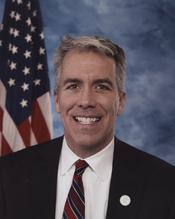
Historical · U.S. House · Illinois · District 8
Joe Walsh
Former U.S. Representative · Illinois District 8 · 2011–2013 · Republican
Joe Walsh represented Illinois's District 8 in the United States House of Representatives (2011–2013) for the Republican party. The page below collects sourced biographical facts, term history, committee roles, and provenance for Walsh.
Bioguide ID: W000811
Key facts
- Full name
- Joe Walsh
- State
- Illinois
- District
- District 8
- Party
- Republican
- House service
- 2011–2013
- First House term
- 2011
- Status
- Left office
- Current term ends
- —
- Born
- 1961
- Bioguide ID
- W000811
- Committee assignments
- —
- Dataset version
- 1.20260605
Biographical narrative
998 words · sourced from the Wikipedia REST extract
William Joseph Walsh is a former U.S. Representative who served Illinois's 8th congressional district from 2011 to 2013. A member of the Republican Party during his time in office, Walsh is also known for his subsequent career as a talk radio host and his candidacy for the presidency in 2020. Born in 1961, he has had a diverse career that includes work as a social worker, educator, and political activist. After leaving Congress, he shifted his political affiliation and registered as a Democrat in 2025.
Early life and career
Joe Walsh was born on December 27, 1961, in North Barrington, Illinois, a suburb of Chicago. He was the fifth of nine children in his family, with his father, Charles Melville Walsh, working as a real estate mortgage banker and appraisal business owner. Growing up in a large family, Walsh was active in school and sports, eventually serving as the student body president at Barrington High School, which he graduated from in 1980.
Following high school, Walsh attended Grinnell College before transferring to the University of Iowa, where he earned a Bachelor of Arts in English in 1985. In the mid-1980s, he pursued a brief career in acting, taking classes at The Lee Strasberg Theatre and Film Institute in both New York City and Los Angeles. He later returned to academia, completing a Master of Public Policy at the University of Chicago's Harris School of Public Policy Studies in 1991.
Walsh began his professional career as a social worker, focusing on education and job skills training for at-risk youth in Chicago. He worked with the Jobs for Youth program, which aimed to help high school dropouts acquire essential academic and vocational skills. In addition to his social work, Walsh taught American government and history at Oakton Community College and the Hebrew Theological College.
In the realm of education reform, Walsh led the Daniel Murphy Scholarship Fund, which provided scholarships to low-income students for private high school education. He was actively involved in fundraising for organizations advocating for school choice, including the American Education Reform Council and the Milton and Rose Friedman Foundation. Walsh also contributed to the Fabretto Children's Foundation, raising significant funds to support educational initiatives and micro-enterprise projects aimed at alleviating poverty in Nicaragua.
Walsh's career extended into policy analysis and advocacy through his work with the Heartland Institute, a libertarian think tank based in Chicago. He was instrumental in launching conservative organizations focused on limiting government and promoting fiscal conservatism, such as the Legislative Education Action Drive and Americans for Limited Government. His consulting work included involvement with the United Republican Fund, a political action committee aimed at electing Republican state legislators.
In terms of financial endeavors, Walsh reportedly raised venture capital and worked with Ravenswood Advisors, a Chicago-based investment banking firm. His financial situation was publicly scrutinized during his congressional campaign, revealing a negative net worth in 2010.
House tenure
Joe Walsh's political career began with his unsuccessful campaigns for Congress in 1996 and for the Illinois House of Representatives in 1998. His persistence paid off in 2010 when he won the Republican nomination for Illinois's 8th congressional district. In the general election, he defeated three-term incumbent Melissa Bean, despite receiving limited support from the Republican Party. His campaign was notably bolstered by the Tea Party movement, which resonated with his conservative platform.
Walsh's tenure in the U.S. House of Representatives began in January 2011. During his time in office, he became known for his confrontational style, often engaging in personal attacks against members of the Democratic Party, including President Barack Obama. He accused the president of undermining the U.S.–Israel alliance and contributing to national bankruptcy. Walsh adopted a hardline stance on fiscal issues, consistently opposing tax increases and voting against raising the federal debt ceiling. He also authored a balanced budget amendment to the U.S. Constitution.
His legislative approach was characterized by a refusal to compromise, which aligned with the more radical elements of the Tea Party movement. Walsh's views on climate change were controversial; he rejected the scientific consensus on the issue and advocated for stricter border control measures.
In 2012, following the redistricting process that occurred after the 2010 United States census, Walsh's congressional district was significantly altered by the Democratic-controlled Illinois General Assembly. Initially, he considered running in the newly drawn 14th district against fellow Republican Randy Hultgren but ultimately opted to contest the remapped 8th district against Democratic candidate Tammy Duckworth. Walsh lost the general election to Duckworth on November 6, 2012, concluding his term in Congress on January 3, 2013.
Legislative focus and committees
During his time in the House, Walsh served on various committees that shaped his legislative priorities. His focus was primarily on fiscal conservatism, advocating for limited government intervention in the economy and promoting policies aimed at reducing federal spending. He was a vocal proponent of a balanced budget amendment, reflecting his commitment to fiscal responsibility.
Walsh's approach to governance was influenced by his alignment with the Tea Party movement, which emphasized a strict interpretation of the Constitution and a reduction in the size and scope of government. His tenure was marked by a series of confrontational exchanges with Democratic colleagues, particularly regarding budgetary issues and social policies. This combative style earned him both supporters and detractors within the political landscape.
After leaving Congress, Walsh transitioned to a career in media, hosting a talk radio show where he continued to express his political views. Initially a supporter of Donald Trump, he later became critical of the former president, leading to his announcement of a presidential campaign in 2019. Despite his efforts, he withdrew from the race in early 2020 after a disappointing performance in the Iowa caucus.
In a significant political shift, Walsh registered as a Democrat in 2025, reflecting his evolving views and discontent with the Republican Party. His journey from a conservative Republican to a Democrat illustrates the complexities of American political identity and the changing dynamics within the political landscape.
Notable legislation
Sponsored and co-sponsored legislation for Joe Walsh is pending operator curation. The biographical narrative above carries the same provenance trail until per-bill rows are written.
Sources
- [1]https://en.wikipedia.org/wiki/Joe_Walsh_(Illinois_politician)Wikipedia · retrieved 2026-06-05
Notable quotes
Sourced quotes for Joe Walsh are pending operator curation. Narrative-scope provenance remains attached below.
Sources
- [1]https://en.wikipedia.org/wiki/Joe_Walsh_(Illinois_politician)Wikipedia · retrieved 2026-06-05
Key positions
Curated policy positions for Joe Walsh are pending operator review. The biographical narrative above carries the same provenance trail until per-topic positions are written.
Sources
- [1]https://en.wikipedia.org/wiki/Joe_Walsh_(Illinois_politician)Wikipedia · retrieved 2026-06-05
Terms served
- 2011–2013U.S. House · Term 1 · Republican
Sources & provenance
Every attributable claim above carries a per-section [N] marker that resolves to the corresponding URL below. Each entry records the upstream provider, the canonical URL, and the timestamp at which the source was retrieved by the ingest pipeline.
Key facts
- https://bioguide.congress.gov/search/bio/W000811bioguide · retrieved 2026-06-05
- http://walsh.house.gov/house.gov · retrieved 2026-06-05
Biographical narrative
- https://en.wikipedia.org/wiki/Joe_Walsh_(Illinois_politician)wikipedia · retrieved 2026-06-05
Find your representative
Every U.S. state elects representatives by district. Browse Illinois’s delegation, the full former-representative roster, or explore the role and term length.
Related on The Candidate
- Preceded by Melissa BeanEarlier holder of the Illinois District 8 House seat · Democratic.Open
- Abner TaylorFormer U.S. Representative · Illinois District 1 · RepublicanOpen
- Adam SnyderFormer U.S. Representative · Illinois District 1 · DemocraticOpen
- Arthur MitchellFormer U.S. Representative · Illinois District 1 · DemocraticOpen
- Bennett StewartFormer U.S. Representative · Illinois District 1 · DemocraticOpen
- Republican PartyFederal candidates and office holders on the Republican line.Open