
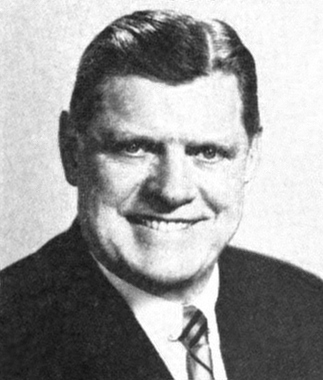
Historical · U.S. House · Illinois · District 9
Edward Finnegan
Former U.S. Representative · Illinois District 9 · 1961–1965 · Democratic
Edward Finnegan represented Illinois's District 9 in the United States House of Representatives (1961–1965) for the Democratic party. The page below collects sourced biographical facts, term history, committee roles, and provenance for Finnegan.
Bioguide ID: F000135
Key facts
- Full name
- Edward Finnegan
- State
- Illinois
- District
- District 9
- Party
- Democratic
- House service
- 1961–1965
- First House term
- 1961
- Status
- Left office
- Current term ends
- —
- Born
- 1905
- Bioguide ID
- F000135
- Committee assignments
- —
- Dataset version
- 1.20260605
Biographical narrative
865 words · sourced from the Wikipedia REST extract
Edward Finnegan was a prominent attorney and politician from Illinois, who served as a U.S. Representative for the state from 1961 to 1964. A member of the Democratic Party, Finnegan's political career was marked by his transition from the House of Representatives to the judiciary, where he served as a judge of the Circuit Court of Cook County until his death in 1971. His legal background and commitment to public service shaped his career and contributions to the state of Illinois.
Early life and career
Edward Finnegan was born on June 5, 1905, in Chicago, Illinois. He received his early education at local parochial schools and graduated from St. Rita High School. Following his secondary education, Finnegan pursued higher education at several institutions, including Loyola University Chicago and Northwestern University Law School. He ultimately graduated from DePaul University in 1930 with a Bachelor of Laws (LL.B.) degree. After completing his education, he was admitted to the bar in 1931 and began his legal practice in Chicago.
Finnegan's early career included various legal roles that laid the groundwork for his future in public service. In 1939, he sought the Democratic nomination for a position as a municipal court judge, though he was unsuccessful in that bid. His legal career advanced significantly when he was appointed as an assistant state's attorney for Cook County in 1945, a position he held until 1956. This role allowed him to gain substantial experience in the legal system and public prosecution.
After his tenure as an assistant state's attorney, Finnegan served as an assistant city corporation counsel from 1956 to 1957. This position further solidified his reputation in the legal community and provided him with additional insights into municipal governance and law. His experiences in these roles would later inform his legislative priorities and judicial philosophy.
House tenure
Finnegan's political career took a significant turn in 1960 when he was elected to the United States House of Representatives, representing Illinois' 12th congressional district. His election came during a period of political change and redistricting in Illinois. In 1962, following redistricting, he successfully ran for re-election in the newly configured 9th congressional district. Finnegan's tenure in the House began in January 1961 and lasted until he resigned in December 1964.
During his time in Congress, Finnegan was part of a legislative body that was engaged in significant national issues, including civil rights, social welfare, and economic policy. His election to the House was notable as it occurred during a time when the Democratic Party was gaining influence at the national level, particularly under the leadership of President John F. Kennedy and later President Lyndon B. Johnson.
In April 1964, Finnegan was renominated for the House, but his political career faced a personal challenge later that month when he nearly drowned while swimming at the Lake Shore Club. A lifeguard performed cardiopulmonary resuscitation, which ultimately saved his life, but he required hospitalization for several days afterward. This incident may have influenced his subsequent decision regarding his political future.
In October 1964, Finnegan made the decision to resign from his nomination for the U.S. House. His choice was influenced by a desire to pursue a judicial career, while Sidney R. Yates, the incumbent representative, sought to return to the House after an unsuccessful bid for the Senate. Finnegan's resignation allowed Yates to be selected as his replacement, who subsequently won the November election.
Legislative focus and committees
While specific details regarding Finnegan's legislative focus and committee assignments during his time in the House are not extensively documented, it can be inferred that his legal background and experience as an assistant state's attorney would have informed his approach to various legislative issues. His career in law likely provided him with a strong understanding of the legal implications of proposed legislation, particularly in areas related to public safety, civil rights, and local governance.
Finnegan's transition from the House of Representatives to the judiciary marked a significant shift in his career. After resigning from Congress, he was nominated for a judgeship on the Circuit Court of Cook County. He won the election for this position in November 1964 and began serving on the bench in December of that year. His judicial career continued until his death in 1971, during which he contributed to the legal community in Cook County.
Throughout his life, Finnegan was known for his commitment to public service and the legal profession. His experiences in both legislative and judicial roles reflect a dedication to the principles of justice and governance. Finnegan passed away on February 2, 1971, at a hospital in Chicago, and was laid to rest at All Saints Catholic Cemetery and Mausoleum in Des Plaines, Illinois.
In his personal life, Finnegan experienced both joy and loss. He was married to his first wife, Katherine, who passed away in 1961. Together, they had three daughters: Sara, Moira, and Kathleen. In 1964, he remarried Iris McCreevey, who survived him.
Edward Finnegan's life and career exemplify the journey of a dedicated public servant who navigated the complexities of both the legislative and judicial branches of government. His contributions to Illinois politics and the legal system remain a part of the state's history.
Notable legislation
Sponsored and co-sponsored legislation for Edward Finnegan is pending operator curation. The biographical narrative above carries the same provenance trail until per-bill rows are written.
Sources
- [1]https://en.wikipedia.org/wiki/Edward_Rowan_FinneganWikipedia · retrieved 2026-06-05
Notable quotes
Sourced quotes for Edward Finnegan are pending operator curation. Narrative-scope provenance remains attached below.
Sources
- [1]https://en.wikipedia.org/wiki/Edward_Rowan_FinneganWikipedia · retrieved 2026-06-05
Key positions
Curated policy positions for Edward Finnegan are pending operator review. The biographical narrative above carries the same provenance trail until per-topic positions are written.
Sources
- [1]https://en.wikipedia.org/wiki/Edward_Rowan_FinneganWikipedia · retrieved 2026-06-05
Terms served
- 1961–1963U.S. House · Term 1 · Democratic
- 1963–1965U.S. House · Term 2 · Democratic
Sources & provenance
Every attributable claim above carries a per-section [N] marker that resolves to the corresponding URL below. Each entry records the upstream provider, the canonical URL, and the timestamp at which the source was retrieved by the ingest pipeline.
Key facts
- https://bioguide.congress.gov/search/bio/F000135bioguide · retrieved 2026-06-05
- https://www.govtrack.us/congress/members/404090govtrack · retrieved 2026-06-05
Biographical narrative
- https://en.wikipedia.org/wiki/Edward_Rowan_Finneganwikipedia · retrieved 2026-06-05
Find your representative
Every U.S. state elects representatives by district. Browse Illinois’s delegation, the full former-representative roster, or explore the role and term length.
Related on The Candidate
- Preceded by Robert TwymanEarlier holder of the Illinois District 9 House seat · Republican.Open
- Abner TaylorFormer U.S. Representative · Illinois District 1 · RepublicanOpen
- Adam SnyderFormer U.S. Representative · Illinois District 1 · DemocraticOpen
- Arthur MitchellFormer U.S. Representative · Illinois District 1 · DemocraticOpen
- Bennett StewartFormer U.S. Representative · Illinois District 1 · DemocraticOpen
- Democratic PartyFederal candidates and office holders on the Democratic line.Open