
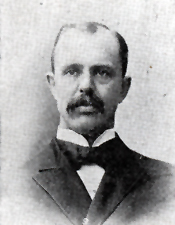
Historical · U.S. House · Illinois · District 9
Hamilton Wheeler
Former U.S. Representative · Illinois District 9 · 1893–1895 · Republican
Hamilton Wheeler represented Illinois's District 9 in the United States House of Representatives (1893–1895) for the Republican party. The page below collects sourced biographical facts, term history, committee roles, and provenance for Wheeler.
Bioguide ID: W000335
Key facts
- Full name
- Hamilton Wheeler
- State
- Illinois
- District
- District 9
- Party
- Republican
- House service
- 1893–1895
- First House term
- 1893
- Status
- Left office
- Current term ends
- —
- Born
- 1848
- Bioguide ID
- W000335
- Committee assignments
- —
- Dataset version
- 1.20260606
Biographical narrative
867 words · sourced from the Wikipedia REST extract
Hamilton Wheeler was a U.S. Representative from Illinois who served in the Fifty-third Congress as a member of the Republican Party. His political career was marked by a single term in the House of Representatives, during which he contributed to legislative discussions and decisions that shaped the era. Born in 1848 in New York, Wheeler's early life and subsequent career in Illinois reflected the broader social and political currents of the late 19th century. After his congressional tenure, he returned to his legal practice and remained active in political circles until his death in 1918.
Early life and career
Hamilton Wheeler was born on August 5, 1848, in Ballston, New York. His family relocated to Illinois in 1852 when he was just a child, settling near Grant Park in Kankakee County. This move placed Wheeler in a region that was rapidly developing during the mid-19th century, as Illinois was becoming a significant state in the Union, both economically and politically. Growing up in Kankakee County, he received his education through a combination of public and private schooling, which provided him with a foundation for his future pursuits.
Wheeler's academic journey led him to the study of law, a field that would become his primary profession. He gained admission to the bar in 1871, marking the beginning of his legal career in Kankakee. As a practicing attorney, he developed a reputation for his legal acumen and became involved in various local legal matters. His professional success in law likely contributed to his growing interest in public service and politics.
In 1884, Wheeler's political aspirations took a significant step forward when he was elected to the Illinois State Senate. This position allowed him to engage more directly with the legislative process and to influence state policy. His time in the state senate provided him with valuable experience in governance and public affairs, which would later serve him well during his tenure in the U.S. House of Representatives.
House tenure
Wheeler's entry into the U.S. Congress came in 1893 when he was elected as a Republican to represent Illinois's Ninth Congressional District in the Fifty-third Congress. His election occurred during a period of significant political and economic change in the United States, as the nation was grappling with issues related to industrialization, labor rights, and economic instability. As a member of the House, Wheeler participated in discussions and debates that were crucial to addressing these pressing matters.
Wheeler's congressional term lasted from March 4, 1893, until March 3, 1895. During this time, he was involved in the legislative process, contributing to the formation of laws and policies that would impact his constituents and the nation as a whole. However, his time in Congress was relatively brief, as he chose not to seek renomination for the Fifty-fourth Congress in 1894. This decision marked the end of his formal legislative career at the federal level.
After concluding his term in the House, Wheeler returned to Kankakee, where he resumed his legal practice. His experience in Congress likely enriched his understanding of the law and governance, which he could apply in his legal work. Additionally, his involvement in politics did not end with his congressional service; he remained active in the Republican Party and participated as a delegate to the Republican National Conventions in 1896 and 1900. These roles allowed him to continue influencing political discourse and party direction, even after leaving office.
Legislative focus and committees
While specific details regarding Wheeler's legislative focus and committee assignments during his time in the House are not extensively documented, it can be inferred that, as a Republican representative during the early 1890s, he would have engaged with key issues of the day. The political landscape at the time was characterized by debates over tariffs, economic policy, and the role of the federal government in regulating industry and labor. Given the challenges facing the nation, including the economic downturn known as the Panic of 1893, Wheeler likely participated in discussions surrounding economic recovery and legislative measures aimed at stabilizing the economy.
As a member of the Republican Party, Wheeler would have aligned with the party's platform, which traditionally emphasized free enterprise, limited government intervention, and support for business interests. This alignment would have influenced his legislative priorities and the types of issues he championed during his congressional tenure. The Republican Party during this period was also focused on issues such as veterans' affairs, infrastructure development, and the expansion of the American economy, all of which may have been relevant to Wheeler's work in Congress.
Following his departure from the House, Wheeler's continued involvement in the Republican Party and his participation in national conventions suggest that he remained engaged with the evolving political landscape. His legal background and experience in state and federal government likely informed his perspectives on legislative matters and party strategies.
Hamilton Wheeler passed away on July 19, 1918, in Kankakee, Illinois. His contributions to both the legal profession and the political arena reflect a commitment to public service and civic engagement. He was interred at Mound Grove Cemetery, leaving behind a legacy as a representative who navigated the complexities of American politics during a transformative period in the nation's history.
Notable legislation
Sponsored and co-sponsored legislation for Hamilton Wheeler is pending operator curation. The biographical narrative above carries the same provenance trail until per-bill rows are written.
Sources
- [1]https://en.wikipedia.org/wiki/Hamilton_K._WheelerWikipedia · retrieved 2026-06-06
Notable quotes
Sourced quotes for Hamilton Wheeler are pending operator curation. Narrative-scope provenance remains attached below.
Sources
- [1]https://en.wikipedia.org/wiki/Hamilton_K._WheelerWikipedia · retrieved 2026-06-06
Key positions
Curated policy positions for Hamilton Wheeler are pending operator review. The biographical narrative above carries the same provenance trail until per-topic positions are written.
Sources
- [1]https://en.wikipedia.org/wiki/Hamilton_K._WheelerWikipedia · retrieved 2026-06-06
Terms served
- 1893–1895U.S. House · Term 1 · Republican
Sources & provenance
Every attributable claim above carries a per-section [N] marker that resolves to the corresponding URL below. Each entry records the upstream provider, the canonical URL, and the timestamp at which the source was retrieved by the ingest pipeline.
Key facts
- https://bioguide.congress.gov/search/bio/W000335bioguide · retrieved 2026-06-06
- https://www.govtrack.us/congress/members/411497govtrack · retrieved 2026-06-06
Biographical narrative
- https://en.wikipedia.org/wiki/Hamilton_K._Wheelerwikipedia · retrieved 2026-06-06
Find your representative
Every U.S. state elects representatives by district. Browse Illinois’s delegation, the full former-representative roster, or explore the role and term length.
Related on The Candidate
- Preceded by Herman SnowEarlier holder of the Illinois District 9 House seat · Democratic.Open
- Succeeded by Henry BoutellLater holder of the Illinois District 9 House seat · Republican.Open
- Abner TaylorFormer U.S. Representative · Illinois District 1 · RepublicanOpen
- Adam SnyderFormer U.S. Representative · Illinois District 1 · DemocraticOpen
- Arthur MitchellFormer U.S. Representative · Illinois District 1 · DemocraticOpen
- Bennett StewartFormer U.S. Representative · Illinois District 1 · DemocraticOpen