
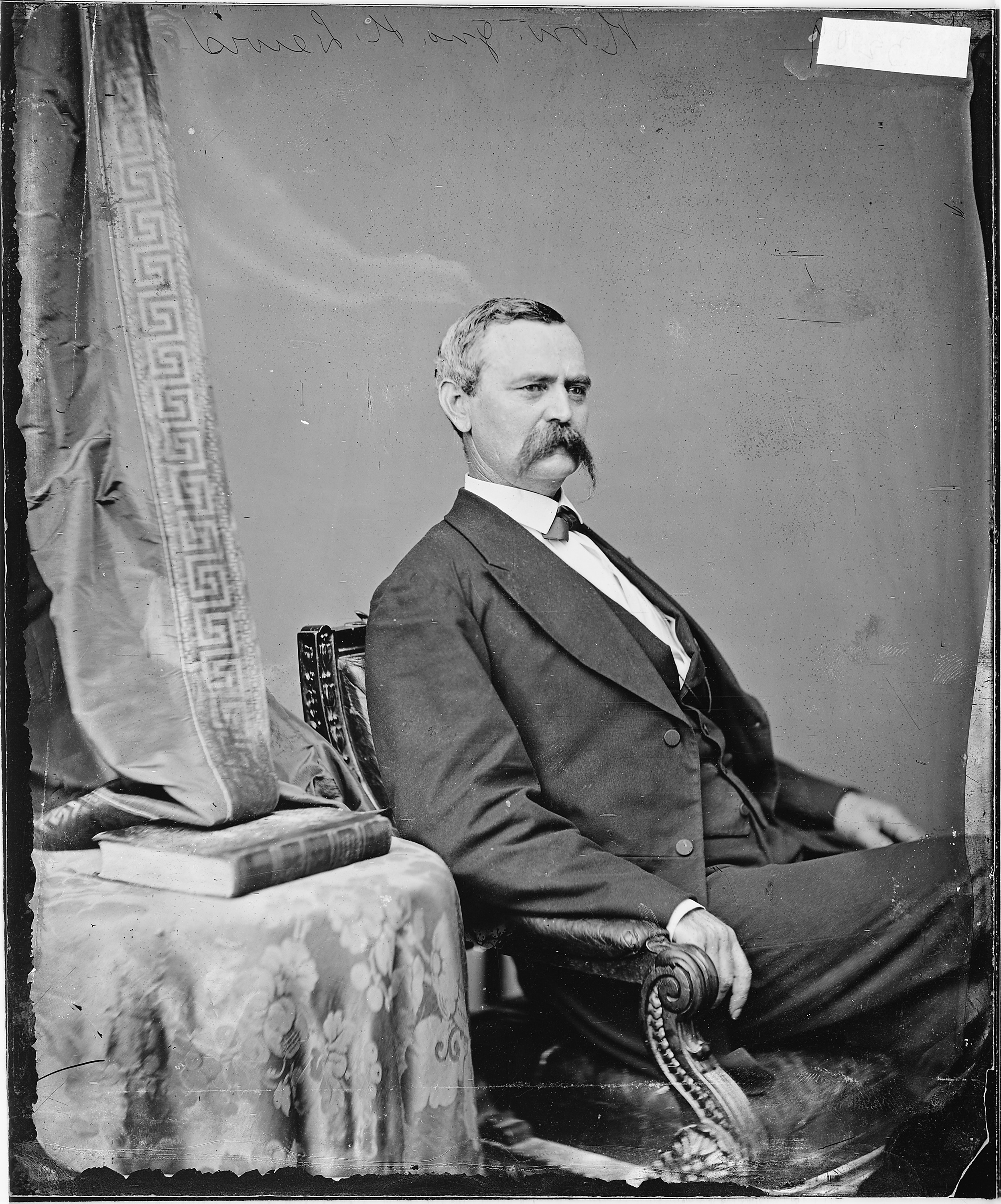
Historical · U.S. House · Illinois · District 9
John Lewis
Former U.S. Representative · Illinois District 9 · 1881–1883 · Republican
John Lewis represented Illinois's District 9 in the United States House of Representatives (1881–1883) for the Republican party. The page below collects sourced biographical facts, term history, committee roles, and provenance for Lewis.
Bioguide ID: L000286
Key facts
- Full name
- John Lewis
- State
- Illinois
- District
- District 9
- Party
- Republican
- House service
- 1881–1883
- First House term
- 1881
- Status
- Left office
- Current term ends
- —
- Born
- 1830
- Bioguide ID
- L000286
- Committee assignments
- —
- Dataset version
- 1.20260606
Biographical narrative
900 words · sourced from the Wikipedia REST extract
John Lewis was an American lawyer and politician who served as a U.S. Representative for Illinois's 9th congressional district from 1881 to 1883. A member of the Republican Party, Lewis's political career was marked by his commitment to public service and his legal expertise. His tenure in the House of Representatives was part of a broader career that included roles in local government and the legal profession. After leaving Congress, he returned to his law practice until his retirement.
Early life and career
John Lewis was born on July 21, 1830, near Ithaca, New York. His early years were spent in a rural setting, where he was raised in a farming family. In 1836, when Lewis was just six years old, his family moved to Illinois, settling on a farm in Fulton County, close to the community of Ellisville. This relocation to the Midwest was part of a larger movement during the 19th century, as many families sought new opportunities in the expanding American frontier.
Lewis's education took place in the local rural schools, where he likely received a foundational education that would serve him well in his future endeavors. In 1847, he moved to Knox County, Illinois, where he continued to engage in agricultural activities near the town of Knoxville. This period of his life was characterized by a blend of farming and self-education, as he began to study law. His dedication to legal studies paid off when he was admitted to the bar in 1860, marking the beginning of his professional career in law.
After gaining admission to the bar, Lewis practiced law in Knoxville, establishing himself as a competent attorney. His legal career was complemented by his involvement in public service; he served as the clerk of the circuit court of Knox County from 1860 to 1864. This position not only provided him with valuable experience in the legal system but also helped him build connections within the community. His commitment to public service continued as he was elected to the Illinois House of Representatives, where he served in 1874 and 1875. This experience in state government laid the groundwork for his later election to the U.S. Congress.
House tenure
John Lewis was elected to the Forty-seventh Congress, representing Illinois's 9th congressional district. His term began on March 4, 1881, and lasted until March 3, 1883. As a member of the Republican Party, Lewis participated in the legislative processes of the time, contributing to discussions and decisions that would shape national policy. His election to Congress was part of a broader trend during this period, as the Republican Party was gaining influence in various regions of the country, particularly in the Midwest.
During his time in the House, Lewis engaged with the issues of the day, although specific details of his legislative contributions are not extensively documented. His tenure coincided with a period of significant change in the United States, as the nation was navigating the aftermath of the Civil War and the complexities of Reconstruction. The political landscape was marked by debates over civil rights, economic development, and the role of the federal government in addressing social issues.
Despite his efforts, Lewis was not successful in his bid for reelection in 1882 to the Forty-eighth Congress. Following his departure from Congress, he returned to his legal practice in Knoxville, where he continued to serve his community through his work as an attorney. His congressional career, although brief, was a notable chapter in his life, reflecting his commitment to public service and the political process.
Legislative focus and committees
While specific details regarding John Lewis's legislative focus and committee assignments during his time in Congress are not extensively documented, it is important to understand the context in which he served. The late 19th century was a period characterized by significant political and social change in the United States. Issues such as civil rights, economic policy, and infrastructure development were at the forefront of national discourse.
As a member of the Republican Party, Lewis would have been aligned with the party's platform, which during this era often emphasized issues such as economic growth, support for business interests, and the promotion of civil rights for African Americans in the wake of the Civil War. The Republican Party was also focused on the expansion of railroads and other infrastructure projects, which were crucial for connecting the growing nation and facilitating commerce.
Lewis's background as a lawyer likely informed his approach to legislative matters, as he would have had a keen understanding of legal principles and the importance of the rule of law in governance. His experience in the Illinois House of Representatives would have also provided him with insights into state-level issues that could translate into his work at the federal level.
After his congressional term, Lewis resumed his legal practice, where he continued to contribute to his community until his retirement in 1900. His long life, which spanned nearly a century, saw him witness significant changes in American society and governance. He passed away on January 6, 1929, in Knoxville, Illinois, at the age of 98. His legacy as a public servant and legal professional is remembered in the context of the broader historical narrative of American politics during the late 19th and early 20th centuries. He was interred in Knoxville Cemetery, marking the end of a life dedicated to public service and the legal profession.
Notable legislation
Sponsored and co-sponsored legislation for John Lewis is pending operator curation. The biographical narrative above carries the same provenance trail until per-bill rows are written.
Sources
- [1]https://en.wikipedia.org/wiki/John_H._LewisWikipedia · retrieved 2026-06-06
Notable quotes
Sourced quotes for John Lewis are pending operator curation. Narrative-scope provenance remains attached below.
Sources
- [1]https://en.wikipedia.org/wiki/John_H._LewisWikipedia · retrieved 2026-06-06
Key positions
Curated policy positions for John Lewis are pending operator review. The biographical narrative above carries the same provenance trail until per-topic positions are written.
Sources
- [1]https://en.wikipedia.org/wiki/John_H._LewisWikipedia · retrieved 2026-06-06
Terms served
- 1881–1883U.S. House · Term 1 · Republican
Sources & provenance
Every attributable claim above carries a per-section [N] marker that resolves to the corresponding URL below. Each entry records the upstream provider, the canonical URL, and the timestamp at which the source was retrieved by the ingest pipeline.
Key facts
- https://bioguide.congress.gov/search/bio/L000286bioguide · retrieved 2026-06-06
- https://www.govtrack.us/congress/members/406784govtrack · retrieved 2026-06-06
Biographical narrative
- https://en.wikipedia.org/wiki/John_H._Lewiswikipedia · retrieved 2026-06-06
Find your representative
Every U.S. state elects representatives by district. Browse Illinois’s delegation, the full former-representative roster, or explore the role and term length.
Related on The Candidate
- Preceded by Thomas BoydEarlier holder of the Illinois District 9 House seat · Republican.Open
- Succeeded by Herman SnowLater holder of the Illinois District 9 House seat · Democratic.Open
- Abner TaylorFormer U.S. Representative · Illinois District 1 · RepublicanOpen
- Adam SnyderFormer U.S. Representative · Illinois District 1 · DemocraticOpen
- Arthur MitchellFormer U.S. Representative · Illinois District 1 · DemocraticOpen
- Bennett StewartFormer U.S. Representative · Illinois District 1 · DemocraticOpen