
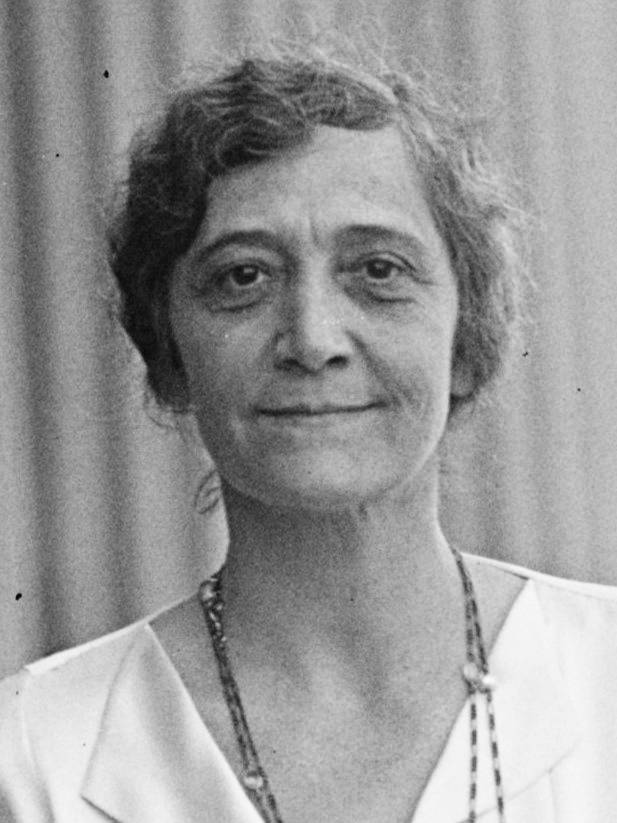
Historical · U.S. House · Illinois · At-Large
Ruth McCormick
Former U.S. Representative · Illinois At-Large · 1929–1931 · Republican
Ruth McCormick represented Illinois's At-Large in the United States House of Representatives (1929–1931) for the Republican party. The page below collects sourced biographical facts, term history, committee roles, and provenance for McCormick.
Bioguide ID: M000372
Key facts
- Full name
- Ruth McCormick
- State
- Illinois
- District
- At-Large
- Party
- Republican
- House service
- 1929–1931
- First House term
- 1929
- Status
- Left office
- Current term ends
- —
- Born
- 1880
- Bioguide ID
- M000372
- Committee assignments
- —
- Dataset version
- 1.20260606
Biographical narrative
980 words · sourced from the Wikipedia REST extract
Ruth McCormick was an American politician, activist, and publisher who served as a U.S. Representative for Illinois. A member of the Republican Party, she was notable for being one of the early women in American politics, advocating for women's suffrage and improved working conditions. McCormick's political career included a single term in the House of Representatives beginning in 1929, after which she sought a Senate seat. She became the first female candidate for a major party for the U.S. Senate in Illinois, although she did not win the general election. In addition to her political endeavors, McCormick was involved in agriculture and publishing, owning several newspapers and ranches throughout her life.
Early life and career
Ruth Hanna was born on March 27, 1880, in Cleveland, Ohio, into a prominent family. She was the third child of Mark Hanna, a businessman and Republican politician known for his influence in the election of President William McKinley, and Charlotte Augusta Hanna. Her mother hailed from a wealthy family with roots in Vermont's coal and iron industries. From a young age, Ruth exhibited an independent spirit, as evidenced by her preference for riding ponies astride rather than sidesaddle, which was customary for girls of her time.
Her education included attendance at several prestigious institutions, such as Hathaway Brown School in Cleveland, The Masters School in New York, and Miss Porter's School in Connecticut. Ruth's early exposure to politics came from her father's close association with McKinley, and she often accompanied him on the campaign trail during the 1896 presidential election. This experience allowed her to engage with political discourse and develop an understanding of the political landscape.
After completing her education, Ruth moved to Washington, D.C., where she worked as a secretary for her father during his tenure as a U.S. Senator. In this role, she took notes from the Senate Gallery and participated in political breakfasts hosted by her father, mingling with influential figures, including Presidents McKinley and Theodore Roosevelt. Despite her family's wealth, Ruth did not restrict her social circle to those of similar status, indicating her belief in the importance of diverse connections.
In 1903, Ruth Hanna married Joseph "Medill" McCormick, a member of a prominent family associated with the Chicago Tribune. The couple had three children: Katrina, John Medill, and Ruth "Bazy." Following their marriage, the McCormicks relocated to Chicago, where Ruth became involved in various social and political causes. She worked at the Chicago Tribune and became a member of the Women's Welfare Committee, which aimed to assist workers, particularly women. Her experiences in Chicago, including living at the University of Chicago Settlement, deepened her understanding of the challenges faced by working women.
Ruth's growing awareness of social issues led her to become a suffragist, advocating for women's right to vote. In 1913, she played a significant role in passing a partial suffrage law in Illinois, which allowed women to vote in municipal and presidential elections. Her commitment to women's rights and social justice was further solidified during her time in Europe, where she and her husband studied political systems in France and Great Britain.
House tenure
Ruth McCormick's political career took a significant turn when she successfully ran for the U.S. House of Representatives, winning an at-large seat in Illinois in the 1928 election. Her tenure in the House began in 1929, marking her as one of the few women to hold such a position at the time. During her time in Congress, McCormick focused on issues pertinent to her constituents and the broader American public, particularly those affecting women and families.
Despite her accomplishments in the House, McCormick chose not to seek re-election after her term ended in 1931. Instead, she set her sights on a more ambitious goal: a seat in the U.S. Senate. In this pursuit, she became the first female candidate for a major party in Illinois when she entered the Republican primary against the incumbent, Senator Charles S. Deneen. McCormick's candidacy was groundbreaking, reflecting the evolving role of women in politics during this period.
Although she won the Republican primary, McCormick ultimately lost the general election. This defeat did not deter her from remaining active in political circles. A decade later, she made history again by becoming the first woman to manage a presidential campaign, this time for Thomas E. Dewey, although he did not secure the nomination for his party.
Legislative focus and committees
During her tenure in the House of Representatives, Ruth McCormick was known for her advocacy on issues that aligned with her commitment to women's rights and social reform. Her background in activism and her experiences as a suffragist informed her legislative priorities. McCormick's work in Congress included efforts to improve working conditions for women and promote policies that would benefit families and children.
While specific details of her committee assignments and legislative initiatives are not extensively documented, it is clear that her focus was on issues that resonated with her constituents, particularly those affecting women. McCormick's involvement in the suffrage movement and her previous work with organizations aimed at improving the lives of working women likely influenced her approach to legislation.
In addition to her political activities, McCormick maintained a diverse portfolio of interests, including agriculture and publishing. She owned and operated ranches in Illinois, New Mexico, and Colorado, reflecting her commitment to agricultural pursuits. Furthermore, she founded the Rockford Consolidated Newspapers in Rockford, Illinois, demonstrating her engagement with media and communication.
Ruth McCormick's legacy is marked by her pioneering role as a woman in politics during a time when female representation was limited. Her efforts to advocate for women's rights and her active participation in political life contributed to the gradual evolution of women's roles in American governance. McCormick passed away on December 31, 1944, leaving behind a legacy of activism and public service that continues to inspire future generations of women in politics.
Notable legislation
Sponsored and co-sponsored legislation for Ruth McCormick is pending operator curation. The biographical narrative above carries the same provenance trail until per-bill rows are written.
Sources
- [1]https://en.wikipedia.org/wiki/Ruth_Hanna_McCormickWikipedia · retrieved 2026-06-06
Notable quotes
Sourced quotes for Ruth McCormick are pending operator curation. Narrative-scope provenance remains attached below.
Sources
- [1]https://en.wikipedia.org/wiki/Ruth_Hanna_McCormickWikipedia · retrieved 2026-06-06
Key positions
Curated policy positions for Ruth McCormick are pending operator review. The biographical narrative above carries the same provenance trail until per-topic positions are written.
Sources
- [1]https://en.wikipedia.org/wiki/Ruth_Hanna_McCormickWikipedia · retrieved 2026-06-06
Terms served
- 1929–1931U.S. House · Term 1 · Republican
Sources & provenance
Every attributable claim above carries a per-section [N] marker that resolves to the corresponding URL below. Each entry records the upstream provider, the canonical URL, and the timestamp at which the source was retrieved by the ingest pipeline.
Key facts
- https://bioguide.congress.gov/search/bio/M000372bioguide · retrieved 2026-06-06
- https://www.govtrack.us/congress/members/407377govtrack · retrieved 2026-06-06
Biographical narrative
- https://en.wikipedia.org/wiki/Ruth_Hanna_McCormickwikipedia · retrieved 2026-06-06
Find your representative
Every U.S. state elects representatives by district. Browse Illinois’s delegation, the full former-representative roster, or explore the role and term length.
Related on The Candidate
- Preceded by Henry RathboneEarlier holder of the Illinois At-Large House seat · Republican.Open
- Succeeded by Martin BrennanLater holder of the Illinois At-Large House seat · Democratic.Open
- Abner TaylorFormer U.S. Representative · Illinois District 1 · RepublicanOpen
- Adam SnyderFormer U.S. Representative · Illinois District 1 · DemocraticOpen
- Arthur MitchellFormer U.S. Representative · Illinois District 1 · DemocraticOpen
- Bennett StewartFormer U.S. Representative · Illinois District 1 · DemocraticOpen