
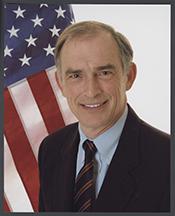
Historical · U.S. House · Indiana · District 1
Peter Visclosky
Former U.S. Representative · Indiana District 1 · 1985–2021 · Democratic
Peter Visclosky represented Indiana's District 1 in the United States House of Representatives (1985–2021) for the Democratic party. The page below collects sourced biographical facts, term history, committee roles, and provenance for Visclosky.
Bioguide ID: V000108
Key facts
- Full name
- Peter Visclosky
- State
- Indiana
- District
- District 1
- Party
- Democratic
- House service
- 1985–2021
- First House term
- 1985
- Status
- Left office
- Current term ends
- —
- Born
- 1949
- Bioguide ID
- V000108
- Committee assignments
- —
- Dataset version
- 1.20260604
Biographical narrative
967 words · sourced from the Wikipedia REST extract
Peter J. Visclosky is a former U.S. Representative who served Indiana's 1st congressional district from 1985 until his retirement in 2021. A member of the Democratic Party, Visclosky was known for his pro-union stance and advocacy for local economic development, particularly in the context of manufacturing and infrastructure. He was the dean of the Indiana congressional delegation from 2013 until his departure from Congress, marking a significant tenure in which he focused on various initiatives aimed at improving the lives of his constituents in Northwest Indiana.
Early life and career
Peter John Visclosky was born on August 13, 1949, in Gary, Indiana. He is of Croatian-Slovak descent and was raised in a family that emphasized the importance of education and community service. Visclosky attended Andrean High School in Merrillville, Indiana, where he laid the groundwork for his future academic and professional pursuits. He earned a Bachelor of Science degree in accounting from Indiana University Northwest in Gary, Indiana, which provided him with a solid foundation in financial matters.
Following his undergraduate studies, Visclosky pursued a legal education, obtaining his Juris Doctor from Notre Dame Law School. His academic journey continued at Georgetown University in Washington, D.C., where he earned a Master of Laws in International and Comparative Law. This extensive educational background equipped him with the skills necessary for a career in law and public service.
Before entering Congress, Visclosky worked as a lawyer and served as a staff member for U.S. Representative Adam Benjamin. This experience in legislative affairs and legal matters prepared him for the complexities of congressional work and helped him understand the needs of his constituents. His entry into politics was marked by a commitment to public service and a desire to address the challenges facing his community.
House tenure
Visclosky's political career began in earnest when he ran for Congress in Indiana's 1st congressional district in 1984. In a competitive Democratic primary, he defeated incumbent Congresswoman Katie Hall and several other candidates, securing his position with a narrow margin. He subsequently won the general election against Republican Joseph Grenchik with a significant majority. Over the course of his career, Visclosky was re-elected 17 times, reflecting the strong Democratic leanings of his district, which had been under Democratic control since 1931.
Throughout his tenure, Visclosky consistently demonstrated electoral strength, winning Democratic primaries with substantial margins and general elections with significant support from voters. His ability to maintain a strong connection with his constituents contributed to his long-standing presence in Congress. The redistricting process in 2011 altered the boundaries of Indiana's 1st congressional district, but Visclosky adapted to these changes while continuing to represent the interests of his constituents.
In November 2019, Visclosky announced that he would not seek re-election in 2020, marking the end of an 18-term congressional career. His decision to retire came after decades of service, during which he established himself as a prominent figure in Indiana politics.
Legislative focus and committees
During his time in the U.S. House of Representatives, Visclosky was known for his pro-union stance and his opposition to free trade agreements that he believed undermined American manufacturing. He was an advocate for reinstating tariffs on steel imports, aiming to protect U.S. steel producers from unfair competition. His commitment to preserving American manufacturing jobs was a central theme of his legislative agenda.
Visclosky served as Chair of the Congressional Steel Caucus when the Democrats held control of the House and as Vice Chair during periods of Republican leadership. His leadership in this capacity underscored his dedication to the steel industry and the workers it employs. He also held significant roles on various committees, including serving as Chair of the Energy and Water Development Subcommittee and later as the Ranking Member.
One of Visclosky's notable legislative efforts was his opposition to the outsourcing of critical components of U.S. military technology. He was particularly vocal about the need to keep manufacturing jobs in the United States, especially in the context of advanced military hardware. His advocacy was highlighted by his efforts to prevent the production of essential components, such as high-tech magnets, from being relocated to foreign countries, particularly China.
Visclosky was also a strong proponent of infrastructure improvements in Northwest Indiana. He played a key role in securing federal funding for various projects, including enhancements to the South Shore Line rail service. His efforts included advocating for new overpasses and bridges, which were essential for improving transportation in the region. In his final term, he focused on two major projects aimed at double-tracking the existing rail line and constructing the new Monon Corridor, which would enhance connectivity and efficiency for commuters.
In addition to transportation improvements, Visclosky was committed to environmental initiatives, particularly concerning Indiana's Lake Michigan shoreline. He initially proposed the "Marquette Plan" to reclaim industrial shoreline for public use during his first term. Although the full vision of the plan was not realized, elements of it were incorporated into later projects, including the establishment of bike trails along the lakefront. His efforts culminated in the successful addition of Indiana Dunes as a national park, which became the 61st National Park in the United States.
Visclosky's legislative focus extended beyond local concerns; he was also involved in broader national issues. He was one of the 126 Democrats who opposed the Iraq War Resolution, reflecting his stance on foreign policy matters. Additionally, he supported high-tech solutions as a means to revitalize the American blue-collar workforce and address crime in urban areas.
Throughout his 18 terms in Congress, Peter J. Visclosky established a reputation as a dedicated public servant focused on the needs of his constituents, particularly in the realms of manufacturing, infrastructure, and environmental stewardship. His long career in the U.S. House of Representatives left a lasting impact on the communities he represented in Northwest Indiana.
Notable legislation
Sponsored and co-sponsored legislation for Peter Visclosky is pending operator curation. The biographical narrative above carries the same provenance trail until per-bill rows are written.
Sources
- [1]https://en.wikipedia.org/wiki/Pete_ViscloskyWikipedia · retrieved 2026-06-04
Notable quotes
Sourced quotes for Peter Visclosky are pending operator curation. Narrative-scope provenance remains attached below.
Sources
- [1]https://en.wikipedia.org/wiki/Pete_ViscloskyWikipedia · retrieved 2026-06-04
Key positions
Curated policy positions for Peter Visclosky are pending operator review. The biographical narrative above carries the same provenance trail until per-topic positions are written.
Sources
- [1]https://en.wikipedia.org/wiki/Pete_ViscloskyWikipedia · retrieved 2026-06-04
Terms served
- 1985–1987U.S. House · Term 1 · Democratic
- 1987–1989U.S. House · Term 2 · Democratic
- 1989–1991U.S. House · Term 3 · Democratic
- 1991–1993U.S. House · Term 4 · Democratic
- 1993–1995U.S. House · Term 5 · Democratic
- 1995–1997U.S. House · Term 6 · Democratic
- 1997–1999U.S. House · Term 7 · Democratic
- 1999–2001U.S. House · Term 8 · Democratic
- 2001–2003U.S. House · Term 9 · Democratic
- 2003–2005U.S. House · Term 10 · Democratic
- 2005–2007U.S. House · Term 11 · Democratic
- 2007–2009U.S. House · Term 12 · Democratic
- 2009–2011U.S. House · Term 13 · Democratic
- 2011–2013U.S. House · Term 14 · Democratic
- 2013–2015U.S. House · Term 15 · Democratic
- 2015–2017U.S. House · Term 16 · Democratic
- 2017–2019U.S. House · Term 17 · Democratic
- 2019–2021U.S. House · Term 18 · Democratic
Sources & provenance
Every attributable claim above carries a per-section [N] marker that resolves to the corresponding URL below. Each entry records the upstream provider, the canonical URL, and the timestamp at which the source was retrieved by the ingest pipeline.
Key facts
- https://bioguide.congress.gov/search/bio/V000108bioguide · retrieved 2026-06-04
- https://visclosky.house.govhouse.gov · retrieved 2026-06-04
Biographical narrative
- https://en.wikipedia.org/wiki/Pete_Viscloskywikipedia · retrieved 2026-06-04
Find your representative
Every U.S. state elects representatives by district. Browse Indiana’s delegation, the full former-representative roster, or explore the role and term length.
Related on The Candidate
- Preceded by Katie HallEarlier holder of the Indiana District 1 House seat · Democratic.Open
- Adam Benjamin Jr.Former U.S. Representative · Indiana District 1 · DemocraticOpen
- Alvin HoveyFormer U.S. Representative · Indiana District 1 · RepublicanOpen
- Arthur TaylorFormer U.S. Representative · Indiana District 1 · DemocraticOpen
- Benoni FullerFormer U.S. Representative · Indiana District 1 · DemocraticOpen
- Democratic PartyFederal candidates and office holders on the Democratic line.Open