
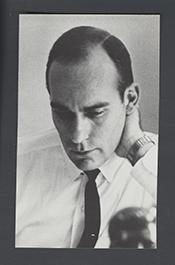
Historical · U.S. House · Indiana · District 10
Andrew Jacobs Jr.
Former U.S. Representative · Indiana District 10 · 1965–1997 · Democratic
Andrew Jacobs Jr. represented Indiana's District 10 in the United States House of Representatives (1965–1997) for the Democratic party. The page below collects sourced biographical facts, term history, committee roles, and provenance for Jr..
Bioguide ID: J000033
Key facts
- Full name
- Andrew Jacobs Jr.
- State
- Indiana
- District
- District 10
- Party
- Democratic
- House service
- 1965–1997
- First House term
- 1965
- Status
- Left office
- Current term ends
- —
- Born
- 1932
- Bioguide ID
- J000033
- Committee assignments
- —
- Dataset version
- 1.20260605
Biographical narrative
1,014 words · sourced from the Wikipedia REST extract
Andrew Jacobs Jr. was an American lawyer and politician who served as a Democratic U.S. Representative for Indiana's 10th congressional district from 1965 until 1997, with a brief interruption in his tenure. A prominent figure in Indiana politics, Jacobs was known for his active participation in the Civil Rights Movement and his vocal opposition to the Vietnam War. His legislative career spanned over three decades, during which he was involved in significant reforms, particularly in Social Security. Following his retirement from Congress, Jacobs continued to engage in public discourse through teaching and writing until his death in 2013.
Early life and career
Andrew Jacobs Jr. was born on February 24, 1932, in Indianapolis, Indiana. He was the son of Joyce Taylor Welborn and Andrew Jacobs, who himself had served as a congressman for one term. Jacobs completed his secondary education at Shortridge High School, graduating in 1949. His early life was marked by a commitment to service, as he enlisted in the United States Marine Corps, where he served as an infantryman during the Korean War. His military service left him a disabled combat veteran, an experience that would shape his perspectives on war and military involvement.
After returning from military service, Jacobs pursued higher education at Indiana University, where he earned a bachelor's degree in Business in 1955, followed by a Bachelor of Laws (LL.B.) in 1958. Upon completing his legal education, he established a law practice and began his political career by serving in the Indiana House of Representatives from 1959 to 1960. This early involvement in state politics laid the groundwork for his future endeavors at the national level.
House tenure
Jacobs's congressional career began in 1965 when he was elected to the United States House of Representatives as a Democrat, during a period characterized by a significant Democratic landslide. He represented Indiana's 10th congressional district, which included parts of Indianapolis. His initial election marked the beginning of a long tenure in Congress, during which he served a total of 15 terms.
During his time in the House, Jacobs was appointed to the House Judiciary Committee, where he played a crucial role in coauthoring the Voting Rights Act of 1965, a landmark piece of legislation aimed at eliminating racial discrimination in voting. His commitment to civil rights was evident throughout his career, as he actively participated in the American Civil Rights Movement during the 1950s and 1960s.
Jacobs was also known for his early opposition to the Vietnam War. He led an all-night debate in the House that critically examined American military involvement in Vietnam, marking one of the first significant discussions on the topic within Congress. His criticisms of the war included coining the term "war wimp," which referred to politicians who advocated for military action while having avoided military service themselves.
In the 1972 Congressional election, Jacobs faced a setback when he was defeated by future Indianapolis Mayor Bill Hudnut. However, he made a comeback in the 1974 Democratic landslide, regaining his seat in Congress. Following this election, Jacobs was appointed to the House Ways and Means Committee, a position he held until his retirement in 1997. He eventually became the Chairman of the Subcommittee on Social Security, where he was instrumental in shaping policies related to the program.
Jacobs's legislative contributions included significant reforms to Social Security in the 1980s, which aimed to enhance the program's sustainability and independence as a government entity. He introduced legislation that mandated the existence of physical bonds representing the funds collected by Social Security, reflecting his commitment to fiscal responsibility and transparency.
In 1985, Jacobs proposed a change to the national anthem, advocating for "America the Beautiful" to replace "The Star-Spangled Banner." This proposal highlighted his willingness to engage in discussions about national identity and cultural representation.
Jacobs retired from Congress on January 3, 1997, leaving behind a legacy characterized by bipartisan cooperation, humor, and a commitment to social justice. He endorsed Julia Carson as his successor, who would go on to serve in the House until her death in 2007. Following Carson's passing, her grandson, André Carson, successfully ran for the same seat.
Legislative focus and committees
Throughout his extensive congressional career, Andrew Jacobs Jr. focused on various legislative issues, with a particular emphasis on civil rights, social security reform, and opposition to military conflicts. His role on the House Judiciary Committee allowed him to contribute to significant civil rights legislation, including the Voting Rights Act of 1965, which aimed to protect the voting rights of all citizens, particularly African Americans in the South.
Jacobs's tenure on the House Ways and Means Committee was marked by his involvement in critical discussions surrounding Social Security. He played a key role in reforms that sought to make the program an independent government organization, ensuring its long-term viability and effectiveness. His legislative efforts included measures that required the establishment of physical bonds to represent the funds collected by Social Security, reflecting his commitment to safeguarding the program for future generations.
In addition to his work on civil rights and social security, Jacobs was an outspoken critic of American military involvement abroad. His opposition to the Vietnam War was a defining aspect of his political identity, and he continued to voice his concerns about U.S. military actions in subsequent conflicts, including those in Iraq and Afghanistan.
After retiring from Congress, Jacobs transitioned to academia, teaching political science at Indiana University – Purdue University Indianapolis. He also authored two memoirs that critiqued American militarism, further contributing to public discourse on military and foreign policy issues. His writings and contributions to local media, such as NUVO Magazine, demonstrated his ongoing engagement with the community and his commitment to discussing important social and political issues.
Andrew Jacobs Jr. passed away on December 28, 2013, at the age of 81, in his home in Indianapolis. He was survived by his third wife, Kim Jacobs, and two sons. His life and career remain a testament to his dedication to public service and his impact on American politics, particularly in the areas of civil rights and social welfare.
Notable legislation
Sponsored and co-sponsored legislation for Andrew Jacobs Jr. is pending operator curation. The biographical narrative above carries the same provenance trail until per-bill rows are written.
Sources
- [1]https://en.wikipedia.org/wiki/Andrew_Jacobs_Jr.Wikipedia · retrieved 2026-06-05
Notable quotes
Sourced quotes for Andrew Jacobs Jr. are pending operator curation. Narrative-scope provenance remains attached below.
Sources
- [1]https://en.wikipedia.org/wiki/Andrew_Jacobs_Jr.Wikipedia · retrieved 2026-06-05
Key positions
Curated policy positions for Andrew Jacobs Jr. are pending operator review. The biographical narrative above carries the same provenance trail until per-topic positions are written.
Sources
- [1]https://en.wikipedia.org/wiki/Andrew_Jacobs_Jr.Wikipedia · retrieved 2026-06-05
Terms served
- 1965–1967U.S. House · Term 1 · Democratic
- 1967–1969U.S. House · Term 2 · Democratic
- 1969–1971U.S. House · Term 3 · Democratic
- 1971–1973U.S. House · Term 4 · Democratic
- 1975–1977U.S. House · Term 5 · Democratic
- 1977–1979U.S. House · Term 6 · Democratic
- 1979–1981U.S. House · Term 7 · Democratic
- 1981–1983U.S. House · Term 8 · Democratic
- 1983–1985U.S. House · Term 9 · Democratic
- 1985–1987U.S. House · Term 10 · Democratic
- 1987–1989U.S. House · Term 11 · Democratic
- 1989–1991U.S. House · Term 12 · Democratic
- 1991–1993U.S. House · Term 13 · Democratic
- 1993–1995U.S. House · Term 14 · Democratic
- 1995–1997U.S. House · Term 15 · Democratic
Sources & provenance
Every attributable claim above carries a per-section [N] marker that resolves to the corresponding URL below. Each entry records the upstream provider, the canonical URL, and the timestamp at which the source was retrieved by the ingest pipeline.
Key facts
- https://bioguide.congress.gov/search/bio/J000033bioguide · retrieved 2026-06-05
- https://www.govtrack.us/congress/members/405939govtrack · retrieved 2026-06-05
Biographical narrative
- https://en.wikipedia.org/wiki/Andrew_Jacobs_Jr.wikipedia · retrieved 2026-06-05
Find your representative
Every U.S. state elects representatives by district. Browse Indiana’s delegation, the full former-representative roster, or explore the role and term length.
Related on The Candidate
- Preceded by Randall HarmonEarlier holder of the Indiana District 10 House seat · Democratic.Open
- Adam Benjamin Jr.Former U.S. Representative · Indiana District 1 · DemocraticOpen
- Alvin HoveyFormer U.S. Representative · Indiana District 1 · RepublicanOpen
- Arthur TaylorFormer U.S. Representative · Indiana District 1 · DemocraticOpen
- Benoni FullerFormer U.S. Representative · Indiana District 1 · DemocraticOpen
- Democratic PartyFederal candidates and office holders on the Democratic line.Open