
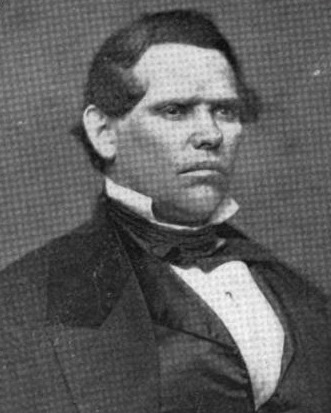
Historical · U.S. House · Indiana · District 11
Andrew Harlan
Former U.S. Representative · Indiana District 11 · 1849–1855 · Democratic
Andrew Harlan represented Indiana's District 11 in the United States House of Representatives (1849–1855) for the Democratic party. The page below collects sourced biographical facts, term history, committee roles, and provenance for Harlan.
Bioguide ID: H000208
Key facts
- Full name
- Andrew Harlan
- State
- Indiana
- District
- District 11
- Party
- Democratic
- House service
- 1849–1855
- First House term
- 1849
- Status
- Left office
- Current term ends
- —
- Born
- 1815
- Bioguide ID
- H000208
- Committee assignments
- —
- Dataset version
- 1.20260606
Biographical narrative
804 words · sourced from the Wikipedia REST extract
Andrew Harlan was a U.S. Representative from Indiana, serving in the House of Representatives during the mid-19th century. A member of the Democratic Party, Harlan's congressional career spanned two terms, during which he was involved in significant legislative activities and held various leadership roles. After his time in Congress, he continued his public service in different capacities, including roles in local government and law practice in various states.
Early life and career
Andrew Harlan was born on March 29, 1815, near Wilmington, Ohio. He received his education in public schools, which laid the foundation for his future endeavors. After completing his schooling, Harlan pursued a legal career, studying law and gaining admission to the bar in 1839. He began his legal practice in Richmond, Indiana, shortly after being admitted.
Harlan's early career included a notable position as a clerk for the Indiana House of Representatives in 1842. His involvement in state politics deepened when he was elected as a member of the Indiana House, serving from 1846 to 1848. This experience provided him with valuable insights into legislative processes and governance, which would later inform his work in the U.S. Congress.
In 1839, Harlan relocated to Marion, Indiana, where he continued to practice law and engage with the local community. His legal background and political involvement positioned him as a prominent figure in Indiana's Democratic Party, setting the stage for his future congressional candidacy.
House tenure
Harlan's tenure in the U.S. House of Representatives began when he was elected as a Democrat to the Thirty-first Congress, serving from March 4, 1849, to March 3, 1851. His election marked the start of a significant period in his political career, during which he participated in various legislative discussions and decisions that shaped the nation during a time of growing sectional tensions.
Following his first term, Harlan was re-elected to the Thirty-third Congress, serving from March 4, 1853, to March 3, 1855. During this term, he held the position of chairman of the Committee on Mileage, where he was responsible for overseeing matters related to congressional travel reimbursements. His leadership in this role demonstrated his capacity for managing legislative responsibilities and contributed to his visibility within the House.
Harlan's political journey took a notable turn in 1854 when he was publicly read out of the Democratic Party during a convention in Marion, Indiana. This action was a consequence of his vote against the repeal of the Missouri Compromise, a pivotal piece of legislation that had significant implications for the expansion of slavery in the United States. Following this event, he declined a nomination from the People's Party for the Thirty-fourth Congress and subsequently aligned himself with the Republican Party, reflecting the shifting political landscape of the era.
Legislative focus and committees
Throughout his time in the House of Representatives, Harlan was involved in various legislative initiatives and discussions that were critical to the political climate of the 1850s. His role as chairman of the Committee on Mileage during the Thirty-third Congress placed him at the intersection of congressional operations and logistics, allowing him to influence how members of Congress managed their travel and expenses.
Harlan's decision to vote against the repeal of the Missouri Compromise indicated his stance on the contentious issue of slavery, which was a defining topic in American politics at the time. His actions led to a significant shift in his political affiliations and highlighted the divisions within the Democratic Party regarding slavery and its expansion into new territories.
After leaving Congress, Harlan's political career continued in the Dakota Territory, where he served as a member of the Territorial House of Representatives in 1861 and held the position of speaker. His tenure in the Dakota Territory was cut short due to conflicts with Indigenous peoples, leading him to relocate to Savannah, Missouri. There, he resumed his legal practice and continued to engage in public service, eventually serving in the Missouri House of Representatives from 1864 to 1868, where he also acted as speaker during his final two years in office.
In his later years, Harlan moved to Wakeeney, Kansas, in 1885, where he continued his legal practice. His public service was recognized when he was appointed by President Harrison as postmaster of Wakeeney, a role he held from 1890 to 1894. After his removal to Savannah, Missouri, in 1894, Harlan lived out the remainder of his life until his death on May 19, 1907. He was interred in Savannah Cemetery, marking the end of a life dedicated to public service and law.
Harlan's career reflects the complexities of American politics in the 19th century, particularly regarding issues of governance, party affiliation, and the contentious debates surrounding slavery. His journey from local politics to the national stage illustrates the interconnectedness of state and federal governance during a transformative period in U.S. history.
Notable legislation
Sponsored and co-sponsored legislation for Andrew Harlan is pending operator curation. The biographical narrative above carries the same provenance trail until per-bill rows are written.
Sources
- [1]https://en.wikipedia.org/wiki/Andrew_J._HarlanWikipedia · retrieved 2026-06-06
Notable quotes
Sourced quotes for Andrew Harlan are pending operator curation. Narrative-scope provenance remains attached below.
Sources
- [1]https://en.wikipedia.org/wiki/Andrew_J._HarlanWikipedia · retrieved 2026-06-06
Key positions
Curated policy positions for Andrew Harlan are pending operator review. The biographical narrative above carries the same provenance trail until per-topic positions are written.
Sources
- [1]https://en.wikipedia.org/wiki/Andrew_J._HarlanWikipedia · retrieved 2026-06-06
Terms served
- 1849–1851U.S. House · Term 1 · Democratic
- 1853–1855U.S. House · Term 2 · Democratic
Sources & provenance
Every attributable claim above carries a per-section [N] marker that resolves to the corresponding URL below. Each entry records the upstream provider, the canonical URL, and the timestamp at which the source was retrieved by the ingest pipeline.
Key facts
- https://bioguide.congress.gov/search/bio/H000208bioguide · retrieved 2026-06-06
- https://www.govtrack.us/congress/members/405087govtrack · retrieved 2026-06-06
Biographical narrative
- https://en.wikipedia.org/wiki/Andrew_J._Harlanwikipedia · retrieved 2026-06-06
Find your representative
Every U.S. state elects representatives by district. Browse Indiana’s delegation, the full former-representative roster, or explore the role and term length.
Related on The Candidate
- Succeeded by John PettitLater holder of the Indiana District 11 House seat · Republican.Open
- Adam Benjamin Jr.Former U.S. Representative · Indiana District 1 · DemocraticOpen
- Alvin HoveyFormer U.S. Representative · Indiana District 1 · RepublicanOpen
- Arthur TaylorFormer U.S. Representative · Indiana District 1 · DemocraticOpen
- Benoni FullerFormer U.S. Representative · Indiana District 1 · DemocraticOpen
- Democratic PartyFederal candidates and office holders on the Democratic line.Open