
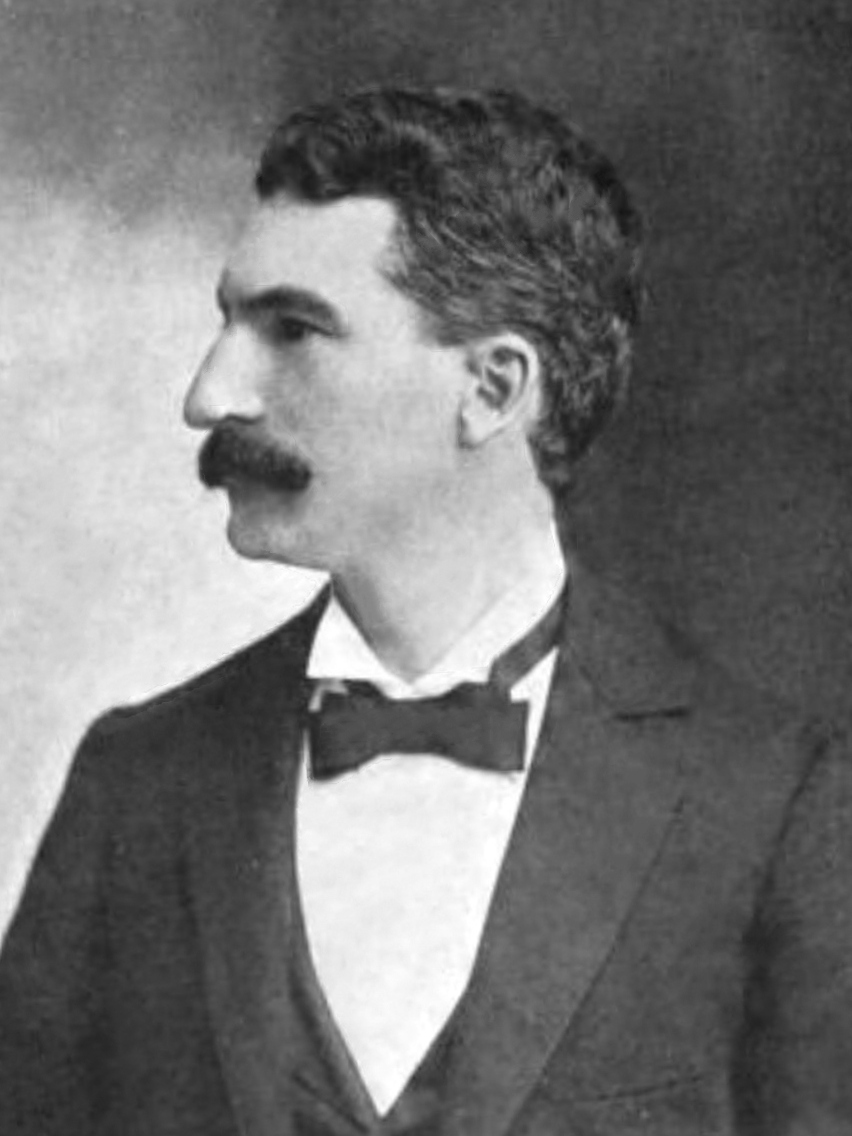
Historical · U.S. House · Indiana · District 12
James Robinson
Former U.S. Representative · Indiana District 12 · 1897–1905 · Democratic
James Robinson represented Indiana's District 12 in the United States House of Representatives (1897–1905) for the Democratic party. The page below collects sourced biographical facts, term history, committee roles, and provenance for Robinson.
Bioguide ID: R000338
Key facts
- Full name
- James Robinson
- State
- Indiana
- District
- District 12
- Party
- Democratic
- House service
- 1897–1905
- First House term
- 1897
- Status
- Left office
- Current term ends
- —
- Born
- 1861
- Bioguide ID
- R000338
- Committee assignments
- —
- Dataset version
- 1.20260606
Biographical narrative
864 words · sourced from the Wikipedia REST extract
James Robinson was an American lawyer and politician who served as a U.S. Representative from Indiana's 12th congressional district. A member of the Democratic Party, Robinson held office from 1897 until 1905, completing four terms in the House of Representatives. His career in public service was marked by his legal background and his commitment to representing his constituents in Congress. Following his tenure in the House, he continued his legal practice before relocating to California, where he lived until his death in 1942.
Early life and career
James Robinson was born on May 31, 1861, on a farm near Fort Wayne, Indiana. Growing up in a rural environment, he received his early education in the public schools of the area, which laid the foundation for his future academic and professional pursuits. His upbringing in Indiana, a state known for its agricultural roots and growing urban centers, likely influenced his understanding of the needs and concerns of both rural and urban constituents.
After completing his education, Robinson chose to study law, a decision that would shape his professional life and political career. He was admitted to the bar in 1882, marking the beginning of his legal practice in Fort Wayne. His legal career began in a period when the United States was experiencing significant social and economic changes, and he was positioned to engage with these transformations through his work.
Robinson's legal acumen quickly led him to a prominent role in the judicial system of Indiana. From 1886 to 1890, he served as the prosecuting attorney for the thirty-eighth judicial circuit of Indiana. This position allowed him to gain valuable experience in the legal field and to establish a reputation as a capable attorney. After completing his term as prosecuting attorney, he resumed private practice, continuing to build his career in law and contributing to his community in Fort Wayne.
House tenure
James Robinson's political career took a significant turn when he was elected to the United States House of Representatives as a member of the Democratic Party. His first term began on March 4, 1897, during the Fifty-fifth Congress. Robinson's election came at a time when the Democratic Party was navigating the complexities of national issues, including economic concerns and social reforms. His alignment with the Democratic Party positioned him to engage with these pressing matters as he represented Indiana's 12th congressional district.
Robinson was re-elected to the House for three additional terms, serving in total for eight years until March 3, 1905. His tenure in Congress coincided with a period of significant legislative activity, including discussions on issues such as labor rights, economic policy, and the expansion of federal authority. While specific details of his legislative contributions are not documented, his role as a member of Congress would have involved participation in debates and votes on a variety of bills and resolutions that shaped the nation during the late 19th and early 20th centuries.
Despite his service and contributions, Robinson faced challenges in his political career. He was an unsuccessful candidate for re-election in 1904, which marked the end of his time in the House of Representatives. The political landscape of the time was competitive, and many factors could have influenced the outcome of the election. After concluding his congressional service, Robinson returned to his legal practice, continuing to serve his community in Fort Wayne.
Legislative focus and committees
During his time in Congress, James Robinson was involved in a range of legislative activities, although specific details about his committee assignments and legislative focus are not provided. As a member of the Democratic Party, he would have been expected to align with the party's platform, which during his tenure included issues such as economic reform, social justice, and labor rights. The late 19th century was a time of significant change in the United States, with industrialization leading to new social dynamics and challenges.
Robinson's legal background would have informed his approach to legislation, as he likely drew upon his understanding of the law and its implications for his constituents. His experience as a prosecuting attorney would have provided him with insights into the legal system and the needs of those he represented. This legal expertise may have influenced his positions on various issues, including those related to justice, civil rights, and economic policy.
After leaving Congress, Robinson continued to practice law in Fort Wayne until 1908. His decision to return to the legal profession suggests a commitment to serving his community and utilizing his skills in a field where he had established a solid reputation. In 1911, he relocated to Los Angeles, California, where he continued his life until his passing on January 16, 1942. His later years in California marked a new chapter in his life, away from the political arena but still engaged in the legal profession.
James Robinson's life and career reflect the journey of a dedicated public servant and legal professional. His contributions to Indiana's political landscape during a transformative period in American history remain a part of the legacy he left behind. After his death, he was interred in Lindenwood Cemetery in Fort Wayne, Indiana, a testament to his roots in the community he served.
Notable legislation
Sponsored and co-sponsored legislation for James Robinson is pending operator curation. The biographical narrative above carries the same provenance trail until per-bill rows are written.
Sources
- [1]https://en.wikipedia.org/wiki/James_M._Robinson_(politician)Wikipedia · retrieved 2026-06-06
Notable quotes
Sourced quotes for James Robinson are pending operator curation. Narrative-scope provenance remains attached below.
Sources
- [1]https://en.wikipedia.org/wiki/James_M._Robinson_(politician)Wikipedia · retrieved 2026-06-06
Key positions
Curated policy positions for James Robinson are pending operator review. The biographical narrative above carries the same provenance trail until per-topic positions are written.
Sources
- [1]https://en.wikipedia.org/wiki/James_M._Robinson_(politician)Wikipedia · retrieved 2026-06-06
Terms served
- 1897–1899U.S. House · Term 1 · Democratic
- 1899–1901U.S. House · Term 2 · Democratic
- 1901–1903U.S. House · Term 3 · Democratic
- 1903–1905U.S. House · Term 4 · Democratic
Sources & provenance
Every attributable claim above carries a per-section [N] marker that resolves to the corresponding URL below. Each entry records the upstream provider, the canonical URL, and the timestamp at which the source was retrieved by the ingest pipeline.
Key facts
- https://bioguide.congress.gov/search/bio/R000338bioguide · retrieved 2026-06-06
- https://www.govtrack.us/congress/members/409309govtrack · retrieved 2026-06-06
Biographical narrative
- https://en.wikipedia.org/wiki/James_M._Robinson_(politician)wikipedia · retrieved 2026-06-06
Find your representative
Every U.S. state elects representatives by district. Browse Indiana’s delegation, the full former-representative roster, or explore the role and term length.
Related on The Candidate
- Preceded by Jacob LeightyEarlier holder of the Indiana District 12 House seat · Republican.Open
- Succeeded by Clarence GilhamsLater holder of the Indiana District 12 House seat · Republican.Open
- Adam Benjamin Jr.Former U.S. Representative · Indiana District 1 · DemocraticOpen
- Alvin HoveyFormer U.S. Representative · Indiana District 1 · RepublicanOpen
- Arthur TaylorFormer U.S. Representative · Indiana District 1 · DemocraticOpen
- Benoni FullerFormer U.S. Representative · Indiana District 1 · DemocraticOpen