
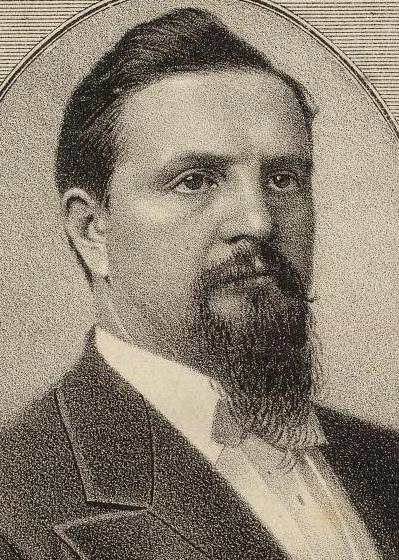
Historical · U.S. House · Indiana · District 12
James White
Former U.S. Representative · Indiana District 12 · 1887–1889 · Republican
James White represented Indiana's District 12 in the United States House of Representatives (1887–1889) for the Republican party. The page below collects sourced biographical facts, term history, committee roles, and provenance for White.
Bioguide ID: W000378
Key facts
- Full name
- James White
- State
- Indiana
- District
- District 12
- Party
- Republican
- House service
- 1887–1889
- First House term
- 1887
- Status
- Left office
- Current term ends
- —
- Born
- 1835
- Bioguide ID
- W000378
- Committee assignments
- —
- Dataset version
- 1.20260606
Biographical narrative
944 words · sourced from the Wikipedia REST extract
James Bain White was a notable figure in American history, serving as a U.S. Representative from Indiana during the late 19th century. Born on June 26, 1835, in Denny, Stirlingshire, Scotland, White immigrated to the United States in 1854, where he became involved in various professions before entering politics. His tenure in the U.S. House of Representatives lasted from 1887 to 1889, representing Indiana's 12th congressional district as a member of the Republican Party. A veteran of the American Civil War, White's life was marked by his commitment to public service, both in military and civic capacities.
Early life and career
James Bain White was born in a small town in Scotland, where he spent his formative years attending local schools. His early education laid the groundwork for his future endeavors, but it was his decision to immigrate to the United States that would significantly alter the course of his life. In 1854, seeking better opportunities, White settled in Fort Wayne, Indiana. There, he initially worked as a calico printer, a profession that involved printing designs on cotton fabric, and later transitioned into tailoring. These early jobs provided him with valuable skills and experience that would serve him well in his later business ventures.
As the nation approached the Civil War, White's sense of duty compelled him to enlist in the Union Army. He became a captain in Company I of the 30th Regiment Indiana Infantry. His military service was marked by significant events, including his participation in the Battle of Shiloh, where he sustained injuries on April 7, 1862. Following this battle, White faced challenges in his recovery and ultimately resigned from military service in December of the same year. His experiences during the war likely shaped his views on governance and public service, influencing his later political career.
After returning to Fort Wayne, White became increasingly involved in local politics and business. In 1874, he was elected to the city's Common Council, a position that allowed him to contribute to the governance of his community. Alongside his political career, he ventured into various business enterprises, including owning a department store and running a wheel manufacturing business. Additionally, White worked in the banking sector, further establishing his presence in the local economy. His diverse professional background provided him with a unique perspective on the needs and concerns of his constituents.
House tenure
James Bain White's political career reached a significant milestone when he was elected to the 50th United States Congress, serving from March 4, 1887, to March 3, 1889. As a Republican representative for Indiana's 12th congressional district, White participated in the legislative process during a period of considerable change in the United States. His election to Congress came during a time when the nation was grappling with the aftermath of the Civil War, economic challenges, and the complexities of industrialization.
During his term in the House of Representatives, White engaged in the legislative activities that defined the era. While specific details of his legislative contributions are not extensively documented, his role as a congressman would have involved addressing a range of issues pertinent to his constituents and the nation as a whole. His tenure in Congress was characterized by the Republican Party's focus on economic growth, infrastructure development, and the promotion of American industry.
Despite his efforts, White was unable to secure re-election for the 51st Congress in 1888. His single term in the House of Representatives marked a significant chapter in his life, but it also reflected the competitive nature of political office during that time. Following his departure from Congress, White continued to be active in political circles, demonstrating his ongoing commitment to public service.
Legislative focus and committees
While specific details regarding the committees on which James Bain White served during his time in Congress are not readily available, it is reasonable to infer that his background in business and local governance would have influenced his legislative focus. Representatives during this period often concentrated on issues related to economic development, infrastructure, and veterans' affairs, especially given White's own experiences as a Civil War veteran.
In addition to his congressional duties, White remained engaged in the Republican Party's activities. He served as a delegate at the 1892 Republican National Convention, contributing to the party's platform and direction during a critical election year. His involvement in the convention underscored his continued influence within the party and his commitment to its principles.
Furthermore, White was appointed as a commissioner for the World's Columbian Exposition held in Chicago in 1893. This event was a significant cultural and economic showcase for the United States, celebrating the 400th anniversary of Christopher Columbus's arrival in the Americas. White's role in this exposition highlighted his dedication to promoting American innovation and culture on a national stage.
James Bain White's life came to an end on October 9, 1897, in Fort Wayne, Indiana. He was interred in Lindenwood Cemetery, where he rests alongside other notable figures from the region. His legacy includes not only his contributions to local and national politics but also his involvement in community initiatives, such as the donation of a drinking fountain to his hometown in Scotland. This fountain, erected in 1892, served as a symbol of the White family's connection to their roots and their commitment to public service.
In summary, James Bain White's life was marked by a blend of military service, business acumen, and political engagement. His tenure in the U.S. House of Representatives, though brief, reflected the complexities of American society during a transformative period. Through his various roles, White demonstrated a commitment to serving his community and contributing to the broader narrative of American history.
Notable legislation
Sponsored and co-sponsored legislation for James White is pending operator curation. The biographical narrative above carries the same provenance trail until per-bill rows are written.
Sources
- [1]https://en.wikipedia.org/wiki/James_Bain_WhiteWikipedia · retrieved 2026-06-06
Notable quotes
Sourced quotes for James White are pending operator curation. Narrative-scope provenance remains attached below.
Sources
- [1]https://en.wikipedia.org/wiki/James_Bain_WhiteWikipedia · retrieved 2026-06-06
Key positions
Curated policy positions for James White are pending operator review. The biographical narrative above carries the same provenance trail until per-topic positions are written.
Sources
- [1]https://en.wikipedia.org/wiki/James_Bain_WhiteWikipedia · retrieved 2026-06-06
Terms served
- 1887–1889U.S. House · Term 1 · Republican
Sources & provenance
Every attributable claim above carries a per-section [N] marker that resolves to the corresponding URL below. Each entry records the upstream provider, the canonical URL, and the timestamp at which the source was retrieved by the ingest pipeline.
Key facts
- https://bioguide.congress.gov/search/bio/W000378bioguide · retrieved 2026-06-06
- https://www.govtrack.us/congress/members/411539govtrack · retrieved 2026-06-06
Biographical narrative
- https://en.wikipedia.org/wiki/James_Bain_Whitewikipedia · retrieved 2026-06-06
Find your representative
Every U.S. state elects representatives by district. Browse Indiana’s delegation, the full former-representative roster, or explore the role and term length.
Related on The Candidate
- Preceded by Robert LowryEarlier holder of the Indiana District 12 House seat · Democratic.Open
- Succeeded by Charles McClellanLater holder of the Indiana District 12 House seat · Democratic.Open
- Adam Benjamin Jr.Former U.S. Representative · Indiana District 1 · DemocraticOpen
- Alvin HoveyFormer U.S. Representative · Indiana District 1 · RepublicanOpen
- Arthur TaylorFormer U.S. Representative · Indiana District 1 · DemocraticOpen
- Benoni FullerFormer U.S. Representative · Indiana District 1 · DemocraticOpen