
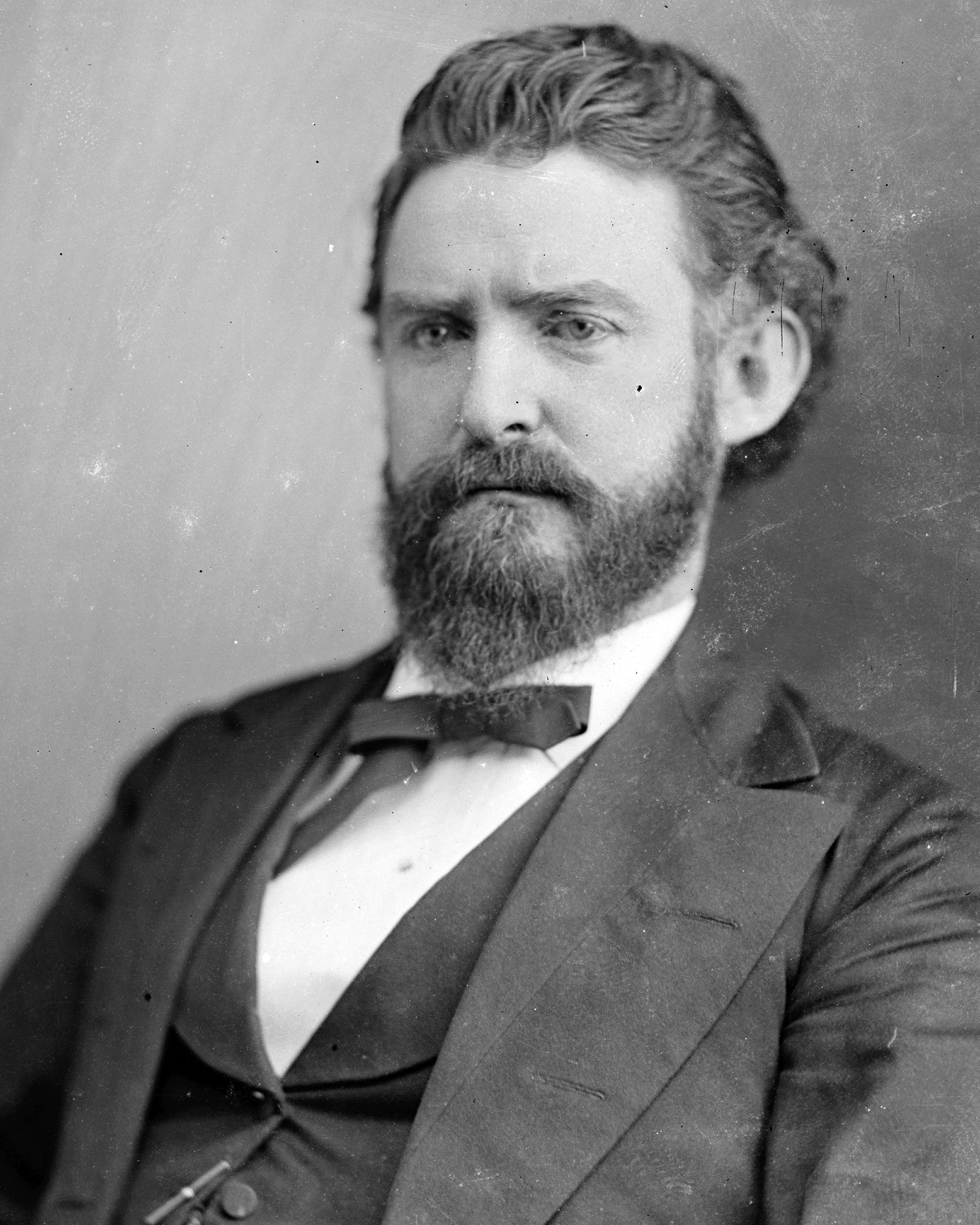
Historical · U.S. House · Indiana · District 12
Walpole Colerick
Former U.S. Representative · Indiana District 12 · 1879–1883 · Democratic
Walpole Colerick represented Indiana's District 12 in the United States House of Representatives (1879–1883) for the Democratic party. The page below collects sourced biographical facts, term history, committee roles, and provenance for Colerick.
Bioguide ID: C000623
Key facts
- Full name
- Walpole Colerick
- State
- Indiana
- District
- District 12
- Party
- Democratic
- House service
- 1879–1883
- First House term
- 1879
- Status
- Left office
- Current term ends
- —
- Born
- 1845
- Bioguide ID
- C000623
- Committee assignments
- —
- Dataset version
- 1.20260606
Biographical narrative
909 words · sourced from the Wikipedia REST extract
Walpole Colerick was an American lawyer and politician who served as a U.S. Representative for Indiana's 12th congressional district from 1879 to 1883. A member of the Democratic Party, Colerick's political career was marked by his two terms in the House of Representatives during a period of significant political and social change in the United States. His legal background and experience in public service contributed to his role in shaping legislation during his time in Congress.
Early life and career
Walpole Colerick was born on August 1, 1845, in Fort Wayne, Indiana. Growing up in a city that was experiencing growth and development during the mid-19th century, Colerick attended public schools, where he received a foundational education that would later support his legal and political ambitions. His early life in Fort Wayne, a city that played a significant role in Indiana's history, likely influenced his understanding of local and regional issues, which would become pertinent in his later political career.
Colerick pursued a career in law, a field that often serves as a stepping stone for many politicians. He studied law and was admitted to the bar in 1872, allowing him to begin practicing law in Fort Wayne. His legal career provided him with valuable experience in understanding the complexities of the legal system and the legislative process. As a practicing attorney, Colerick would have developed skills in advocacy, negotiation, and public speaking, all of which are essential for a successful career in politics.
His legal practice in Fort Wayne not only established his reputation as a competent lawyer but also likely helped him build a network of connections within the community. This network would prove beneficial when he decided to enter the political arena. Colerick's commitment to public service was evident as he transitioned from law into politics, seeking to influence the legislative landscape in Indiana and beyond.
House tenure
Walpole Colerick's political career took a significant turn when he was elected to the United States House of Representatives as a Democrat. He served in the Forty-sixth and Forty-seventh Congresses, with his first term beginning on March 4, 1879, and concluding on March 3, 1883. During this time, Colerick represented Indiana's 12th congressional district, a position that allowed him to advocate for the interests of his constituents at the national level.
His election to Congress came during a period of considerable political activity and change in the United States. The late 19th century was marked by significant economic growth, industrialization, and social upheaval. As a member of the House, Colerick was part of the legislative body that addressed various issues of the day, including economic policy, labor rights, and the role of government in regulating commerce.
Colerick's tenure in the House was characterized by his involvement in the legislative process, where he contributed to discussions and decisions that shaped the direction of national policy. While specific details regarding his legislative initiatives or the bills he supported are not documented, his role as a U.S. Representative would have involved participation in debates, committee work, and collaboration with fellow lawmakers to address the pressing issues of the time.
After completing his two terms in Congress, Colerick's public service did not end. Following his departure from the House in 1883, he was appointed as a Supreme Court commissioner, a role he held until 1885. This position allowed him to continue his involvement in the legal system and contribute to the administration of justice in Indiana. His experience as a commissioner would have further solidified his understanding of the law and its application, enhancing his reputation as a legal expert in the region.
Legislative focus and committees
While specific details about Walpole Colerick's legislative focus and committee assignments during his time in Congress are not provided, it can be inferred that as a member of the Democratic Party during a transformative era in American history, he would have engaged with a range of issues pertinent to his constituents and the nation. The late 19th century was a time of significant change, and legislators were often involved in debates surrounding economic policy, civil rights, and the expansion of government roles in various sectors.
Colerick's background as a lawyer likely influenced his legislative priorities and the issues he championed. Lawyers in Congress often focus on matters related to the legal system, property rights, and civil liberties. Given the era's challenges, including labor disputes and the impact of industrialization on workers, it is plausible that Colerick would have had an interest in legislation that addressed these pressing concerns.
As a member of the House, Colerick would have participated in various committees that aligned with his interests and expertise. Committees play a crucial role in the legislative process, as they are responsible for reviewing proposed legislation, conducting hearings, and making recommendations to the full House. While the specific committees on which Colerick served are not documented, his legal background would have made him a valuable asset in any committee focused on legal, economic, or social issues.
After his congressional service, Colerick returned to his legal practice in Fort Wayne, where he continued to contribute to the community until his death on January 11, 1911. His interment at Lindenwood Cemetery marks the end of a life dedicated to public service and the law. Through his work as a lawyer and politician, Walpole Colerick left a legacy that reflects the complexities and challenges of his time, as well as the ongoing evolution of American governance.
Notable legislation
Sponsored and co-sponsored legislation for Walpole Colerick is pending operator curation. The biographical narrative above carries the same provenance trail until per-bill rows are written.
Sources
- [1]https://en.wikipedia.org/wiki/Walpole_G._ColerickWikipedia · retrieved 2026-06-06
Notable quotes
Sourced quotes for Walpole Colerick are pending operator curation. Narrative-scope provenance remains attached below.
Sources
- [1]https://en.wikipedia.org/wiki/Walpole_G._ColerickWikipedia · retrieved 2026-06-06
Key positions
Curated policy positions for Walpole Colerick are pending operator review. The biographical narrative above carries the same provenance trail until per-topic positions are written.
Sources
- [1]https://en.wikipedia.org/wiki/Walpole_G._ColerickWikipedia · retrieved 2026-06-06
Terms served
- 1879–1881U.S. House · Term 1 · Democratic
- 1881–1883U.S. House · Term 2 · Democratic
Sources & provenance
Every attributable claim above carries a per-section [N] marker that resolves to the corresponding URL below. Each entry records the upstream provider, the canonical URL, and the timestamp at which the source was retrieved by the ingest pipeline.
Key facts
- https://bioguide.congress.gov/search/bio/C000623bioguide · retrieved 2026-06-06
- https://www.govtrack.us/congress/members/402752govtrack · retrieved 2026-06-06
Biographical narrative
- https://en.wikipedia.org/wiki/Walpole_G._Colerickwikipedia · retrieved 2026-06-06
Find your representative
Every U.S. state elects representatives by district. Browse Indiana’s delegation, the full former-representative roster, or explore the role and term length.
Related on The Candidate
- Preceded by Andrew HamiltonEarlier holder of the Indiana District 12 House seat · Democratic.Open
- Succeeded by Robert LowryLater holder of the Indiana District 12 House seat · Democratic.Open
- Adam Benjamin Jr.Former U.S. Representative · Indiana District 1 · DemocraticOpen
- Alvin HoveyFormer U.S. Representative · Indiana District 1 · RepublicanOpen
- Arthur TaylorFormer U.S. Representative · Indiana District 1 · DemocraticOpen
- Benoni FullerFormer U.S. Representative · Indiana District 1 · DemocraticOpen