
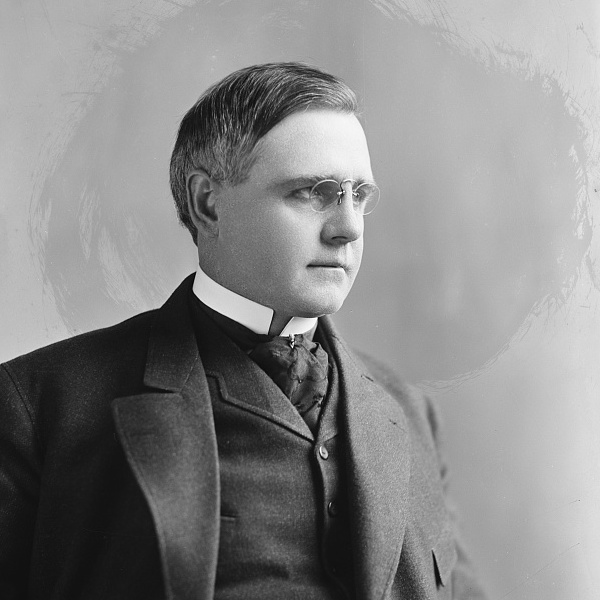
Historical · U.S. House · Indiana · District 13
Abraham Brick
Former U.S. Representative · Indiana District 13 · 1899–1909 · Republican
Abraham Brick represented Indiana's District 13 in the United States House of Representatives (1899–1909) for the Republican party. The page below collects sourced biographical facts, term history, committee roles, and provenance for Brick.
Bioguide ID: B000819
Key facts
- Full name
- Abraham Brick
- State
- Indiana
- District
- District 13
- Party
- Republican
- House service
- 1899–1909
- First House term
- 1899
- Status
- Left office
- Current term ends
- —
- Born
- 1860
- Bioguide ID
- B000819
- Committee assignments
- —
- Dataset version
- 1.20260606
Biographical narrative
975 words · sourced from the Wikipedia REST extract
Abraham Lincoln Brick was an American attorney and politician who served as a U.S. Representative for Indiana's 13th congressional district. A member of the Republican Party, Brick's political career spanned five terms in the United States House of Representatives from 1899 until his death in 1908. His contributions to the legislative process during this period reflected the political landscape of the late 19th and early 20th centuries in the United States.
Early life and career
Abraham Lincoln Brick was born on May 27, 1860, on his father's farm located near South Bend in St. Joseph County, Indiana. His early education took place in the local common schools, where he laid the foundation for his future academic pursuits. Brick graduated from South Bend High School, demonstrating a commitment to education that would serve him well in his later endeavors.
Following his high school education, Brick attended Cornell University and subsequently Yale University, institutions known for their rigorous academic standards. He ultimately graduated from the law department of the University of Michigan at Ann Arbor in 1883, marking the beginning of his professional career in law. After being admitted to the bar in the same year, Brick commenced his legal practice in South Bend, where he quickly established himself in the local legal community.
In addition to his legal career, Brick became involved in public service. He served as the prosecuting attorney for St. Joseph and La Porte counties in 1886, a position that allowed him to gain valuable experience in the legal and political arenas. His involvement in the Republican Party also began to take shape during this time, culminating in his role as a delegate to the Republican National Convention in 1896. This experience not only solidified his political affiliations but also provided him with a platform to influence party policies and direction.
House tenure
Brick's political career took a significant turn when he was elected as a Republican to the Fifty-Sixth Congress, marking the beginning of his tenure in the U.S. House of Representatives on March 4, 1899. Over the course of his five terms, Brick represented Indiana's 13th congressional district, a role that required him to engage with a wide array of issues pertinent to his constituents and the nation as a whole. His election to Congress was a reflection of the political dynamics of the time, as the Republican Party was gaining prominence in national politics.
Throughout his time in office, Brick participated in various legislative activities and discussions that shaped the policies of the era. His tenure coincided with a period of significant change in the United States, including industrialization, urbanization, and social reform movements. As a member of Congress, Brick was involved in the legislative process that addressed these evolving issues, although specific details regarding the bills he supported or opposed are not documented in the available records.
Brick's commitment to his constituents was evident in his continuous service in the House until his death in 1908. His ability to secure re-election multiple times suggests that he maintained a level of support among voters in his district, reflecting his effectiveness as a representative. However, the specifics of his electoral victories, including the margins by which he won, are not detailed in the available information.
Tragically, Brick's life and career were cut short when he passed away on April 7, 1908, in Indianapolis, Indiana. His death marked the end of a significant chapter in his political journey, as he had been an active participant in the legislative process until shortly before his passing. Following his death, Brick was interred in Riverview Cemetery in South Bend, Indiana, where he is remembered for his contributions to the legal and political landscape of his time.
Legislative focus and committees
During his tenure in the U.S. House of Representatives, Abraham Brick was involved in various legislative initiatives and discussions that were significant to the political climate of the late 19th and early 20th centuries. While specific details regarding the committees he served on or the particular legislation he championed are not provided in the available records, it can be inferred that as a member of the Republican Party during this period, he would have engaged with issues related to economic growth, infrastructure development, and social reform.
The late 1800s and early 1900s were characterized by rapid industrialization, which brought about numerous challenges and opportunities for lawmakers. Brick's role as a congressman would have required him to navigate the complexities of these changes, advocating for policies that aligned with the interests of his constituents while also addressing broader national concerns. The Republican Party at the time was focused on promoting business interests and fostering economic development, which likely influenced Brick's legislative priorities.
In addition to economic issues, Brick's legislative focus may have included matters related to public welfare, education, and infrastructure, as these were common areas of concern for legislators during this era. The political landscape was also shaped by social movements advocating for various reforms, including labor rights and women's suffrage, which may have intersected with Brick's work in Congress.
Brick's papers are preserved in the collection of the Indiana State Library, providing a resource for researchers and historians interested in his contributions and the broader context of his legislative work. These documents may offer insights into his political philosophy, the issues he prioritized, and the relationships he cultivated during his time in office.
In summary, Abraham Lincoln Brick's career as a U.S. Representative was marked by his commitment to public service and his active participation in the legislative process. His background in law and his involvement in local politics laid the groundwork for his successful election to Congress, where he served five terms until his untimely death. His legacy continues to be recognized through the preservation of his papers and the impact he made during a transformative period in American history.
Notable legislation
Sponsored and co-sponsored legislation for Abraham Brick is pending operator curation. The biographical narrative above carries the same provenance trail until per-bill rows are written.
Sources
- [1]https://en.wikipedia.org/wiki/Abraham_L._BrickWikipedia · retrieved 2026-06-06
Notable quotes
Sourced quotes for Abraham Brick are pending operator curation. Narrative-scope provenance remains attached below.
Sources
- [1]https://en.wikipedia.org/wiki/Abraham_L._BrickWikipedia · retrieved 2026-06-06
Key positions
Curated policy positions for Abraham Brick are pending operator review. The biographical narrative above carries the same provenance trail until per-topic positions are written.
Sources
- [1]https://en.wikipedia.org/wiki/Abraham_L._BrickWikipedia · retrieved 2026-06-06
Terms served
- 1899–1901U.S. House · Term 1 · Republican
- 1901–1903U.S. House · Term 2 · Republican
- 1903–1905U.S. House · Term 3 · Republican
- 1905–1907U.S. House · Term 4 · Republican
- 1907–1909U.S. House · Term 5 · Republican
Sources & provenance
Every attributable claim above carries a per-section [N] marker that resolves to the corresponding URL below. Each entry records the upstream provider, the canonical URL, and the timestamp at which the source was retrieved by the ingest pipeline.
Key facts
- https://bioguide.congress.gov/search/bio/B000819bioguide · retrieved 2026-06-06
- https://www.govtrack.us/congress/members/401776govtrack · retrieved 2026-06-06
Biographical narrative
- https://en.wikipedia.org/wiki/Abraham_L._Brickwikipedia · retrieved 2026-06-06
Find your representative
Every U.S. state elects representatives by district. Browse Indiana’s delegation, the full former-representative roster, or explore the role and term length.
Related on The Candidate
- Preceded by Lemuel RoyseEarlier holder of the Indiana District 13 House seat · Republican.Open
- Succeeded by Andrew HickeyLater holder of the Indiana District 13 House seat · Republican.Open
- Adam Benjamin Jr.Former U.S. Representative · Indiana District 1 · DemocraticOpen
- Alvin HoveyFormer U.S. Representative · Indiana District 1 · RepublicanOpen
- Arthur TaylorFormer U.S. Representative · Indiana District 1 · DemocraticOpen
- Benoni FullerFormer U.S. Representative · Indiana District 1 · DemocraticOpen