
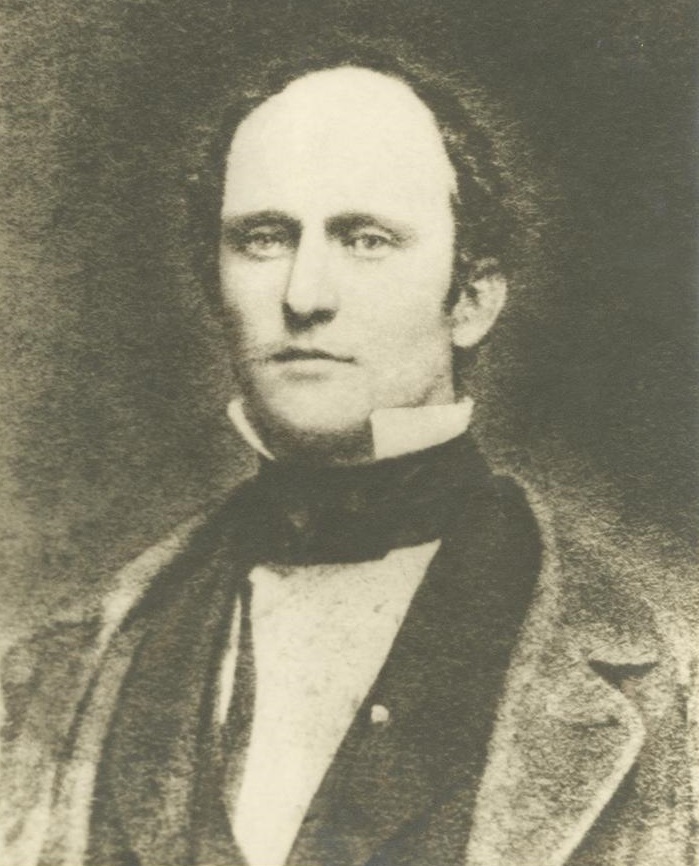
Historical · U.S. House · Indiana · District 3
James Hughes
Former U.S. Representative · Indiana District 3 · 1857–1859 · Democratic
James Hughes represented Indiana's District 3 in the United States House of Representatives (1857–1859) for the Democratic party. The page below collects sourced biographical facts, term history, committee roles, and provenance for Hughes.
Bioguide ID: H000923
Key facts
- Full name
- James Hughes
- State
- Indiana
- District
- District 3
- Party
- Democratic
- House service
- 1857–1859
- First House term
- 1857
- Status
- Left office
- Current term ends
- —
- Born
- 1823
- Bioguide ID
- H000923
- Committee assignments
- —
- Dataset version
- 1.20260606
Biographical narrative
903 words · sourced from the Wikipedia REST extract
James Hughes was a prominent figure in 19th-century American politics, serving as a U.S. Representative from Indiana. A member of the Democratic Party, he represented Indiana's 3rd congressional district during the 35th Congress from 1857 to 1859. Hughes had a multifaceted career that included military service, judicial responsibilities, and legislative roles. His contributions spanned various sectors, including law, education, and politics, reflecting the diverse experiences that characterized his life.
Early life and career
James Hughes was born on November 24, 1823, in Bladensburg, Maryland. His early education took place in common schools, which laid the foundation for his future academic pursuits. Hughes furthered his education at Indiana University Bloomington, where he honed his legal knowledge and skills. He also attended the United States Military Academy, which provided him with a military background that would later influence his career.
In 1842, Hughes read law, a method of legal education that involved studying under practicing attorneys rather than attending formal law school. This approach allowed him to gain practical experience in the legal field. After being admitted to the bar, he began his private practice in Bloomington and Bedford, Indiana, where he worked from 1842 until 1852. During this period, Hughes established himself as a competent lawyer, gaining respect within the local legal community.
Hughes's career was marked by his service as a lieutenant in the United States Army during the Mexican-American War. This military experience not only contributed to his personal development but also enhanced his understanding of national issues, which would later inform his political career. Following his military service, Hughes transitioned into the judiciary, serving as a judge of the Indiana Circuit Court for the Sixth Judicial Circuit from 1852 to 1856. This role allowed him to gain significant experience in legal matters and governance, further preparing him for his future political endeavors.
In addition to his judicial duties, Hughes was appointed as a professor of law at Indiana University Bloomington from 1853 to 1856. This position underscored his commitment to education and his belief in the importance of legal training for future generations. His time as a professor allowed him to influence young minds and contribute to the development of legal education in Indiana.
House tenure
James Hughes's political career took a significant turn when he was elected as a Democrat to the United States House of Representatives, representing Indiana's 3rd congressional district. He served during the 35th Congress, with his term beginning on March 4, 1857, and concluding on March 3, 1859. His election to Congress came at a time of considerable national tension, as the country was grappling with issues related to slavery, states' rights, and sectionalism.
During his time in the House, Hughes participated in the legislative process and contributed to discussions on various issues facing the nation. Although specific details of his legislative activities are not extensively documented, his role as a member of Congress placed him at the center of critical debates that would shape the future of the United States. Hughes's tenure in the House was relatively brief, as he was unsuccessful in his bid for reelection in 1858 to the 36th Congress. This defeat marked the end of his congressional service, but it did not conclude his involvement in public service.
Legislative focus and committees
While specific details regarding Hughes's legislative focus and committee assignments during his time in Congress are not provided, it is important to contextualize his role within the broader political landscape of the time. The 35th Congress was marked by significant challenges, including the escalating tensions surrounding slavery and the impending Civil War. As a member of the Democratic Party, Hughes would have been involved in discussions and decisions that reflected the party's positions on these contentious issues.
Following his congressional service, Hughes continued to engage in public life. In 1860, he was nominated by President James Buchanan to a position on the Court of Claims, which later became known as the United States Court of Claims. His confirmation by the Senate occurred shortly after his nomination, and he received his commission on the same day. Hughes served on the Court of Claims until December 1, 1864, when he resigned from the position.
After leaving the federal bench, Hughes took on the role of a cotton agent for the United States Department of the Treasury from 1865 to 1866. This position involved overseeing the cotton trade, which was a significant economic factor in the post-Civil War South. Hughes's work in this capacity demonstrated his adaptability and willingness to engage with the economic realities of the time.
Hughes's political career continued as he served in the Indiana House of Representatives from 1866 to 1868 and subsequently in the Indiana Senate from 1868 to 1869. These roles allowed him to remain active in state politics and contribute to the governance of Indiana. After his time in the state legislature, Hughes resumed private legal practice in Washington, D.C., where he worked until his death.
James Hughes passed away on October 21, 1873, in Bladensburg, Maryland. His contributions to law, education, and politics left a lasting impact on the communities he served. He was interred in Rose Hill Cemetery in Bloomington, Indiana, marking the end of a life dedicated to public service and the legal profession. Through his varied career, Hughes exemplified the interconnectedness of military, legal, and political spheres in 19th-century America, reflecting the complexities of a nation in transition.
Notable legislation
Sponsored and co-sponsored legislation for James Hughes is pending operator curation. The biographical narrative above carries the same provenance trail until per-bill rows are written.
Sources
- [1]https://en.wikipedia.org/wiki/James_Hughes_(representative)Wikipedia · retrieved 2026-06-06
Notable quotes
Sourced quotes for James Hughes are pending operator curation. Narrative-scope provenance remains attached below.
Sources
- [1]https://en.wikipedia.org/wiki/James_Hughes_(representative)Wikipedia · retrieved 2026-06-06
Key positions
Curated policy positions for James Hughes are pending operator review. The biographical narrative above carries the same provenance trail until per-topic positions are written.
Sources
- [1]https://en.wikipedia.org/wiki/James_Hughes_(representative)Wikipedia · retrieved 2026-06-06
Terms served
- 1857–1859U.S. House · Term 1 · Democratic
Sources & provenance
Every attributable claim above carries a per-section [N] marker that resolves to the corresponding URL below. Each entry records the upstream provider, the canonical URL, and the timestamp at which the source was retrieved by the ingest pipeline.
Key facts
- https://bioguide.congress.gov/search/bio/H000923bioguide · retrieved 2026-06-06
- https://www.govtrack.us/congress/members/405768govtrack · retrieved 2026-06-06
Biographical narrative
- https://en.wikipedia.org/wiki/James_Hughes_(representative)wikipedia · retrieved 2026-06-06
Find your representative
Every U.S. state elects representatives by district. Browse Indiana’s delegation, the full former-representative roster, or explore the role and term length.
Related on The Candidate
- Preceded by George DunnEarlier holder of the Indiana District 3 House seat · Ind. Republican-Democrat.Open
- Succeeded by William DunnLater holder of the Indiana District 3 House seat · Republican.Open
- Adam Benjamin Jr.Former U.S. Representative · Indiana District 1 · DemocraticOpen
- Alvin HoveyFormer U.S. Representative · Indiana District 1 · RepublicanOpen
- Arthur TaylorFormer U.S. Representative · Indiana District 1 · DemocraticOpen
- Benoni FullerFormer U.S. Representative · Indiana District 1 · DemocraticOpen