
Historical · U.S. House · Indiana · District 3
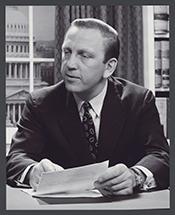
John Brademas
Former U.S. Representative · Indiana District 3 · 1959–1981 · Democratic
John Brademas represented Indiana's District 3 in the United States House of Representatives (1959–1981) for the Democratic party. The page below collects sourced biographical facts, term history, committee roles, and provenance for Brademas.
Bioguide ID: B000736
Key facts
- Full name
- John Brademas
- State
- Indiana
- District
- District 3
- Party
- Democratic
- House service
- 1959–1981
- First House term
- 1959
- Status
- Left office
- Current term ends
- —
- Born
- 1927
- Bioguide ID
- B000736
- Committee assignments
- —
- Dataset version
- 1.20260605
Biographical narrative
942 words · sourced from the Wikipedia REST extract
Stephen John Brademas Jr. was an American politician and educator who served as a U.S. Representative for Indiana's 3rd congressional district from 1959 until 1981. A member of the Democratic Party, he held significant leadership roles during his tenure, including serving as the Majority Whip of the House of Representatives from 1977 to 1981. Brademas was instrumental in shaping federal legislation related to education, the arts, and social services. After leaving Congress, he transitioned into academia, becoming the president of New York University and contributing to various boards and foundations in the fields of education and public policy.
Early life and career
John Brademas was born on March 2, 1927, in Mishawaka, Indiana, as the eldest of four children. His father, Stephen John Brademas, was a Greek immigrant who operated a restaurant, while his mother, Beatrice Goble, was an elementary school teacher. Brademas spent his formative years immersed in a family environment that valued education and culture. He often visited his maternal grandfather, who served as the state superintendent of schools in Canada and had an extensive library, further fostering Brademas's intellectual curiosity.
Brademas excelled academically, graduating as valedictorian from Central High School in South Bend, Indiana. Following high school, he served for two years in the U.S. Navy, where he was stationed in Milwaukee, Wisconsin. After his military service, he pursued higher education at Harvard University. At Harvard, he graduated with an A.B. degree, earning magna cum laude honors and membership in the Phi Beta Kappa honor society. His academic work culminated in a thesis titled "The Sinarquista Movement in Mexico: Its Implications for the United States," which was published in April 1949. Brademas's scholarly achievements led him to win a Rhodes Scholarship, allowing him to study at Brasenose College, Oxford, where he obtained a D.Phil. in Social Studies.
House tenure
Brademas began his congressional career in 1959, representing Indiana's 3rd congressional district. Over the course of his 22 years in office, he became a prominent figure in the House of Representatives, ultimately serving as the Majority Whip during his final term. His legislative contributions were particularly notable in the areas of education and social services. As a member of the Committee on Education and Labor, Brademas played a crucial role in drafting and promoting various federal initiatives aimed at improving educational opportunities and resources across the nation.
Among his significant legislative achievements, Brademas was a cosponsor of the 1965 legislation that established the National Endowment for the Arts (NEA) and the National Endowment for the Humanities (NEH). He chaired the congressional subcommittee responsible for overseeing these organizations for a decade. His leadership extended to several key pieces of legislation, including the Arts, Humanities and Cultural Affairs Act, the Arts and Artifacts Indemnity Act, the Museum Services Act, and the Library Services and Construction Act. Additionally, he was involved in the Education for All Handicapped Children Act, the Alcohol and Drug Abuse Education Act, and the International Education Act.
Brademas also contributed to the Elementary and Secondary Education Act of 1965 and the Higher Education Acts of 1972 and 1976, which focused on student aid and educational access. His efforts were particularly significant in the wake of economic challenges faced by his constituents. For instance, after the closure of the Studebaker Corporation's manufacturing plants in South Bend, which resulted in substantial job losses, Brademas utilized his connections in Washington to facilitate recovery efforts. His advocacy helped attract Kaiser Jeep Corporation to the area, which ultimately provided employment opportunities for many displaced workers.
Despite his long and impactful career, Brademas faced electoral challenges. He was defeated for reelection on November 4, 1980, by Republican candidate John Hiler. This outcome was influenced by the broader national political climate, particularly the presidential election campaign between Ronald Reagan and Jimmy Carter.
Legislative focus and committees
Throughout his congressional tenure, Brademas demonstrated a strong commitment to education, the arts, and social services. His legislative focus was characterized by a belief in the importance of federal support for these sectors, which he viewed as essential for the nation's cultural and intellectual development. His work on the Committee on Education and Labor allowed him to influence a wide range of policies that aimed to enhance educational access and quality for all Americans.
Brademas's role in establishing and promoting the NEA and NEH reflected his dedication to fostering the arts and humanities. His leadership in these areas helped secure funding and support for various cultural initiatives, which have had lasting impacts on American society. His involvement in legislation concerning libraries and museums further underscored his commitment to preserving and promoting knowledge and culture.
In addition to his legislative work, Brademas's participation in various committees and subcommittees allowed him to address pressing issues related to education and social welfare. His advocacy for the rights of the elderly and individuals with disabilities was evident in his support for legislation that aimed to improve services and resources for these populations.
Brademas's contributions to education and the arts extended beyond his time in Congress. After leaving the House, he continued to influence these fields as the president of New York University from 1981 to 1992. His leadership in academia and various boards and foundations further solidified his legacy as a dedicated public servant and advocate for education and cultural enrichment.
In summary, John Brademas's career as a U.S. Representative and educator reflects a deep commitment to improving the lives of his constituents and advancing the fields of education and the arts. His legislative achievements and leadership roles have left a lasting impact on American society, demonstrating the importance of public service and advocacy in fostering a vibrant and educated citizenry.
Notable legislation
Sponsored and co-sponsored legislation for John Brademas is pending operator curation. The biographical narrative above carries the same provenance trail until per-bill rows are written.
Sources
- [1]https://en.wikipedia.org/wiki/John_BrademasWikipedia · retrieved 2026-06-05
Notable quotes
Sourced quotes for John Brademas are pending operator curation. Narrative-scope provenance remains attached below.
Sources
- [1]https://en.wikipedia.org/wiki/John_BrademasWikipedia · retrieved 2026-06-05
Key positions
Curated policy positions for John Brademas are pending operator review. The biographical narrative above carries the same provenance trail until per-topic positions are written.
Sources
- [1]https://en.wikipedia.org/wiki/John_BrademasWikipedia · retrieved 2026-06-05
Terms served
- 1959–1961U.S. House · Term 1 · Democratic
- 1961–1963U.S. House · Term 2 · Democratic
- 1963–1965U.S. House · Term 3 · Democratic
- 1965–1967U.S. House · Term 4 · Democratic
- 1967–1969U.S. House · Term 5 · Democratic
- 1969–1971U.S. House · Term 6 · Democratic
- 1971–1973U.S. House · Term 7 · Democratic
- 1973–1975U.S. House · Term 8 · Democratic
- 1975–1977U.S. House · Term 9 · Democratic
- 1977–1979U.S. House · Term 10 · Democratic
- 1979–1981U.S. House · Term 11 · Democratic
Sources & provenance
Every attributable claim above carries a per-section [N] marker that resolves to the corresponding URL below. Each entry records the upstream provider, the canonical URL, and the timestamp at which the source was retrieved by the ingest pipeline.
Key facts
- https://bioguide.congress.gov/search/bio/B000736bioguide · retrieved 2026-06-05
- https://www.govtrack.us/congress/members/401696govtrack · retrieved 2026-06-05
Biographical narrative
- https://en.wikipedia.org/wiki/John_Brademaswikipedia · retrieved 2026-06-05
Find your representative
Every U.S. state elects representatives by district. Browse Indiana’s delegation, the full former-representative roster, or explore the role and term length.
Related on The Candidate
- Preceded by F. NimtzEarlier holder of the Indiana District 3 House seat · Republican.Open
- Succeeded by John HilerLater holder of the Indiana District 3 House seat · Republican.Open
- Adam Benjamin Jr.Former U.S. Representative · Indiana District 1 · DemocraticOpen
- Alvin HoveyFormer U.S. Representative · Indiana District 1 · RepublicanOpen
- Arthur TaylorFormer U.S. Representative · Indiana District 1 · DemocraticOpen
- Benoni FullerFormer U.S. Representative · Indiana District 1 · DemocraticOpen