
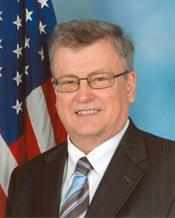
Historical · U.S. House · Indiana · District 3
Mark Souder
Former U.S. Representative · Indiana District 3 · 1995–2010 · Republican
Mark Souder represented Indiana's District 3 in the United States House of Representatives (1995–2010) for the Republican party. The page below collects sourced biographical facts, term history, committee roles, and provenance for Souder.
Bioguide ID: S001143
Key facts
- Full name
- Mark Souder
- State
- Indiana
- District
- District 3
- Party
- Republican
- House service
- 1995–2010
- First House term
- 1995
- Status
- Left office
- Current term ends
- —
- Born
- 1950
- Bioguide ID
- S001143
- Committee assignments
- —
- Dataset version
- 1.20260605
Biographical narrative
986 words · sourced from the Wikipedia REST extract
Mark E. Souder was an American politician and businessman who served as a U.S. Representative for Indiana's 3rd congressional district from 1995 until his resignation in 2010. A member of the Republican Party, Souder was known for his advocacy of family values and abstinence education during his time in Congress. His career in public service was preceded by roles as a congressional aide and staff director, which provided him with significant experience in legislative matters prior to his election to the House.
Early life and career
Mark E. Souder was born on July 18, 1950, in Fort Wayne, Indiana. He was raised in Grabill, Indiana, where he was educated at Leo Junior/Senior High School. Following his secondary education, Souder pursued higher education at Indiana University–Purdue University Fort Wayne, where he earned an undergraduate degree. He later attended the University of Notre Dame's College of Commerce, now known as the Mendoza College of Business, where he received a Master of Business Administration (MBA). During his time in college, he was involved with the Young Americans for Freedom, a conservative youth organization.
After completing his education, Souder entered the business world, initially working as a marketing manager for Gabbort's Furniture from 1974 to 1976. He then became the owner of Souder's General Store, also referred to as Historic Souder's of Grabill. His entrepreneurial experience laid a foundation for his later political career. Souder's involvement in politics began in earnest when he served as an aide to United States Representative Dan Coats from 1983 to 1984. He later took on the role of minority staff director for the House Select Committee on Children, Youth, and Families from 1985 to 1988. After this, he continued to work with Coats, who became a U.S. Senator in 1989, until 1993. This period provided Souder with valuable insights into the legislative process and the workings of Congress.
House tenure
Souder was elected to the United States House of Representatives in November 1994, succeeding Democrat Jill Long in a significant Republican victory during that year's midterm elections. He was re-elected in every subsequent election until his resignation in May 2010. Throughout his tenure, Souder was known for his commitment to conservative principles, which included a pledge to limit his time in office to no more than two additional terms. However, he ultimately served a total of eight terms in the House, making it the only elected office he ever held.
During his time in Congress, Souder held several key positions. He served as the Ranking Member on the House Homeland Security Subcommittee on Border, Maritime, and Global Counterterrorism. Additionally, he was a senior member of both the House Oversight and Government Reform Committee and the House Education and Labor Committee. His involvement in these committees allowed him to influence significant legislative issues, particularly those related to national security, education, and government oversight.
Souder was also active in bipartisan efforts, co-founding and co-chairing the Congressional National Parks Caucus alongside U.S. Representative Brian Baird from Washington. He was similarly involved in drug policy reform, co-founding and co-chairing the Congressional Caucus on Drug Policy. His leadership in these areas reflected his commitment to addressing pressing national issues through collaborative legislative efforts.
In terms of legislative actions, Souder was involved in several notable events during his congressional career. In 1997, he was one of eighteen Republicans to co-sponsor a resolution aimed at initiating an impeachment inquiry against President Bill Clinton. This resolution was an early attempt to address concerns regarding Clinton's conduct, which later escalated into a more serious impeachment effort following the Clinton–Lewinsky scandal. Souder's voting record included support for the impeachment inquiry and one of the articles of impeachment against Clinton.
Souder also played a significant role in drug policy legislation. In March 2006, he was instrumental in the passage of the Combat Methamphetamine Epidemic Act, which represented a comprehensive effort to combat methamphetamine trafficking at various levels. This legislation was signed into law by President George W. Bush and marked a significant achievement in Souder's legislative career. Additionally, he authored the ONDCP Reauthorization Act, which was signed into law in December 2006, reauthorizing the office of the "Drug Czar" for five years.
Legislative focus and committees
Throughout his congressional career, Souder's legislative focus encompassed a range of issues, particularly those related to education, drug policy, and national security. As a member of the House Education and Labor Committee, he participated in discussions and initiatives aimed at improving educational opportunities and outcomes for students across the nation. His work on the committee included involvement in subcommittees focused on early childhood education, elementary and secondary education, as well as higher education and lifelong learning.
Souder's role on the House Oversight and Government Reform Committee allowed him to engage in oversight of government operations and policies, ensuring accountability and transparency in federal programs. He served as the Vice Ranking Member of the Subcommittee on Domestic Policy and was involved in the Subcommittee on Federal Workforce, Post Office, and the District of Columbia, addressing various issues related to federal employment and public services.
In addition to his committee assignments, Souder's co-founding of the National Parks Caucus highlighted his interest in environmental conservation and the promotion of national parks as vital resources. His efforts in this area aimed to foster bipartisan support for the preservation and enhancement of America's natural landscapes.
Souder's career in Congress came to an end in May 2010 when he announced his resignation following the revelation of an affair with a staff member. His decision to resign was accompanied by a public acknowledgment of his actions and the impact they had on his family and constituents. This marked the conclusion of an extensive legislative career characterized by a focus on conservative values and a commitment to various policy issues. Following his departure from Congress, Souder's legacy remains tied to his contributions to drug policy, education, and national security during his time in office.
Notable legislation
Sponsored and co-sponsored legislation for Mark Souder is pending operator curation. The biographical narrative above carries the same provenance trail until per-bill rows are written.
Sources
- [1]https://en.wikipedia.org/wiki/Mark_SouderWikipedia · retrieved 2026-06-05
Notable quotes
Sourced quotes for Mark Souder are pending operator curation. Narrative-scope provenance remains attached below.
Sources
- [1]https://en.wikipedia.org/wiki/Mark_SouderWikipedia · retrieved 2026-06-05
Key positions
Curated policy positions for Mark Souder are pending operator review. The biographical narrative above carries the same provenance trail until per-topic positions are written.
Sources
- [1]https://en.wikipedia.org/wiki/Mark_SouderWikipedia · retrieved 2026-06-05
Terms served
- 1995–1997U.S. House · Term 1 · Republican
- 1997–1999U.S. House · Term 2 · Republican
- 1999–2001U.S. House · Term 3 · Republican
- 2001–2003U.S. House · Term 4 · Republican
- 2003–2005U.S. House · Term 5 · Republican
- 2005–2007U.S. House · Term 6 · Republican
- 2007–2009U.S. House · Term 7 · Republican
- 2009–2010U.S. House · Term 8 · Republican
Sources & provenance
Every attributable claim above carries a per-section [N] marker that resolves to the corresponding URL below. Each entry records the upstream provider, the canonical URL, and the timestamp at which the source was retrieved by the ingest pipeline.
Key facts
- https://bioguide.congress.gov/search/bio/S001143bioguide · retrieved 2026-06-05
- http://souder.house.govhouse.gov · retrieved 2026-06-05
Biographical narrative
- https://en.wikipedia.org/wiki/Mark_Souderwikipedia · retrieved 2026-06-05
Find your representative
Every U.S. state elects representatives by district. Browse Indiana’s delegation, the full former-representative roster, or explore the role and term length.
Related on The Candidate
- Preceded by John HilerEarlier holder of the Indiana District 3 House seat · Republican.Open
- Adam Benjamin Jr.Former U.S. Representative · Indiana District 1 · DemocraticOpen
- Alvin HoveyFormer U.S. Representative · Indiana District 1 · RepublicanOpen
- Arthur TaylorFormer U.S. Representative · Indiana District 1 · DemocraticOpen
- Benoni FullerFormer U.S. Representative · Indiana District 1 · DemocraticOpen
- Republican PartyFederal candidates and office holders on the Republican line.Open