
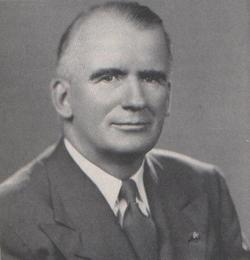
Historical · U.S. House · Indiana · District 3
Samuel Pettengill
Former U.S. Representative · Indiana District 3 · 1931–1939 · Democratic
Samuel Pettengill represented Indiana's District 3 in the United States House of Representatives (1931–1939) for the Democratic party. The page below collects sourced biographical facts, term history, committee roles, and provenance for Pettengill.
Bioguide ID: P000268
Key facts
- Full name
- Samuel Pettengill
- State
- Indiana
- District
- District 3
- Party
- Democratic
- House service
- 1931–1939
- First House term
- 1931
- Status
- Left office
- Current term ends
- —
- Born
- 1886
- Bioguide ID
- P000268
- Committee assignments
- —
- Dataset version
- 1.20260605
Biographical narrative
922 words · sourced from the Wikipedia REST extract
Samuel Pettengill was a U.S. Representative from Indiana, serving in the House of Representatives for four terms from 1931 until 1939. A member of the Democratic Party, he represented Indiana's 3rd congressional district after being redistricted from the 13th district following the 1930 Census. Pettengill was known for his involvement in various legislative initiatives and his contributions to significant economic and regulatory policies during his time in Congress.
Early life and career
Samuel Barrett Pettengill was born on January 19, 1886, in Portland, Oregon. He was the second son of Samuel Barrett and Susan Clagett Pettengill. Following the death of his mother in 1890, the family relocated to Vermont in 1892, where they lived on a farm that had been established by his great-grandfather in 1787 in Grafton, Windham County. Pettengill received his early education in common schools and graduated from Vermont Academy in Saxtons River in 1904. He furthered his education at Middlebury College, where he graduated in 1908, and then attended Yale University, earning a law degree in 1911. He was admitted to the bar in 1912 and began practicing law in South Bend, Indiana.
Pettengill was a member of both the Indiana Supreme Court Bar and the United States Supreme Court Bar. His academic achievements were recognized through honorary degrees from several institutions, including Harding College, Franklin College, Marietta College, Middlebury College, and Norwich University. His commitment to education was also evident in his service on the board of education in South Bend from 1926 to 1928.
In his personal life, Pettengill married Josephine Campbell from Napoleon, Ohio, on June 1, 1912. The couple had one daughter, Susan, who later married Thomas B. Douglas and resided in Washington, D.C. After Josephine's passing in 1948, Pettengill married Helen M. Charles from New York City on July 16, 1949. Throughout his life, he was affiliated with the Congregational Church and remained a lifelong member of the Grafton Church in Vermont.
House tenure
Pettengill's political career began when he was elected as a Democrat to the U.S. House of Representatives, serving from March 4, 1931, to January 3, 1939. Initially, he represented Indiana's 13th congressional district, which was dissolved after the 1930 Census. Following this change, he was redistricted into Indiana's 3rd congressional district, where he continued his legislative work.
During his tenure in Congress, Pettengill served on several important committees, including the Committee on Military Affairs and the Committee on Interstate and Foreign Commerce. His involvement in these committees allowed him to contribute to the development of significant legislation affecting various sectors, including transportation, commerce, and public utilities. Notably, he played a role in the enactment of the Connolly Hot Oil Act and was involved in the formulation of the Interstate Oil Compact.
Pettengill's legislative contributions extended to several key pieces of legislation, such as the Securities Act, the Motor Carriers Act, the Stock Exchange Act, and the National Gas Act. His work also encompassed matters related to railroads, commodity exchanges, and aviation, as well as issues concerning the Panama Canal. He became particularly well-known for his opposition to the Supreme Court Packing Bill and the Reorganization Bill during President Franklin D. Roosevelt's administration.
Despite his active role in Congress, Pettengill chose not to seek renomination for the 76th Congress in 1938. After concluding his time in the House, he returned to his law practice.
Legislative focus and committees
Throughout his congressional career, Pettengill was recognized for his focus on economic and regulatory issues. His work on the Committee on Interstate and Foreign Commerce was particularly influential, as he helped shape legislation that addressed the complexities of the American economy during a time of significant change. His involvement in the formulation of the Securities Act and the Stock Exchange Act reflected his commitment to establishing a regulatory framework for financial markets, which was crucial during the economic challenges of the era.
Pettengill's advocacy for state rather than federal regulation of the petroleum industry was articulated in his first book, "Hot Oil," published in 1936. In this work, he presented arguments concerning the control and nationalization of the petroleum sector, emphasizing the importance of industrial freedom while advocating for the conservation of national resources. His second book, "Jefferson, The Forgotten Man," published in 1939, critiqued the departure from Thomas Jefferson's principles in contemporary governance.
In addition to his writing, Pettengill was an active commentator on public affairs, serving as a newspaper columnist from 1939 to 1948. His critical stance on various New Deal policies positioned him as a notable figure in political discourse during the 1940s. He was also involved in the "No Third Term" campaign against President Roosevelt's potential re-election in 1940 and held the position of Chairman of the Republican National Finance Committee in 1942.
After leaving Congress, Pettengill continued his legal career, working as an attorney for the Pure Oil Company from 1949 to 1956. He also served as vice president and general counsel of the Transportation Association of America from 1943 to 1945. His retirement from public life in 1956 marked a transition to a focus on writing and teaching American history at various colleges in Vermont.
Pettengill's legacy includes his contributions to the legislative process and his commitment to the principles of constitutional government and free enterprise. He remained active in historical societies and continued to write until his death on March 20, 1974, in Springfield, Vermont. He was interred in Grafton Village Cemetery in Grafton, Vermont. His autobiography, "My Story," was published posthumously in 1979, providing further insight into his life and career.
Notable legislation
Sponsored and co-sponsored legislation for Samuel Pettengill is pending operator curation. The biographical narrative above carries the same provenance trail until per-bill rows are written.
Sources
- [1]https://en.wikipedia.org/wiki/Samuel_B._PettengillWikipedia · retrieved 2026-06-05
Notable quotes
Sourced quotes for Samuel Pettengill are pending operator curation. Narrative-scope provenance remains attached below.
Sources
- [1]https://en.wikipedia.org/wiki/Samuel_B._PettengillWikipedia · retrieved 2026-06-05
Key positions
Curated policy positions for Samuel Pettengill are pending operator review. The biographical narrative above carries the same provenance trail until per-topic positions are written.
Sources
- [1]https://en.wikipedia.org/wiki/Samuel_B._PettengillWikipedia · retrieved 2026-06-05
Terms served
- 1931–1933U.S. House · Term 1 · Democratic
- 1933–1935U.S. House · Term 2 · Democratic
- 1935–1937U.S. House · Term 3 · Democratic
- 1937–1939U.S. House · Term 4 · Democratic
Sources & provenance
Every attributable claim above carries a per-section [N] marker that resolves to the corresponding URL below. Each entry records the upstream provider, the canonical URL, and the timestamp at which the source was retrieved by the ingest pipeline.
Key facts
- https://bioguide.congress.gov/search/bio/P000268bioguide · retrieved 2026-06-05
- https://www.govtrack.us/congress/members/408668govtrack · retrieved 2026-06-05
Biographical narrative
- https://en.wikipedia.org/wiki/Samuel_B._Pettengillwikipedia · retrieved 2026-06-05
Find your representative
Every U.S. state elects representatives by district. Browse Indiana’s delegation, the full former-representative roster, or explore the role and term length.
Related on The Candidate
- Preceded by James DunbarEarlier holder of the Indiana District 3 House seat · Republican.Open
- Succeeded by Robert GrantLater holder of the Indiana District 3 House seat · Republican.Open
- Adam Benjamin Jr.Former U.S. Representative · Indiana District 1 · DemocraticOpen
- Alvin HoveyFormer U.S. Representative · Indiana District 1 · RepublicanOpen
- Arthur TaylorFormer U.S. Representative · Indiana District 1 · DemocraticOpen
- Benoni FullerFormer U.S. Representative · Indiana District 1 · DemocraticOpen