
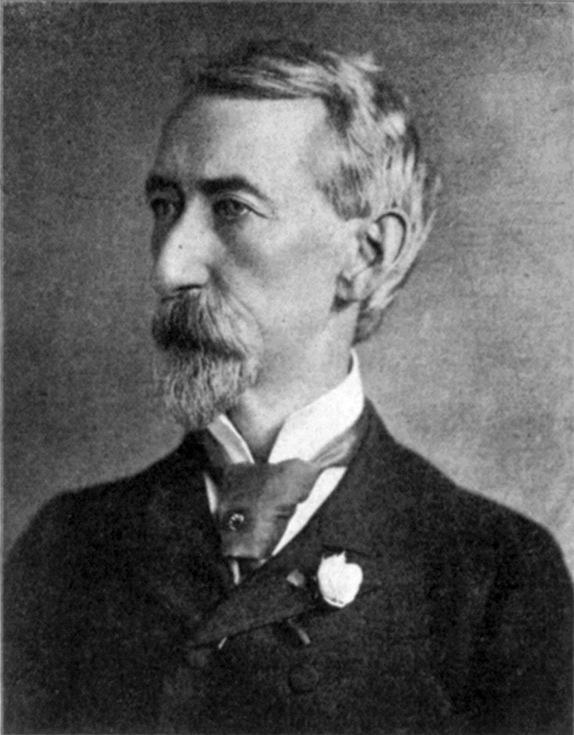
Historical · U.S. House · Indiana · District 4
Jeremiah Wilson
Former U.S. Representative · Indiana District 4 · 1871–1875 · Republican
Jeremiah Wilson represented Indiana's District 4 in the United States House of Representatives (1871–1875) for the Republican party. The page below collects sourced biographical facts, term history, committee roles, and provenance for Wilson.
Bioguide ID: W000596
Key facts
- Full name
- Jeremiah Wilson
- State
- Indiana
- District
- District 4
- Party
- Republican
- House service
- 1871–1875
- First House term
- 1871
- Status
- Left office
- Current term ends
- —
- Born
- 1828
- Bioguide ID
- W000596
- Committee assignments
- —
- Dataset version
- 1.20260606
Biographical narrative
912 words · sourced from the Wikipedia REST extract
Jeremiah Wilson was a notable American educator, lawyer, jurist, and politician who served as a U.S. Representative from Indiana during the early 1870s. A member of the Republican Party, he held office in the Forty-second and Forty-third Congresses from 1871 until 1875. Wilson's career spanned various fields, including law, education, and public service, reflecting a commitment to both his constituents and the legal profession. His tenure in Congress was marked by significant investigative work, particularly concerning the governance of the District of Columbia. After leaving Congress, he continued his legal practice in Washington, D.C., where he gained recognition for his involvement in high-profile cases and served in various leadership roles within the legal community.
Early life and career
Jeremiah Wilson was born on November 25, 1828, near Lebanon, Ohio. His early education included preparatory studies that laid the groundwork for his future pursuits in law and public service. Following his educational endeavors, Wilson studied law and was subsequently admitted to the bar, allowing him to begin his legal career. He initially practiced law in Ohio before relocating to Indiana, where he settled in Connersville. In Indiana, Wilson continued to build his legal practice, establishing himself as a respected attorney in the region.
Wilson's legal career was complemented by his involvement in the judiciary. He served as a judge of the court of common pleas for Fayette County, Indiana, from 1860 to 1865. This role provided him with valuable experience in the legal system and furthered his reputation as a knowledgeable and capable jurist. In October 1865, he was elected as a judge of the circuit court, a position he held until his election to Congress in 1871. His judicial experience contributed to his understanding of legal matters and governance, which would later inform his work as a legislator.
House tenure
Jeremiah Wilson was elected to the U.S. House of Representatives as a Republican, serving in the Forty-second and Forty-third Congresses from March 4, 1871, to March 3, 1875. His election to Congress marked a significant transition from his judicial career to a role in national politics. During his time in the House, Wilson was actively involved in various legislative matters and was appointed as the chairman of a special committee tasked with investigating the District of Columbia's board of public works. This investigation, which took place in 1874, lasted four months and was notable for its thoroughness and the intensity of its proceedings.
As chairman, Wilson often assumed a role that resembled that of a prosecutor, indicating his commitment to uncovering the truth behind the operations of the board. The investigation's findings ultimately led to a significant change in the governance of the District of Columbia, transitioning its administration from a territorial model to one overseen by three appointed commissioners. This shift was indicative of Wilson's influence and the importance of his work during this period, as it aimed to improve the efficiency and accountability of the District's government.
At the conclusion of his second term in Congress, Wilson chose not to seek renomination. Instead, he decided to return to private practice, relocating to Washington, D.C. This decision marked the end of his congressional career but opened a new chapter in his professional life.
Legislative focus and committees
During his tenure in the House of Representatives, Jeremiah Wilson's legislative focus was shaped by his background in law and his commitment to governance. His role as chairman of the special committee investigating the District of Columbia's board of public works underscored his interest in issues related to public administration and accountability. The investigation not only highlighted problems within the board but also reflected broader concerns about the governance of urban areas during a time of significant growth and change in the United States.
After leaving Congress, Wilson returned to the legal profession, where he established a practice in Washington, D.C., alongside his former law partner Samuel Shallabarger. Their partnership lasted until Shallabarger’s death in 1896. Wilson's legal career continued to flourish, and he gained a reputation as a skilled criminal lawyer. He became involved in several notable cases, including serving as counsel for Henry W. Howgate during a high-profile trial in 1894. Additionally, Wilson successfully prosecuted Congressman W. C. P. Breckinridge for breach of promise, a case that garnered considerable public attention.
In addition to his legal practice, Wilson was also engaged in academia. He taught at the Law School of Georgetown University and eventually served as the school's dean, contributing to the education of future lawyers and shaping the legal landscape of the time. His involvement in education reflected his belief in the importance of legal knowledge and the role of law in society.
Throughout his career, Wilson held various leadership positions in the legal community. At the time of his death, he was serving as president of the Chesapeake and Potomac Telephone Company and was a director in the National Fidelity and Deposit Company, among other corporate roles. His active participation in these organizations demonstrated his continued influence and engagement in both the legal and business sectors.
Jeremiah Wilson passed away on September 24, 1901, and was interred next to his wife, Mary H. S. Wilson, in Rock Creek Cemetery. At the time of his death, he was survived by his son, Charles S. Wilson, and his daughter, Anna Wilson Haywood. Wilson's legacy is marked by his contributions to law, education, and public service, reflecting a career dedicated to the advancement of both his profession and his community.
Notable legislation
Sponsored and co-sponsored legislation for Jeremiah Wilson is pending operator curation. The biographical narrative above carries the same provenance trail until per-bill rows are written.
Sources
- [1]https://en.wikipedia.org/wiki/Jeremiah_M._WilsonWikipedia · retrieved 2026-06-06
Notable quotes
Sourced quotes for Jeremiah Wilson are pending operator curation. Narrative-scope provenance remains attached below.
Sources
- [1]https://en.wikipedia.org/wiki/Jeremiah_M._WilsonWikipedia · retrieved 2026-06-06
Key positions
Curated policy positions for Jeremiah Wilson are pending operator review. The biographical narrative above carries the same provenance trail until per-topic positions are written.
Sources
- [1]https://en.wikipedia.org/wiki/Jeremiah_M._WilsonWikipedia · retrieved 2026-06-06
Terms served
- 1871–1873U.S. House · Term 1 · Republican
- 1873–1875U.S. House · Term 2 · Republican
Sources & provenance
Every attributable claim above carries a per-section [N] marker that resolves to the corresponding URL below. Each entry records the upstream provider, the canonical URL, and the timestamp at which the source was retrieved by the ingest pipeline.
Key facts
- https://bioguide.congress.gov/search/bio/W000596bioguide · retrieved 2026-06-06
- https://www.govtrack.us/congress/members/411751govtrack · retrieved 2026-06-06
Biographical narrative
- https://en.wikipedia.org/wiki/Jeremiah_M._Wilsonwikipedia · retrieved 2026-06-06
Find your representative
Every U.S. state elects representatives by district. Browse Indiana’s delegation, the full former-representative roster, or explore the role and term length.
Related on The Candidate
- Preceded by George JulianEarlier holder of the Indiana District 4 House seat · Republican.Open
- Succeeded by Jeptha NewLater holder of the Indiana District 4 House seat · Democratic.Open
- Adam Benjamin Jr.Former U.S. Representative · Indiana District 1 · DemocraticOpen
- Alvin HoveyFormer U.S. Representative · Indiana District 1 · RepublicanOpen
- Arthur TaylorFormer U.S. Representative · Indiana District 1 · DemocraticOpen
- Benoni FullerFormer U.S. Representative · Indiana District 1 · DemocraticOpen