
Historical · U.S. House · Indiana · District 4
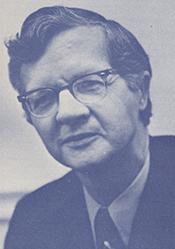
John Roush
Former U.S. Representative · Indiana District 4 · 1959–1977 · Democratic
John Roush represented Indiana's District 4 in the United States House of Representatives (1959–1977) for the Democratic party. The page below collects sourced biographical facts, term history, committee roles, and provenance for Roush.
Bioguide ID: R000467
Key facts
- Full name
- John Roush
- State
- Indiana
- District
- District 4
- Party
- Democratic
- House service
- 1959–1977
- First House term
- 1959
- Status
- Left office
- Current term ends
- —
- Born
- 1920
- Bioguide ID
- R000467
- Committee assignments
- —
- Dataset version
- 1.20260605
Biographical narrative
807 words · sourced from the Wikipedia REST extract
J. Edward Roush was an American lawyer and politician who served as a U.S. Representative for Indiana's 4th congressional district. A member of the Democratic Party, Roush's congressional career spanned eight terms from 1959 to 1969 and again from 1971 to 1977. His tenure in the House of Representatives was marked by significant political contests and a commitment to public service, both in the military and in local government.
Early life and career
J. Edward Roush was born on September 12, 1920, in Barnsdall, Oklahoma. He completed his secondary education at Huntington High School in Huntington, Indiana, graduating in 1938. Roush pursued higher education at Huntington College, where he earned an A.B. degree in 1942. Following his undergraduate studies, he attended the Indiana University School of Law in Bloomington, Indiana, and obtained his LL.B. degree in 1949.
Roush's early career was significantly influenced by his military service. He served in the United States Army during World War II from 1942 to 1946. His commitment to military service continued after the war, as he served again from 1950 to 1952, ultimately achieving the rank of major in the Army Reserves. This experience not only shaped his character but also instilled a sense of duty that would later inform his political career.
After completing his law degree, Roush entered private legal practice and began to engage in public service. He was elected to the Indiana state legislature, serving from 1949 to 1950. Following this role, he was elected as the prosecuting attorney for Huntington County, a position he held from 1954 to 1958. His involvement in local governance extended to serving on the Board of Trustees of Huntington College, where he was a member from 1958 to 1960 and again from 1981 to 1987.
House tenure
Roush's congressional career began when he was elected as a Democrat to the Eighty-sixth Congress, taking office on January 3, 1959. He was re-elected to four consecutive terms, serving until January 3, 1969. His tenure was characterized by a notable electoral contest during the 1960 election for the Eighty-seventh Congress. Initially, Roush's opponent, George O. Chambers, was declared the winner by a narrow margin of 12 votes. However, Roush contested the election results, leading to a unique situation where neither candidate was seated while the matter was resolved. Ultimately, a House committee conducted a recount and declared Roush the victor by a margin of 99 votes, allowing him to be sworn in on June 14, 1961.
During his time in Congress, Roush faced significant changes due to redistricting. The Indiana legislature reconfigured the congressional districts, resulting in the elimination of Roush's district and placing his residence in the 4th Congressional District, which was represented by Republican E. Ross Adair. In the 1968 election, Roush was defeated by Adair, marking the end of his first stint in Congress.
Roush returned to the political arena in 1970 when he sought a rematch against Adair and narrowly won the election. He served three additional terms in the House from January 3, 1971, to January 3, 1977. During this period, he successfully defeated State Senator Allan Bloom in 1972 and State Senator Walter P. Helmke in 1974. However, Roush's political career faced another challenge when he ran for re-election in 1976 and was defeated by Dan Quayle, who would later become a U.S. Senator and Vice President.
Legislative focus and committees
Throughout his time in Congress, Roush was involved in various legislative efforts and served on multiple committees, reflecting his commitment to addressing the needs of his constituents and the broader public. His legislative focus included issues pertinent to his district and the nation, although specific details regarding the bills he sponsored or supported are not provided in the available records.
Roush's contributions to public service extended beyond his congressional duties. After leaving Congress, he took on a role as the director of regional and intergovernmental operations for the United States Environmental Protection Agency from 1977 to 1979. This position allowed him to continue his work in public service and contribute to environmental policy at a national level.
In 1989, Roush served as the interim president of Huntington College, further demonstrating his dedication to education and community service. His legacy includes significant contributions to the establishment of the 911 emergency telephone system, which has become a crucial component of public safety in the United States.
J. Edward Roush passed away on March 26, 2004, in Huntington, Indiana. He was interred in Pilgrim's Rest Cemetery in his hometown. In recognition of his contributions, the Huntington Reservoir was renamed J. Edward Roush Lake following congressional action, commemorating his impact on the community and his service to the state of Indiana. Roush's life and career reflect a commitment to public service, both in military and political arenas, and his legacy continues to influence the region he served.
Notable legislation
Sponsored and co-sponsored legislation for John Roush is pending operator curation. The biographical narrative above carries the same provenance trail until per-bill rows are written.
Sources
- [1]https://en.wikipedia.org/wiki/J._Edward_RoushWikipedia · retrieved 2026-06-05
Notable quotes
Sourced quotes for John Roush are pending operator curation. Narrative-scope provenance remains attached below.
Sources
- [1]https://en.wikipedia.org/wiki/J._Edward_RoushWikipedia · retrieved 2026-06-05
Key positions
Curated policy positions for John Roush are pending operator review. The biographical narrative above carries the same provenance trail until per-topic positions are written.
Sources
- [1]https://en.wikipedia.org/wiki/J._Edward_RoushWikipedia · retrieved 2026-06-05
Terms served
- 1959–1961U.S. House · Term 1 · Democratic
- 1961–1963U.S. House · Term 2 · Democratic
- 1963–1965U.S. House · Term 3 · Democratic
- 1965–1967U.S. House · Term 4 · Democratic
- 1967–1969U.S. House · Term 5 · Democratic
- 1971–1973U.S. House · Term 6 · Democratic
- 1973–1975U.S. House · Term 7 · Democratic
- 1975–1977U.S. House · Term 8 · Democratic
Sources & provenance
Every attributable claim above carries a per-section [N] marker that resolves to the corresponding URL below. Each entry records the upstream provider, the canonical URL, and the timestamp at which the source was retrieved by the ingest pipeline.
Key facts
- https://bioguide.congress.gov/search/bio/R000467bioguide · retrieved 2026-06-05
- https://www.govtrack.us/congress/members/409428govtrack · retrieved 2026-06-05
Biographical narrative
- https://en.wikipedia.org/wiki/J._Edward_Roushwikipedia · retrieved 2026-06-05
Find your representative
Every U.S. state elects representatives by district. Browse Indiana’s delegation, the full former-representative roster, or explore the role and term length.
Related on The Candidate
- Preceded by Edward KruseEarlier holder of the Indiana District 4 House seat · Democratic.Open
- Succeeded by Jill Long ThompsonLater holder of the Indiana District 4 House seat · Democratic.Open
- Adam Benjamin Jr.Former U.S. Representative · Indiana District 1 · DemocraticOpen
- Alvin HoveyFormer U.S. Representative · Indiana District 1 · RepublicanOpen
- Arthur TaylorFormer U.S. Representative · Indiana District 1 · DemocraticOpen
- Benoni FullerFormer U.S. Representative · Indiana District 1 · DemocraticOpen