
Historical · U.S. House · Indiana · District 4
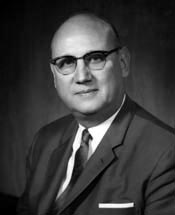
Ross Adair
Former U.S. Representative · Indiana District 4 · 1951–1971 · Republican
Ross Adair represented Indiana's District 4 in the United States House of Representatives (1951–1971) for the Republican party. The page below collects sourced biographical facts, term history, committee roles, and provenance for Adair.
Bioguide ID: A000024
Key facts
- Full name
- Ross Adair
- State
- Indiana
- District
- District 4
- Party
- Republican
- House service
- 1951–1971
- First House term
- 1951
- Status
- Left office
- Current term ends
- —
- Born
- 1907
- Bioguide ID
- A000024
- Committee assignments
- —
- Dataset version
- 1.20260605
Biographical narrative
968 words · sourced from the Wikipedia REST extract
Edwin Ross Adair was an American lawyer and politician who served as a U.S. Representative for Indiana's 4th congressional district from 1951 until 1971. A member of the Republican Party, Adair had a notable career in public service, which included a decade-long tenure in the House of Representatives and later an appointment as the United States Ambassador to Ethiopia. His legislative career was marked by his involvement in significant civil rights legislation during a transformative period in American history.
Early life and career
Ross Adair was born on December 14, 1907, in Albion, Indiana. He spent his formative years in this small town, where he attended local grade and high schools. Following his secondary education, Adair pursued higher education at Hillsdale College in Michigan, where he earned his Bachelor of Arts degree in 1928. He then continued his academic journey at George Washington University Law School in Washington, D.C., obtaining his Bachelor of Laws degree in 1933. This legal education laid the foundation for his future career in law and politics.
After being admitted to the Indiana bar in 1933, Adair began practicing law in Fort Wayne, Indiana. His legal career was complemented by his public service; he served as the probate commissioner of Allen County, Indiana, from 1940 until 1950. This role involved overseeing the administration of estates and guardianships, which provided him with valuable experience in legal and governmental processes.
Adair's public service was interrupted by World War II, during which he was called to active duty as a second lieutenant in the Quartermaster Corps Reserve in September 1941. His military service extended until October 1945, during which he participated in several key campaigns, earning battle stars for his contributions in the Normandy, Northern France, Ardennes, Rhine, and Central European campaigns. This experience not only shaped his character but also deepened his understanding of national and international issues, which would later inform his work as a legislator.
House tenure
In 1950, Ross Adair entered the political arena by running for a seat in the U.S. House of Representatives. He was elected as a Republican to represent Indiana's 4th congressional district, beginning his first term on January 3, 1951. Over the course of his political career, Adair was re-elected to nine consecutive terms, serving a total of ten terms in the House until his tenure concluded on January 3, 1971. His sustained electoral success reflected his ability to connect with constituents and navigate the political landscape of Indiana.
During his time in Congress, Adair was involved in a range of legislative activities and discussions. He participated in significant debates surrounding civil rights, voting rights, and other pressing issues of the era. Notably, he voted in favor of several landmark civil rights measures, including the Civil Rights Acts of 1957, 1960, 1964, and 1968, as well as the Voting Rights Act of 1965. These votes indicated his support for the advancement of civil rights and the protection of voting access for all Americans, reflecting the changing social dynamics of the United States during the mid-20th century.
However, Adair's legislative record was not without its complexities. He voted present on the 24th Amendment to the U.S. Constitution, which abolished the poll tax in federal elections. This decision has been interpreted in various ways, but it underscores the nuanced positions that legislators often navigate in relation to civil rights issues.
Despite his long tenure and involvement in significant legislative matters, Adair faced challenges in his political career. He was an unsuccessful candidate for re-election in 1970, which marked the end of his time in the House of Representatives. His departure from Congress came at a time of considerable political change in the United States, as various social movements and shifts in public opinion were reshaping the political landscape.
Legislative focus and committees
Throughout his congressional career, Ross Adair's legislative focus was informed by his background in law, his military service, and the evolving needs of his constituents in Indiana. His participation in key civil rights legislation highlighted his commitment to addressing issues of equality and justice, which were paramount during the 1960s. Adair's votes on civil rights measures positioned him as a participant in the broader national dialogue on race and equality, reflecting the complexities of Republican politics during this transformative period.
In addition to civil rights, Adair's legislative work likely encompassed a range of issues pertinent to his constituents, including economic development, education, and infrastructure. As a representative from Indiana, a state with a diverse economy and a mix of urban and rural communities, he would have been attentive to the needs and concerns of various demographic groups within his district.
Adair's experience as a lawyer and his role as probate commissioner would have also influenced his approach to legislative matters, particularly those involving legal and judicial issues. His background may have provided him with insights into the implications of legislation on the legal system and the lives of ordinary citizens.
After concluding his tenure in the House of Representatives, Adair continued his public service by accepting an appointment as the United States Ambassador to Ethiopia, serving from 1971 to 1974 under President Richard Nixon. This role marked a significant transition in his career, allowing him to engage with international diplomacy and foreign policy, further broadening his experience in public service.
Following his ambassadorship, Adair returned to Fort Wayne, Indiana, where he resumed his legal practice. He remained active in the community until his passing on May 5, 1983. His contributions to both local and national politics, as well as his involvement in significant legislative developments, left a lasting impact on the political landscape of Indiana and the United States. He was interred at Greenlawn Memorial Park and Mausoleum in Fort Wayne, Indiana, marking the end of a life dedicated to public service and the law.
Notable legislation
Sponsored and co-sponsored legislation for Ross Adair is pending operator curation. The biographical narrative above carries the same provenance trail until per-bill rows are written.
Sources
- [1]https://en.wikipedia.org/wiki/E._Ross_AdairWikipedia · retrieved 2026-06-05
Notable quotes
Sourced quotes for Ross Adair are pending operator curation. Narrative-scope provenance remains attached below.
Sources
- [1]https://en.wikipedia.org/wiki/E._Ross_AdairWikipedia · retrieved 2026-06-05
Key positions
Curated policy positions for Ross Adair are pending operator review. The biographical narrative above carries the same provenance trail until per-topic positions are written.
Sources
- [1]https://en.wikipedia.org/wiki/E._Ross_AdairWikipedia · retrieved 2026-06-05
Terms served
- 1951–1953U.S. House · Term 1 · Republican
- 1953–1955U.S. House · Term 2 · Republican
- 1955–1957U.S. House · Term 3 · Republican
- 1957–1959U.S. House · Term 4 · Republican
- 1959–1961U.S. House · Term 5 · Republican
- 1961–1963U.S. House · Term 6 · Republican
- 1963–1965U.S. House · Term 7 · Republican
- 1965–1967U.S. House · Term 8 · Republican
- 1967–1969U.S. House · Term 9 · Republican
- 1969–1971U.S. House · Term 10 · Republican
Sources & provenance
Every attributable claim above carries a per-section [N] marker that resolves to the corresponding URL below. Each entry records the upstream provider, the canonical URL, and the timestamp at which the source was retrieved by the ingest pipeline.
Key facts
- https://bioguide.congress.gov/search/bio/A000024bioguide · retrieved 2026-06-05
- https://www.govtrack.us/congress/members/400685govtrack · retrieved 2026-06-05
Biographical narrative
- https://en.wikipedia.org/wiki/E._Ross_Adairwikipedia · retrieved 2026-06-05
Find your representative
Every U.S. state elects representatives by district. Browse Indiana’s delegation, the full former-representative roster, or explore the role and term length.
Related on The Candidate
- Preceded by Edward KruseEarlier holder of the Indiana District 4 House seat · Democratic.Open
- Succeeded by Jill Long ThompsonLater holder of the Indiana District 4 House seat · Democratic.Open
- Adam Benjamin Jr.Former U.S. Representative · Indiana District 1 · DemocraticOpen
- Alvin HoveyFormer U.S. Representative · Indiana District 1 · RepublicanOpen
- Arthur TaylorFormer U.S. Representative · Indiana District 1 · DemocraticOpen
- Benoni FullerFormer U.S. Representative · Indiana District 1 · DemocraticOpen