
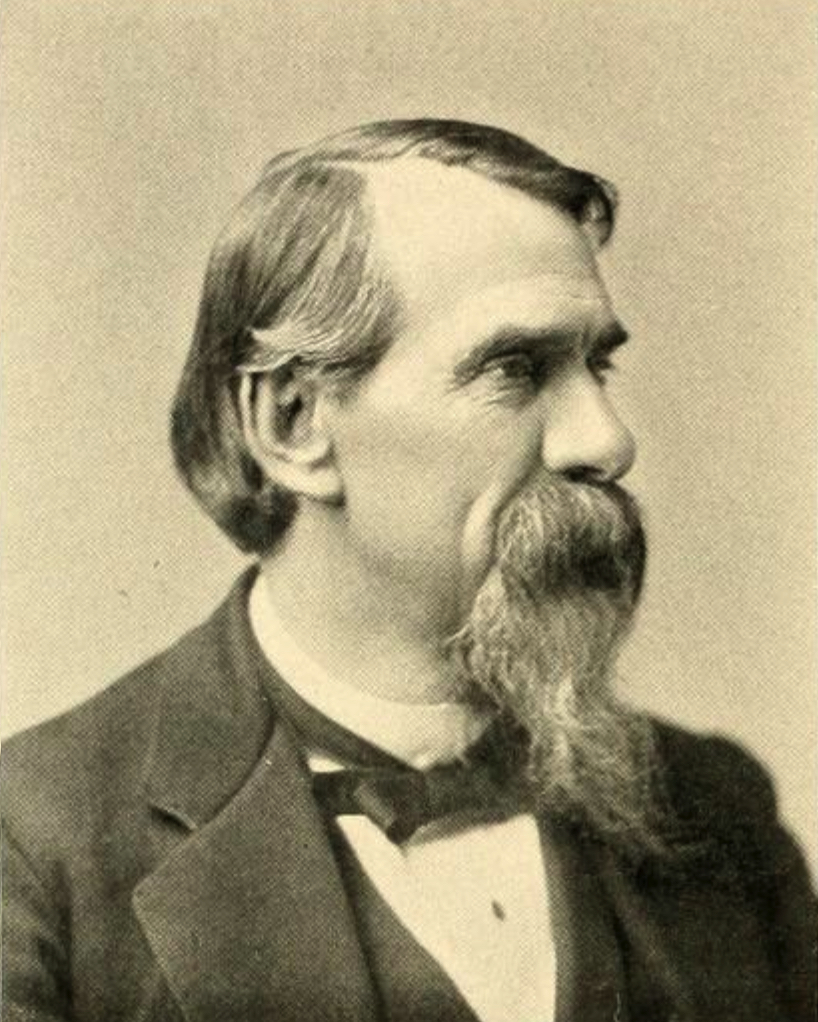
Historical · U.S. House · Indiana · District 4
William Cumback
Former U.S. Representative · Indiana District 4 · 1853–1857 · Ind. Republican-Democrat
William Cumback represented Indiana's District 4 in the United States House of Representatives (1853–1857) for the Ind. Republican-Democrat party. The page below collects sourced biographical facts, term history, committee roles, and provenance for Cumback.
Bioguide ID: C000980
Key facts
- Full name
- William Cumback
- State
- Indiana
- District
- District 4
- Party
- Ind. Republican-Democrat
- House service
- 1853–1857
- First House term
- 1853
- Status
- Left office
- Current term ends
- —
- Born
- 1829
- Bioguide ID
- C000980
- Committee assignments
- —
- Dataset version
- 1.20260606
Biographical narrative
952 words · sourced from the Wikipedia REST extract
William Cumback was an American lawyer and politician who served as a U.S. Representative for Indiana's 4th congressional district during the mid-19th century. Born on March 24, 1829, Cumback's career spanned various roles, including his service as a paymaster in the Union Army during the Civil War and as a member of the Indiana State Senate. His political affiliations included being a member of the Indiana People's Party, and he held office from 1855 to 1857. After his congressional tenure, Cumback continued to engage in public service and law until his death on July 31, 1905.
Early life and career
William Cumback was born near Mount Carmel, Indiana, in 1829. He grew up in a region that would shape his values and future endeavors. Cumback pursued his education through the common schools available in his area, which laid the foundation for his later academic achievements. He attended Miami University in Oxford, Ohio, where he completed his higher education. Following his graduation, Cumback took on the role of a schoolteacher for two years, which provided him with valuable experience in education and public speaking.
After his time in education, Cumback turned his focus to the field of law. He studied at the Cincinnati Law School, where he developed the legal knowledge and skills necessary for a successful career in law. Upon completing his studies, he was admitted to the bar and began practicing law in Greensburg, Indiana, in 1853. His legal career would later serve as a significant backdrop to his political aspirations, as many politicians of the era often had legal training.
Cumback's early career was marked by his commitment to public service and community engagement. His involvement in local affairs and his legal practice in Greensburg positioned him as a prominent figure in his community. This local prominence would eventually lead him to seek higher office, as he became increasingly involved in the political landscape of Indiana.
House tenure
William Cumback's political career took a significant turn when he was elected to the United States House of Representatives as a candidate from the Indiana People's Party. He served in the Thirty-fourth Congress, with his term beginning on March 4, 1855, and concluding on March 3, 1857. During this period, Cumback represented Indiana's 4th congressional district, a role that involved addressing the concerns and interests of his constituents at the national level.
His election to Congress occurred during a time of considerable political upheaval in the United States, particularly regarding issues such as slavery and states' rights. As a member of the Indiana People's Party, Cumback aligned himself with a political movement that sought to address the needs of the people, although specific details about his legislative priorities during his term are not extensively documented.
Despite his efforts in Congress, Cumback faced challenges in securing re-election. He was unsuccessful in his bid for a second term in 1856, which led him to return to his legal practice after his congressional service. This experience reflects the often tumultuous nature of political careers during this era, as many politicians faced difficulties in maintaining their positions amid shifting political landscapes.
Legislative focus and committees
While specific details regarding William Cumback's legislative focus and committee assignments during his time in Congress are not extensively recorded, it is known that he served during a pivotal period in American history. The mid-1850s were characterized by intense debates over slavery, territorial expansion, and the balance of power between state and federal authorities. As a member of the Indiana People's Party, Cumback likely engaged with issues pertinent to his constituents, including economic development, infrastructure, and social policies.
After his congressional tenure, Cumback continued to serve his country in various capacities. He was appointed as a paymaster in the Union Army during the Civil War, a role that involved managing financial matters for soldiers and ensuring that they received their due compensation. This experience in the military further solidified his commitment to public service and demonstrated his willingness to contribute to the nation during a time of conflict.
Following the war, Cumback returned to Indiana politics, serving as a member of the Indiana State Senate in 1866. His involvement in state politics allowed him to continue advocating for the interests of his constituents and to influence legislation at the state level. In 1868, he was elected as the 16th Lieutenant Governor of Indiana, a position that further elevated his political profile.
Cumback's political ambitions did not end there; he sought election to the United States Senate in 1869 but was unsuccessful. Additionally, President Ulysses S. Grant nominated him as the U.S. Minister to Portugal in 1870, a position he declined. His career continued as he served as a United States revenue collector from 1871 to 1883, a role that involved overseeing tax collection and financial matters for the federal government.
In addition to his political roles, Cumback contributed to education and community development as a trustee of DePauw University in Greencastle, Indiana. His involvement in the university reflects his commitment to education and the importance of higher learning in society.
William Cumback's later years included attempts to further his political career, including an unsuccessful bid for the nomination for governor in 1896. His dedication to public service remained evident throughout his life, as he continued to engage with the community and contribute to various civic initiatives.
William Cumback passed away on July 31, 1905, in Greensburg, Indiana. He was interred in South Park Cemetery, leaving behind a legacy that included his contributions to law, politics, and education in Indiana. His name is commemorated in the community of Cumback, Indiana, serving as a reminder of his impact on the region and his commitment to public service throughout his life.
Notable legislation
Sponsored and co-sponsored legislation for William Cumback is pending operator curation. The biographical narrative above carries the same provenance trail until per-bill rows are written.
Sources
- [1]https://en.wikipedia.org/wiki/William_CumbackWikipedia · retrieved 2026-06-06
Notable quotes
Sourced quotes for William Cumback are pending operator curation. Narrative-scope provenance remains attached below.
Sources
- [1]https://en.wikipedia.org/wiki/William_CumbackWikipedia · retrieved 2026-06-06
Key positions
Curated policy positions for William Cumback are pending operator review. The biographical narrative above carries the same provenance trail until per-topic positions are written.
Sources
- [1]https://en.wikipedia.org/wiki/William_CumbackWikipedia · retrieved 2026-06-06
Terms served
- 1853–1855U.S. House · Term 1 · Democratic
- 1855–1857U.S. House · Term 2 · Ind. Republican-Democrat
Sources & provenance
Every attributable claim above carries a per-section [N] marker that resolves to the corresponding URL below. Each entry records the upstream provider, the canonical URL, and the timestamp at which the source was retrieved by the ingest pipeline.
Key facts
- https://bioguide.congress.gov/search/bio/C000980bioguide · retrieved 2026-06-06
- https://www.govtrack.us/congress/members/403091govtrack · retrieved 2026-06-06
Biographical narrative
- https://en.wikipedia.org/wiki/William_Cumbackwikipedia · retrieved 2026-06-06
Find your representative
Every U.S. state elects representatives by district. Browse Indiana’s delegation, the full former-representative roster, or explore the role and term length.
Related on The Candidate
- Preceded by Caleb SmithEarlier holder of the Indiana District 4 House seat · Whig.Open
- Succeeded by James FoleyLater holder of the Indiana District 4 House seat · Democratic.Open
- Adam Benjamin Jr.Former U.S. Representative · Indiana District 1 · DemocraticOpen
- Alvin HoveyFormer U.S. Representative · Indiana District 1 · RepublicanOpen
- Arthur TaylorFormer U.S. Representative · Indiana District 1 · DemocraticOpen
- Benoni FullerFormer U.S. Representative · Indiana District 1 · DemocraticOpen