
Historical · U.S. House · Indiana · District 5
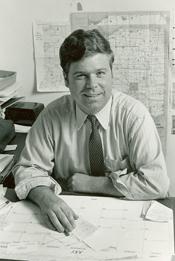
James Jontz
Former U.S. Representative · Indiana District 5 · 1987–1993 · Democratic
James Jontz represented Indiana's District 5 in the United States House of Representatives (1987–1993) for the Democratic party. The page below collects sourced biographical facts, term history, committee roles, and provenance for Jontz.
Bioguide ID: J000265
Key facts
- Full name
- James Jontz
- State
- Indiana
- District
- District 5
- Party
- Democratic
- House service
- 1987–1993
- First House term
- 1987
- Status
- Left office
- Current term ends
- —
- Born
- 1951
- Bioguide ID
- J000265
- Committee assignments
- —
- Dataset version
- 1.20260605
Biographical narrative
813 words · sourced from the Wikipedia REST extract
James Prather Jontz, born on December 18, 1951, was an American politician who served as a U.S. Representative for Indiana's 5th congressional district from 1987 until 1993. A member of the Democratic Party, Jontz was known for his progressive stance on various issues, particularly environmental advocacy. He was the last Democrat to represent his district in Congress, which includes rural north-central Indiana, with key cities such as Kokomo and Logansport. Before his tenure in the U.S. House, Jontz was active in the Indiana General Assembly, where he began his political career at a young age.
Early life and career
Jim Jontz was born in Indianapolis, Indiana, where he completed his secondary education at North Central High School, graduating at the age of 17. He began his higher education at Williams College before transferring to Indiana University Bloomington. At Indiana University, he graduated with honors in geology in less than three years, earning recognition as a member of the Phi Beta Kappa honor society. During his time at the university, Jontz was actively involved in environmental advocacy and co-founded the Indiana Public Interest Research Group as part of his senior project. He also pursued a master's degree in history from Butler University and later graduated from Valparaiso University School of Law while serving as a State Representative. Additionally, he took graduate courses at Purdue University, further broadening his academic background.
Jontz's political career commenced in 1974, motivated by his opposition to a dam project in Central Indiana. He ran for a seat in the Indiana House of Representatives against the project's sponsor, House Majority Leader John Guy. At the age of 22, Jontz was elected to the Indiana House, becoming one of the youngest individuals to hold that position. He was re-elected multiple times, even in a district that leaned heavily Republican, particularly after redistricting efforts following the 1980 census. In 1984, he transitioned to the Indiana Senate, where he served for two years before making the leap to the U.S. House of Representatives.
House tenure
Jim Jontz was elected to the U.S. House of Representatives in 1986, succeeding long-time Republican incumbent Bud Hillis. His election was notable for the narrow margin by which he won, aided by a fractious Republican primary that weakened his opponent, State Senator James Butcher. Jontz's campaigns garnered national attention, partly due to endorsements from various celebrities, including musicians and actors, who supported his environmental initiatives. He was re-elected in 1988 with a more substantial victory but faced tougher competition in 1990.
During his time in Congress, Jontz employed a populist approach to politics, characterized by his frequent engagement with constituents across his district. He built a dedicated team of staff members who played significant roles in his office and later in other government positions. Despite his progressive platform, which included a strong focus on environmental issues, Jontz's political stance was sometimes seen as a mismatch for the predominantly rural and conservative electorate of his district.
In 1992, Jontz ran for re-election but was narrowly defeated by Republican candidate Steve Buyer, a young Army officer and Persian Gulf War veteran. This loss marked the end of Jontz's congressional career, concluding his three terms in the House.
Legislative focus and committees
Throughout his six years in the U.S. House, Jim Jontz served on several committees, including the House Committees on Agriculture, Education and Labor, Veterans Affairs, and the Select Committee on Aging. His legislative efforts were particularly focused on environmental conservation, including the preservation of ancient forests in the Pacific Northwest. Jontz was known for fostering collaborations between organized labor and environmentalists, reflecting his commitment to addressing both economic and ecological concerns.
After leaving Congress, Jontz continued his advocacy work, particularly in environmental issues. He sought to return to political office in 1994 by challenging incumbent Senator Dick Lugar but was unsuccessful, losing by a significant margin. Following this defeat, he took on the role of Executive Director for the Western Ancient Forest Campaign, where he worked to protect forests and combat practices such as clearcutting. Jontz was instrumental in organizing grassroots campaigns and building coalitions with local forest protection groups across the country.
In 1999, he played a key role in establishing the Alliance for Sustainable Jobs and the Environment, further solidifying his commitment to environmental activism. Jontz's advocacy included participating in acts of civil disobedience to draw attention to environmental issues, which earned him respect among forest activists. He was elected president of Americans for Democratic Action in 1998 and later served as president emeritus and project coordinator for the organization's Working Families Win project.
Jim Jontz passed away on April 14, 2007, in Portland, Oregon, after a prolonged battle with colon cancer. His legacy is marked by his contributions to environmental advocacy and his service in the U.S. House of Representatives, where he was recognized for his progressive ideals and commitment to his constituents.
Notable legislation
Sponsored and co-sponsored legislation for James Jontz is pending operator curation. The biographical narrative above carries the same provenance trail until per-bill rows are written.
Sources
- [1]https://en.wikipedia.org/wiki/Jim_JontzWikipedia · retrieved 2026-06-05
Notable quotes
Sourced quotes for James Jontz are pending operator curation. Narrative-scope provenance remains attached below.
Sources
- [1]https://en.wikipedia.org/wiki/Jim_JontzWikipedia · retrieved 2026-06-05
Key positions
Curated policy positions for James Jontz are pending operator review. The biographical narrative above carries the same provenance trail until per-topic positions are written.
Sources
- [1]https://en.wikipedia.org/wiki/Jim_JontzWikipedia · retrieved 2026-06-05
Terms served
- 1987–1989U.S. House · Term 1 · Democratic
- 1989–1991U.S. House · Term 2 · Democratic
- 1991–1993U.S. House · Term 3 · Democratic
Sources & provenance
Every attributable claim above carries a per-section [N] marker that resolves to the corresponding URL below. Each entry records the upstream provider, the canonical URL, and the timestamp at which the source was retrieved by the ingest pipeline.
Key facts
- https://bioguide.congress.gov/search/bio/J000265bioguide · retrieved 2026-06-05
- https://www.govtrack.us/congress/members/406157govtrack · retrieved 2026-06-05
Biographical narrative
- https://en.wikipedia.org/wiki/Jim_Jontzwikipedia · retrieved 2026-06-05
Find your representative
Every U.S. state elects representatives by district. Browse Indiana’s delegation, the full former-representative roster, or explore the role and term length.
Related on The Candidate
- Preceded by Elwood HillisEarlier holder of the Indiana District 5 House seat · Republican.Open
- Succeeded by Susan BrooksLater holder of the Indiana District 5 House seat · Republican.Open
- Adam Benjamin Jr.Former U.S. Representative · Indiana District 1 · DemocraticOpen
- Alvin HoveyFormer U.S. Representative · Indiana District 1 · RepublicanOpen
- Arthur TaylorFormer U.S. Representative · Indiana District 1 · DemocraticOpen
- Benoni FullerFormer U.S. Representative · Indiana District 1 · DemocraticOpen