
Historical · U.S. House · Indiana · District 6
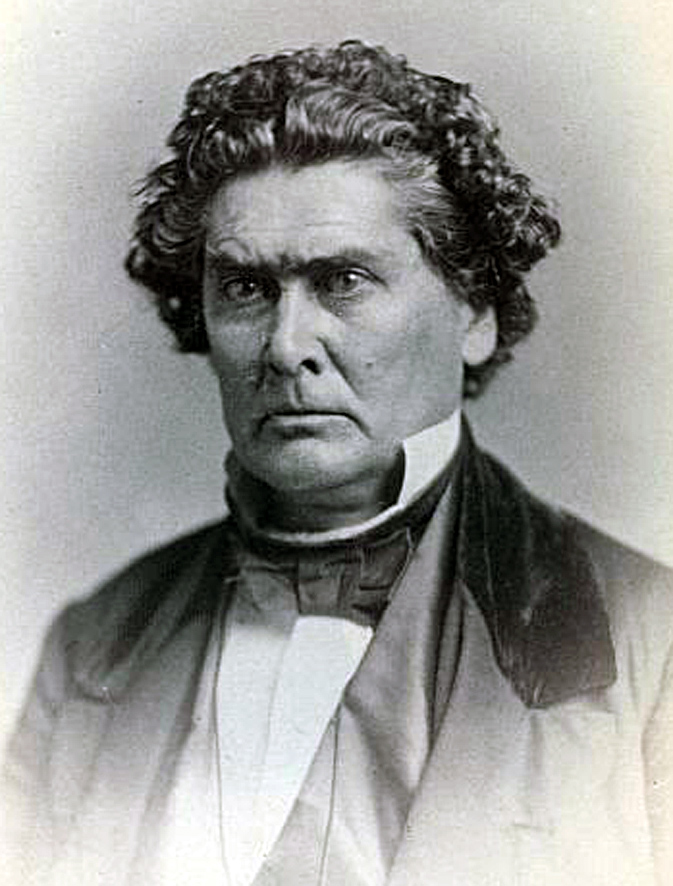
James Gregg
Former U.S. Representative · Indiana District 6 · 1857–1859 · Democratic
James Gregg represented Indiana's District 6 in the United States House of Representatives (1857–1859) for the Democratic party. The page below collects sourced biographical facts, term history, committee roles, and provenance for Gregg.
Bioguide ID: G000444
Key facts
- Full name
- James Gregg
- State
- Indiana
- District
- District 6
- Party
- Democratic
- House service
- 1857–1859
- First House term
- 1857
- Status
- Left office
- Current term ends
- —
- Born
- 1806
- Bioguide ID
- G000444
- Committee assignments
- —
- Dataset version
- 1.20260606-1
Biographical narrative
788 words · sourced from the Wikipedia REST extract
James Gregg was an American lawyer and politician who served as a U.S. Representative from Indiana during the mid-19th century. A member of the Democratic Party, he held office in the Thirty-fifth Congress from 1857 to 1859. Born in Virginia, Gregg pursued a career in law after completing his education and eventually moved to Indiana, where he became involved in local politics and governance. His time in Congress was marked by the political tensions of the era, particularly as the nation approached the Civil War. After his congressional term, he continued his legal practice and participated in state politics until his death in 1869.
Early life and career
James Gregg was born on June 26, 1806, in Patrick County, Virginia. Growing up in the early 19th century, he received his education through public schools, which were vital in providing foundational knowledge during that period. Following his schooling, Gregg pursued a legal career, demonstrating an early interest in the law and governance. He studied law diligently and was admitted to the bar in 1830, marking the beginning of his professional journey as a lawyer.
Shortly after gaining admission to the bar, Gregg relocated to Danville, Indiana, where he began his legal practice. This move was significant, as Indiana was experiencing growth and development during this time, providing ample opportunities for legal professionals. Gregg's legal career flourished in Danville, and he became a prominent figure in the local legal community.
In addition to his legal work, Gregg engaged in public service. He served as the county surveyor of Hendricks County from 1834 to 1837, a role that involved overseeing land surveys and property assessments, which were crucial for the area's development. Following this position, he was elected as the clerk of the circuit court, serving from 1837 to 1845. This role further solidified his reputation in the community and provided him with valuable experience in the workings of the judicial system.
House tenure
James Gregg's political career took a significant turn when he was elected to the United States House of Representatives as a Democrat. He served in the Thirty-fifth Congress, with his term beginning on March 4, 1857, and concluding on March 3, 1859. His election came at a time when the United States was grappling with various issues, including debates over slavery, states' rights, and the expansion of the nation. These topics were particularly contentious and would soon lead to significant national conflict.
During his time in Congress, Gregg participated in the legislative process, contributing to discussions and decisions that shaped the nation during a pivotal period. However, his congressional tenure was relatively brief, as he was not successful in his bid for reelection in 1858 for the Thirty-sixth Congress. This defeat marked the end of his time in the House of Representatives, but it did not conclude his involvement in public service.
Legislative focus and committees
While specific details regarding the legislative focus and committee assignments of James Gregg during his time in Congress are not extensively documented, it is important to contextualize his role within the broader political landscape of the era. The Thirty-fifth Congress was characterized by intense debates over slavery, sectionalism, and the future of the Union. As a member of the Democratic Party, Gregg would have aligned with the party's positions at the time, which often included support for states' rights and, in many cases, the protection of slavery in the Southern states.
The political environment of the late 1850s was fraught with tension, as the nation was on the brink of civil war. The Democratic Party was divided between Northern and Southern factions, and members like Gregg had to navigate these divisions while representing their constituents' interests. The decisions made during this Congress would have lasting implications for the country, as the issues debated would soon culminate in the outbreak of the Civil War.
After his term in Congress, Gregg returned to Danville, Indiana, where he resumed his legal practice. His experience in Congress likely enriched his understanding of law and governance, allowing him to contribute more effectively to his community upon his return. In 1862, he furthered his public service by becoming a member of the Indiana State House of Representatives, where he continued to engage in the political discourse of his time.
James Gregg passed away on June 16, 1869, in Danville, Indiana. His contributions to both the legal field and public service left a mark on his community. He was interred in South Cemetery, where he rests alongside other notable figures from the area. His life and career reflect the complexities of American politics during a transformative period in the nation's history, highlighting the roles that individuals like him played in shaping local and national governance.
Notable legislation
Sponsored and co-sponsored legislation for James Gregg is pending operator curation. The biographical narrative above carries the same provenance trail until per-bill rows are written.
Sources
- [1]https://en.wikipedia.org/wiki/James_M._GreggWikipedia · retrieved 2026-06-06
Notable quotes
Sourced quotes for James Gregg are pending operator curation. Narrative-scope provenance remains attached below.
Sources
- [1]https://en.wikipedia.org/wiki/James_M._GreggWikipedia · retrieved 2026-06-06
Key positions
Curated policy positions for James Gregg are pending operator review. The biographical narrative above carries the same provenance trail until per-topic positions are written.
Sources
- [1]https://en.wikipedia.org/wiki/James_M._GreggWikipedia · retrieved 2026-06-06
Terms served
- 1857–1859U.S. House · Term 1 · Democratic
Sources & provenance
Every attributable claim above carries a per-section [N] marker that resolves to the corresponding URL below. Each entry records the upstream provider, the canonical URL, and the timestamp at which the source was retrieved by the ingest pipeline.
Key facts
- https://bioguide.congress.gov/search/bio/G000444bioguide · retrieved 2026-06-06
- https://www.govtrack.us/congress/members/404791govtrack · retrieved 2026-06-06
Biographical narrative
- https://en.wikipedia.org/wiki/James_M._Greggwikipedia · retrieved 2026-06-06
Find your representative
Every U.S. state elects representatives by district. Browse Indiana’s delegation, the full former-representative roster, or explore the role and term length.
Related on The Candidate
- Preceded by Lucien BarbourEarlier holder of the Indiana District 6 House seat · Ind. Republican-Democrat.Open
- Succeeded by Albert PorterLater holder of the Indiana District 6 House seat · Republican.Open
- Adam Benjamin Jr.Former U.S. Representative · Indiana District 1 · DemocraticOpen
- Alvin HoveyFormer U.S. Representative · Indiana District 1 · RepublicanOpen
- Arthur TaylorFormer U.S. Representative · Indiana District 1 · DemocraticOpen
- Benoni FullerFormer U.S. Representative · Indiana District 1 · DemocraticOpen