
Historical · U.S. House · Indiana · District 7
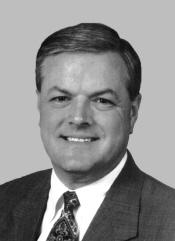
Edward Pease
Former U.S. Representative · Indiana District 7 · 1997–2001 · Republican
Edward Pease represented Indiana's District 7 in the United States House of Representatives (1997–2001) for the Republican party. The page below collects sourced biographical facts, term history, committee roles, and provenance for Pease.
Bioguide ID: P000171
Key facts
- Full name
- Edward Pease
- State
- Indiana
- District
- District 7
- Party
- Republican
- House service
- 1997–2001
- First House term
- 1997
- Status
- Left office
- Current term ends
- —
- Born
- 1951
- Bioguide ID
- P000171
- Committee assignments
- —
- Dataset version
- 1.20260605
Biographical narrative
977 words · sourced from the Wikipedia REST extract
Edward A. Pease is a former American politician and lawyer who served as a Republican member of the United States House of Representatives, representing Indiana's 7th congressional district from 1997 to 2001. His career in public service is marked by his involvement in various legal, educational, and community activities, as well as his tenure in Congress, where he focused on issues related to transportation funding and military investment.
Early life and career
Edward Allan Pease was born on May 22, 1951, in Terre Haute, Indiana. He completed his secondary education at Gerstmeyer High School in Terre Haute, graduating in 1969. Following high school, Pease pursued higher education at Indiana University Bloomington, where he earned a Bachelor of Arts degree in 1973. He continued his studies at the Indiana University-Purdue University Indianapolis (IUPUI), obtaining a Juris Doctor degree in 1977. His commitment to education did not end there; from 1978 to 1984, he engaged in post-graduate studies at Indiana State University.
Pease's professional journey began in the legal field. He served as a law clerk to the Attorney General of Indiana from 1974 to 1975, gaining valuable experience in legal matters. Afterward, he took on the role of national director of alumni affairs for the Pi Kappa Alpha fraternity in Memphis, Tennessee, from 1975 to 1976. He returned to Indiana to practice law in Brazil, Indiana, from 1977 to 1984, during which time he also worked as an attorney for the Clay County Department of Public Welfare. His legal expertise led him to serve as City Attorney for Brazil, Indiana, in 1980.
Pease's career in academia began in 1984 when he joined Indiana State University. He initially served as an assistant to the university's president and later became the general counsel. His contributions to the university continued as he took on the role of vice president for university advancement from 1993 until he entered Congress in 1997. In addition to his professional roles, Pease was active in the Indiana Senate from 1980 to 1992, further establishing his presence in public service.
Beyond his professional endeavors, Pease has been recognized for his contributions to the Boy Scouts of America. He is an Eagle Scout and has received several prestigious awards, including the Distinguished Eagle Scout Award, the Silver Buffalo Award, the Silver Antelope Award, and the Silver Beaver Award. His leadership in scouting included serving as chairman of the National Order of the Arrow Committee.
House tenure
Edward Pease was elected to the U.S. House of Representatives in 1996, marking the beginning of his congressional career. He served two terms in office, with his first term commencing in 1997 and concluding in 2001. During his time in Congress, Pease was known for his focus on various legislative issues, particularly those affecting his home state of Indiana.
One of Pease's notable achievements in Congress was his work to increase Indiana's share of transportation funding. This initiative aimed to enhance infrastructure and improve transportation systems within the state, addressing critical needs for both residents and businesses. Additionally, he advocated for increased investment in the U.S. military, reflecting a commitment to national defense and security.
Pease's tenure also included efforts to preserve historical sites, such as the downtown Federal Building in Terre Haute, Indiana. His dedication to local issues was evident in his actions to save this landmark, which holds significance for the community. Furthermore, he served on the House Judiciary Committee, which played a pivotal role in the impeachment proceedings against President Bill Clinton, marking a significant moment in American political history.
While Pease's congressional career included accomplishments, it was not without challenges. He faced several unfortunate incidents during his time in office, including being the victim of a mugging and experiencing a burglary at his apartment. Additionally, he encountered a distressing situation when he discovered a deceased individual outside his apartment building. These events contributed to a difficult environment during his tenure and may have influenced his decision to retire from public office.
Legislative focus and committees
During his time in the House of Representatives, Edward Pease served on the House Judiciary Committee, which is responsible for overseeing matters related to the federal judiciary and legal affairs. This committee's work includes considerations of legislation, oversight of the Department of Justice, and addressing issues of constitutional law. Pease's involvement in this committee placed him at the center of significant legislative discussions, including those surrounding the impeachment of President Bill Clinton.
Pease's legislative focus extended beyond judicial matters. He was particularly active in advocating for transportation funding, which is crucial for the development and maintenance of infrastructure. His efforts aimed to ensure that Indiana received a fair share of federal resources to support transportation projects, which are vital for economic growth and public safety.
In addition to transportation, Pease's commitment to national defense was a key aspect of his legislative agenda. He supported initiatives aimed at increasing military funding, reflecting a broader concern for the security of the nation and the well-being of its armed forces. This focus on defense aligns with the priorities of many members of the Republican Party during his time in Congress.
Pease's tenure in Congress concluded on January 3, 2001, after serving two terms. Following his departure from the House, he transitioned to a role in the private sector, becoming senior vice president of government relations for Rolls-Royce plc North America. His experience in public service and law provided a foundation for his subsequent career as a consultant for the company.
In summary, Edward A. Pease's career encompasses a diverse range of experiences in law, education, and public service. His time as a U.S. Representative was marked by significant legislative efforts, particularly in transportation and military funding, while also navigating challenges that impacted his tenure. After leaving Congress, he continued to engage in various professional pursuits, maintaining his involvement in community and educational initiatives.
Notable legislation
Sponsored and co-sponsored legislation for Edward Pease is pending operator curation. The biographical narrative above carries the same provenance trail until per-bill rows are written.
Sources
- [1]https://en.wikipedia.org/wiki/Ed_PeaseWikipedia · retrieved 2026-06-05
Notable quotes
Sourced quotes for Edward Pease are pending operator curation. Narrative-scope provenance remains attached below.
Sources
- [1]https://en.wikipedia.org/wiki/Ed_PeaseWikipedia · retrieved 2026-06-05
Key positions
Curated policy positions for Edward Pease are pending operator review. The biographical narrative above carries the same provenance trail until per-topic positions are written.
Sources
- [1]https://en.wikipedia.org/wiki/Ed_PeaseWikipedia · retrieved 2026-06-05
Terms served
- 1997–1999U.S. House · Term 1 · Republican
- 1999–2001U.S. House · Term 2 · Republican
Sources & provenance
Every attributable claim above carries a per-section [N] marker that resolves to the corresponding URL below. Each entry records the upstream provider, the canonical URL, and the timestamp at which the source was retrieved by the ingest pipeline.
Key facts
- https://bioguide.congress.gov/search/bio/P000171bioguide · retrieved 2026-06-05
- https://www.govtrack.us/congress/members/400602govtrack · retrieved 2026-06-05
Biographical narrative
- https://en.wikipedia.org/wiki/Ed_Peasewikipedia · retrieved 2026-06-05
Find your representative
Every U.S. state elects representatives by district. Browse Indiana’s delegation, the full former-representative roster, or explore the role and term length.
Related on The Candidate
- Preceded by John MyersEarlier holder of the Indiana District 7 House seat · Republican.Open
- Succeeded by Brian KernsLater holder of the Indiana District 7 House seat · Republican.Open
- Adam Benjamin Jr.Former U.S. Representative · Indiana District 1 · DemocraticOpen
- Alvin HoveyFormer U.S. Representative · Indiana District 1 · RepublicanOpen
- Arthur TaylorFormer U.S. Representative · Indiana District 1 · DemocraticOpen
- Benoni FullerFormer U.S. Representative · Indiana District 1 · DemocraticOpen