
Historical · U.S. House · Indiana · District 7
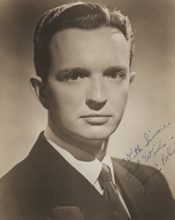
James Noland
Former U.S. Representative · Indiana District 7 · 1949–1951 · Democratic
James Noland represented Indiana's District 7 in the United States House of Representatives (1949–1951) for the Democratic party. The page below collects sourced biographical facts, term history, committee roles, and provenance for Noland.
Bioguide ID: N000129
Key facts
- Full name
- James Noland
- State
- Indiana
- District
- District 7
- Party
- Democratic
- House service
- 1949–1951
- First House term
- 1949
- Status
- Left office
- Current term ends
- —
- Born
- 1920
- Bioguide ID
- N000129
- Committee assignments
- —
- Dataset version
- 1.20260605
Biographical narrative
832 words · sourced from the Wikipedia REST extract
James Noland was a prominent figure in American politics and law, serving as a U.S. Representative for Indiana's 7th congressional district from 1949 to 1951. A member of the Democratic Party, Noland's career spanned various roles in both the legislative and judicial branches of government. He was born on April 22, 1920, in La Grange, Missouri, and his educational and professional journey would lead him to significant positions, including a federal judgeship later in his career. His contributions to public service, particularly in Indiana, reflect a commitment to civic duty and legal integrity.
Early life and career
James Noland was born in La Grange, Missouri, and spent his formative years in the Midwest. He pursued higher education at Indiana University Bloomington, where he earned an Artium Baccalaureus degree in 1942. His academic journey continued at Harvard Graduate School of Business Administration, where he obtained a Master of Business Administration in 1943. Noland's education was interrupted by World War II, during which he served in the United States Army from 1943 to 1946. His military service would have undoubtedly shaped his perspectives and commitment to public service.
After the war, Noland returned to academia, enrolling at the Indiana University Maurer School of Law. He completed his Juris Doctor in 1948, marking the beginning of his legal career. Following his graduation, he entered private practice in Bloomington, Indiana, where he worked until 1949. His initial foray into politics came in 1946 when he ran unsuccessfully for a seat in the Eightieth Congress. Despite this setback, Noland's aspirations in public service persisted, leading him to a successful campaign for the U.S. House of Representatives.
House tenure
Noland's tenure in the U.S. House of Representatives began in 1949, representing Indiana's 7th congressional district. His time in office was characterized by the post-World War II context, a period marked by significant social and economic changes in the United States. During his term, Noland participated in various legislative activities, contributing to discussions and decisions that shaped the nation during a transformative era.
As a member of the Democratic Party, Noland aligned with the party's platform, which often focused on issues such as civil rights, social welfare, and economic recovery. However, specific details regarding the legislation he supported or opposed during his time in office are not documented in the available records. His congressional career was relatively brief, as he served only one term before running for reelection in 1950, a campaign that did not result in a return to Congress. Following the conclusion of his House term on January 3, 1951, Noland transitioned back into private legal practice.
Legislative focus and committees
While specific details about Noland's legislative focus during his time in the House are not extensively documented, it is known that he was involved in the political landscape of Indiana during a critical period in American history. The post-war era was marked by a push for civil rights and social reforms, and Noland's alignment with the Democratic Party suggests he may have supported initiatives reflective of these priorities.
After leaving Congress, Noland returned to private practice in Indianapolis, where he continued to engage in legal work until 1966. His career during this time included various roles in public service, such as serving as an assistant state attorney general of Indiana in 1952 and as a member of the Indiana State Election Board from 1958 to 1966. These positions allowed him to remain active in the legal and political spheres of Indiana, contributing to the governance and electoral processes of the state.
In 1966, Noland's career took a significant turn when he was nominated by President Lyndon B. Johnson to serve as a judge on the United States District Court for the Southern District of Indiana. This appointment marked the culmination of his legal career, transitioning him from legislative responsibilities to judicial duties. He was confirmed by the Senate and received his commission later that year. Noland's judicial service included a tenure as Chief Judge from 1984 to 1986, and he also served on the Foreign Intelligence Surveillance Court from 1983 to 1990, eventually becoming its Presiding Judge.
Noland's judicial career was characterized by a commitment to the rule of law and the principles of justice. He remained in senior status until his death on August 12, 1992, in Indianapolis. His contributions to the legal field and public service left a lasting impact on the state of Indiana and the broader judicial landscape.
In summary, James Noland's career spanned various roles in public service, from his time as a U.S. Representative to his later judicial appointments. His educational background, military service, and legal practice provided a foundation for his contributions to American governance. While his congressional tenure was brief, it was part of a larger commitment to civic engagement and the rule of law, which continued throughout his life. Noland's legacy is reflected in his service to the state of Indiana and the nation, underscoring the importance of public service in a democratic society.
Notable legislation
Sponsored and co-sponsored legislation for James Noland is pending operator curation. The biographical narrative above carries the same provenance trail until per-bill rows are written.
Sources
- [1]https://en.wikipedia.org/wiki/James_Ellsworth_NolandWikipedia · retrieved 2026-06-05
Notable quotes
Sourced quotes for James Noland are pending operator curation. Narrative-scope provenance remains attached below.
Sources
- [1]https://en.wikipedia.org/wiki/James_Ellsworth_NolandWikipedia · retrieved 2026-06-05
Key positions
Curated policy positions for James Noland are pending operator review. The biographical narrative above carries the same provenance trail until per-topic positions are written.
Sources
- [1]https://en.wikipedia.org/wiki/James_Ellsworth_NolandWikipedia · retrieved 2026-06-05
Terms served
- 1949–1951U.S. House · Term 1 · Democratic
Sources & provenance
Every attributable claim above carries a per-section [N] marker that resolves to the corresponding URL below. Each entry records the upstream provider, the canonical URL, and the timestamp at which the source was retrieved by the ingest pipeline.
Key facts
- https://bioguide.congress.gov/search/bio/N000129bioguide · retrieved 2026-06-05
- https://www.govtrack.us/congress/members/408213govtrack · retrieved 2026-06-05
Biographical narrative
- https://en.wikipedia.org/wiki/James_Ellsworth_Nolandwikipedia · retrieved 2026-06-05
Find your representative
Every U.S. state elects representatives by district. Browse Indiana’s delegation, the full former-representative roster, or explore the role and term length.
Related on The Candidate
- Preceded by Gerald LandisEarlier holder of the Indiana District 7 House seat · Republican.Open
- Succeeded by John MyersLater holder of the Indiana District 7 House seat · Republican.Open
- Adam Benjamin Jr.Former U.S. Representative · Indiana District 1 · DemocraticOpen
- Alvin HoveyFormer U.S. Representative · Indiana District 1 · RepublicanOpen
- Arthur TaylorFormer U.S. Representative · Indiana District 1 · DemocraticOpen
- Benoni FullerFormer U.S. Representative · Indiana District 1 · DemocraticOpen