
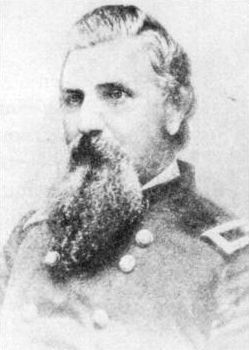
Historical · U.S. House · Indiana · District 7
Mahlon Manson
Former U.S. Representative · Indiana District 7 · 1871–1873 · Democratic
Mahlon Manson represented Indiana's District 7 in the United States House of Representatives (1871–1873) for the Democratic party. The page below collects sourced biographical facts, term history, committee roles, and provenance for Manson.
Bioguide ID: M000114
Key facts
- Full name
- Mahlon Manson
- State
- Indiana
- District
- District 7
- Party
- Democratic
- House service
- 1871–1873
- First House term
- 1871
- Status
- Left office
- Current term ends
- —
- Born
- 1820
- Bioguide ID
- M000114
- Committee assignments
- —
- Dataset version
- 1.20260606
Biographical narrative
871 words · sourced from the Wikipedia REST extract
Mahlon Manson was a prominent figure in Indiana's political and military history during the 19th century. Born on February 20, 1820, he served as a U.S. Representative for Indiana's 7th congressional district from 1871 to 1873. Manson's career encompassed various roles, including that of a druggist, educator, and Union general during the American Civil War. His contributions to both the military and political spheres reflect a life dedicated to public service and leadership in a transformative era for the United States.
Early life and career
Mahlon Manson was born in Piqua, Ohio, to David Manson Jr. and Sarah Cornwall. He was a descendant of David Manson, who served as an aide to General George Washington during the Revolutionary War. This familial connection to American history may have influenced Manson's later pursuits in both military and public service. The Manson family relocated to Crawfordsville, Indiana, where Mahlon began his early career as a schoolteacher in Montgomery County. His educational background laid a foundation for his later endeavors.
Manson pursued medical studies in Cincinnati, Ohio, and became involved in the medical field by giving lectures in New Orleans. His early career was marked by a diverse range of experiences, including serving as a captain with the 5th Indiana Volunteers during the Mexican-American War. Following this military service, he established himself as a druggist in Crawfordsville, which further integrated him into the local community and its political landscape. Manson's political career began to take shape as he became a member of the Indiana Legislature, where he engaged in legislative matters that would impact his constituents.
With the onset of the Civil War, Manson's military career took a significant turn. He was appointed as a captain in the 10th Indiana Infantry shortly after the war began and quickly rose through the ranks, achieving the rank of colonel within a month. His leadership abilities were evident as he commanded a brigade in the Army of the Ohio during the Battle of Mill Springs in 1862. His actions during this battle earned him a promotion to brigadier general on March 24, 1862. Manson's military service was marked by several notable engagements, including being wounded and captured at the Battle of Richmond, Kentucky, before being exchanged two months later.
House tenure
Mahlon Manson's political career culminated in his election to the United States House of Representatives, where he served as a Democrat representing Indiana's 7th congressional district. His first term in the House began in 1871, during a period of significant political and social change in the United States following the Civil War. Manson's tenure in Congress lasted until March 3, 1873, marking a brief but impactful period in his political life.
During his time in the House, Manson was involved in various legislative discussions and decisions that reflected the priorities and concerns of his constituents. While specific details regarding the legislation he supported or opposed are not documented, his background as a military leader and a community member likely informed his perspectives on issues pertinent to his district and the nation. Manson's experience in the Indiana Legislature and his understanding of local issues would have contributed to his effectiveness as a representative.
After concluding his term in the House, Manson continued to be active in public service. He held the position of state auditor and later served as the 20th Lieutenant Governor of Indiana from 1885 to 1886. These roles allowed him to further influence state governance and contribute to the political landscape of Indiana in the years following his congressional service.
Legislative focus and committees
While specific details regarding Mahlon Manson's legislative focus during his time in the U.S. House of Representatives are not extensively documented, it can be inferred that his background as a military leader and community member shaped his priorities. His experiences during the Civil War and his subsequent roles in state government likely influenced his perspectives on issues such as veterans' affairs, infrastructure, and education.
Manson's military service may have led him to advocate for policies that supported veterans returning from service, as well as initiatives aimed at rebuilding and strengthening communities affected by the war. His role as a druggist and educator could have also informed his views on healthcare and education, areas that were crucial in the post-war era as the nation sought to recover and rebuild.
In Congress, Manson would have participated in various committees that aligned with his interests and expertise, although specific committee assignments during his tenure are not detailed in the available records. His legislative work would have involved collaboration with fellow representatives, contributing to the broader legislative agenda of the Democratic Party during a time of significant political realignment in the United States.
Mahlon Manson's life and career reflect a commitment to public service, shaped by his experiences in education, medicine, and military leadership. His contributions to Indiana's political landscape, particularly during his time in the U.S. House of Representatives, underscore the multifaceted nature of his public life. After his political career, Manson continued to engage with his community until his death on February 4, 1895, in Frankfort, Indiana. He is interred at Oak Hill Cemetery in Crawfordsville, Indiana, leaving behind a legacy intertwined with the history of Indiana and the nation.
Notable legislation
Sponsored and co-sponsored legislation for Mahlon Manson is pending operator curation. The biographical narrative above carries the same provenance trail until per-bill rows are written.
Sources
- [1]https://en.wikipedia.org/wiki/Mahlon_Dickerson_MansonWikipedia · retrieved 2026-06-06
Notable quotes
Sourced quotes for Mahlon Manson are pending operator curation. Narrative-scope provenance remains attached below.
Sources
- [1]https://en.wikipedia.org/wiki/Mahlon_Dickerson_MansonWikipedia · retrieved 2026-06-06
Key positions
Curated policy positions for Mahlon Manson are pending operator review. The biographical narrative above carries the same provenance trail until per-topic positions are written.
Sources
- [1]https://en.wikipedia.org/wiki/Mahlon_Dickerson_MansonWikipedia · retrieved 2026-06-06
Terms served
- 1871–1873U.S. House · Term 1 · Democratic
Sources & provenance
Every attributable claim above carries a per-section [N] marker that resolves to the corresponding URL below. Each entry records the upstream provider, the canonical URL, and the timestamp at which the source was retrieved by the ingest pipeline.
Key facts
- https://bioguide.congress.gov/search/bio/M000114bioguide · retrieved 2026-06-06
- https://www.govtrack.us/congress/members/407138govtrack · retrieved 2026-06-06
Biographical narrative
- https://en.wikipedia.org/wiki/Mahlon_Dickerson_Mansonwikipedia · retrieved 2026-06-06
Find your representative
Every U.S. state elects representatives by district. Browse Indiana’s delegation, the full former-representative roster, or explore the role and term length.
Related on The Candidate
- Preceded by Henry WashburnEarlier holder of the Indiana District 7 House seat · Republican.Open
- Succeeded by Franklin LandersLater holder of the Indiana District 7 House seat · Democratic.Open
- Adam Benjamin Jr.Former U.S. Representative · Indiana District 1 · DemocraticOpen
- Alvin HoveyFormer U.S. Representative · Indiana District 1 · RepublicanOpen
- Arthur TaylorFormer U.S. Representative · Indiana District 1 · DemocraticOpen
- Benoni FullerFormer U.S. Representative · Indiana District 1 · DemocraticOpen