
Historical · U.S. House · Indiana · District 7
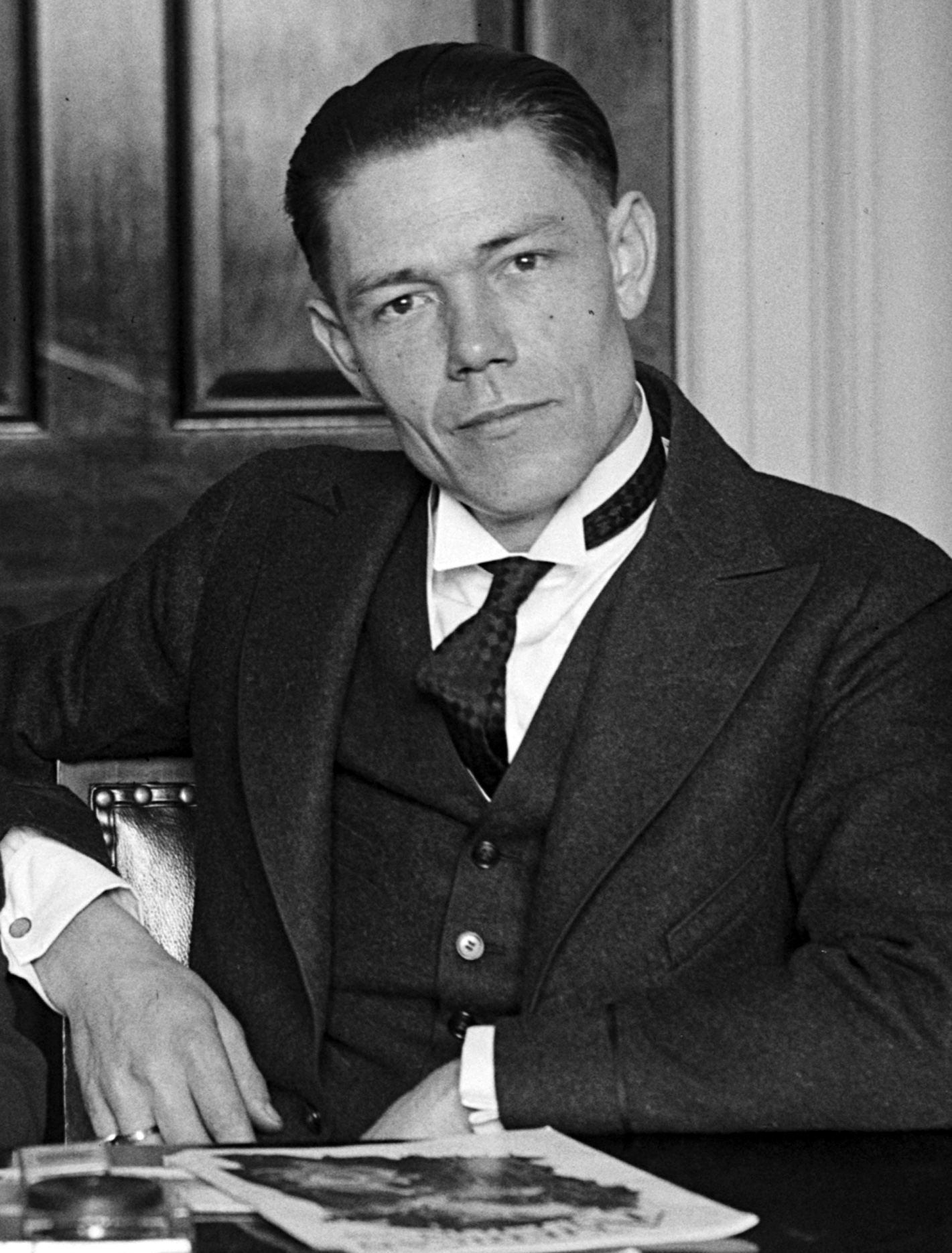
Ralph Updike
Former U.S. Representative · Indiana District 7 · 1925–1929 · Republican
Ralph Updike represented Indiana's District 7 in the United States House of Representatives (1925–1929) for the Republican party. The page below collects sourced biographical facts, term history, committee roles, and provenance for Updike.
Bioguide ID: U000020
Key facts
- Full name
- Ralph Updike
- State
- Indiana
- District
- District 7
- Party
- Republican
- House service
- 1925–1929
- First House term
- 1925
- Status
- Left office
- Current term ends
- —
- Born
- 1894
- Bioguide ID
- U000020
- Committee assignments
- —
- Dataset version
- 1.20260606
Biographical narrative
853 words · sourced from the Wikipedia REST extract
Ralph Updike was an American lawyer and politician who served as a U.S. Representative for Indiana's 7th congressional district from 1925 to 1929. A member of the Republican Party, Updike's political career followed a background in law and military service. His tenure in Congress was marked by the challenges of the post-World War I era, and he was involved in various legal and judicial roles both before and after his time in the House of Representatives. Updike's life spanned significant historical events, including two world wars, and he continued to influence the legal landscape in Indiana and Washington, D.C., until his retirement.
Early life and career
Ralph Eugene Updike was born on May 27, 1894, in Brookville, Indiana. He received his early education in the public schools of Whitcomb and Brookville, which laid the foundation for his academic pursuits. Updike's educational journey included attendance at Dodds Army and Navy Academy in Washington, D.C., as well as studies at Columbia University in New York City. He later attended Purdue University in Lafayette, Indiana, where he furthered his education.
In 1916, as World War I escalated, Updike enlisted in the United States Marine Corps. He served overseas as a sergeant in the Seventy-fourth Company, Sixth Regiment, Second Division, from 1916 until 1919. His military service not only contributed to the war effort but also instilled in him a sense of discipline and leadership that would later serve him in his political career.
After returning from military service, Updike pursued a legal education. He was admitted to the bar in 1920, marking the beginning of his professional career in law. He graduated from the law department of Indiana University in 1923, and shortly thereafter, he began practicing law in Indianapolis, Indiana. His legal expertise would become a significant asset in his subsequent political endeavors.
Before entering Congress, Updike's political career began at the state level. He served as a member of the Indiana House of Representatives from 1923 to 1925, where he was involved in legislative processes and gained valuable experience in governance. Additionally, he held judicial roles as a special judge in the city of Indianapolis in 1923 and 1924, as well as a special judge of the superior court of Marion County from 1925 to 1926. These positions provided him with insights into the judicial system and further solidified his reputation as a legal authority in the state.
House tenure
Ralph Updike was elected to the United States House of Representatives as a Republican in 1925, representing Indiana's 7th congressional district. His first term began on March 4, 1925, during a period characterized by significant social and economic changes in the United States. Updike served in the Sixty-ninth and Seventieth Congresses, where he participated in legislative discussions and decisions that shaped the nation during the mid-1920s.
During his time in Congress, Updike was involved in various issues pertinent to his constituents and the broader national landscape. He served until March 3, 1929, when his term concluded. However, his bid for reelection in 1928 was unsuccessful, and he did not return to Congress for the Seventy-first Congress. This period marked a transition in Updike's career as he moved away from the legislative arena and returned to his legal practice.
Legislative focus and committees
While specific details regarding Updike's legislative focus during his time in Congress are not extensively documented, it is known that he was active in the political discussions of his day. As a member of the Republican Party, he would have engaged with the party's platform and priorities, which often included issues related to economic growth, infrastructure development, and national defense. The 1920s were a time of prosperity for many Americans, but they also foreshadowed the economic challenges that would arise later in the decade with the onset of the Great Depression.
After his congressional service, Updike continued to contribute to the legal field. He served as a special attorney in the Bureau of Internal Revenue from 1929 to 1933, where he dealt with tax-related legal matters during a time of economic uncertainty. Following this role, he resumed his law practice in both Indianapolis and Washington, D.C. His legal career continued until March 2, 1942, when he was commissioned as a captain in the United States Marine Corps Reserve during World War II.
Updike's military service during World War II saw him deployed overseas in the South Pacific with the First Marine Division, Fleet Marine Force. He was inactivated on June 15, 1945, after contributing to the war effort. Following his military service, he returned to his legal practice, continuing to work in Indianapolis and Washington, D.C., until his retirement.
Ralph Updike passed away on September 16, 1953, in Arlington, Virginia. His contributions to law and politics were recognized posthumously, and he was interred in Arlington National Cemetery, a testament to his service to the nation. Throughout his life, Updike's experiences as a soldier, lawyer, and politician reflected the complexities of American society during a transformative period in history. His legacy remains as part of Indiana's political narrative and the broader context of American governance in the early 20th century.
Notable legislation
Sponsored and co-sponsored legislation for Ralph Updike is pending operator curation. The biographical narrative above carries the same provenance trail until per-bill rows are written.
Sources
- [1]https://en.wikipedia.org/wiki/Ralph_E._UpdikeWikipedia · retrieved 2026-06-06
Notable quotes
Sourced quotes for Ralph Updike are pending operator curation. Narrative-scope provenance remains attached below.
Sources
- [1]https://en.wikipedia.org/wiki/Ralph_E._UpdikeWikipedia · retrieved 2026-06-06
Key positions
Curated policy positions for Ralph Updike are pending operator review. The biographical narrative above carries the same provenance trail until per-topic positions are written.
Sources
- [1]https://en.wikipedia.org/wiki/Ralph_E._UpdikeWikipedia · retrieved 2026-06-06
Terms served
- 1925–1927U.S. House · Term 1 · Republican
- 1927–1929U.S. House · Term 2 · Republican
Sources & provenance
Every attributable claim above carries a per-section [N] marker that resolves to the corresponding URL below. Each entry records the upstream provider, the canonical URL, and the timestamp at which the source was retrieved by the ingest pipeline.
Key facts
- https://bioguide.congress.gov/search/bio/U000020bioguide · retrieved 2026-06-06
- https://www.govtrack.us/congress/members/411043govtrack · retrieved 2026-06-06
Biographical narrative
- https://en.wikipedia.org/wiki/Ralph_E._Updikewikipedia · retrieved 2026-06-06
Find your representative
Every U.S. state elects representatives by district. Browse Indiana’s delegation, the full former-representative roster, or explore the role and term length.
Related on The Candidate
- Preceded by Merrill MooresEarlier holder of the Indiana District 7 House seat · Republican.Open
- Succeeded by Gerald LandisLater holder of the Indiana District 7 House seat · Republican.Open
- Adam Benjamin Jr.Former U.S. Representative · Indiana District 1 · DemocraticOpen
- Alvin HoveyFormer U.S. Representative · Indiana District 1 · RepublicanOpen
- Arthur TaylorFormer U.S. Representative · Indiana District 1 · DemocraticOpen
- Benoni FullerFormer U.S. Representative · Indiana District 1 · DemocraticOpen