
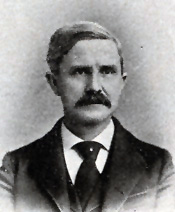
Historical · U.S. House · Indiana · District 8
Charles Henry
Former U.S. Representative · Indiana District 8 · 1895–1899 · Republican
Charles Henry represented Indiana's District 8 in the United States House of Representatives (1895–1899) for the Republican party. The page below collects sourced biographical facts, term history, committee roles, and provenance for Henry.
Bioguide ID: H000503
Key facts
- Full name
- Charles Henry
- State
- Indiana
- District
- District 8
- Party
- Republican
- House service
- 1895–1899
- First House term
- 1895
- Status
- Left office
- Current term ends
- —
- Born
- 1849
- Bioguide ID
- H000503
- Committee assignments
- —
- Dataset version
- 1.20260606
Biographical narrative
809 words · sourced from the Wikipedia REST extract
Charles Henry was an American lawyer and politician who served as a U.S. Representative for Indiana's 8th congressional district from 1895 to 1899. A member of the Republican Party, he was involved in various aspects of public service and law throughout his career. His contributions extended beyond his time in Congress, as he became a notable figure in the development of electric interurban railways, a significant advancement in transportation during his era.
Early life and career
Charles Henry was born on July 1, 1849, in Green Township, Hancock County, Indiana. His early life was characterized by a typical upbringing for a young man in rural Indiana during the mid-19th century. He moved with his family to Pendleton, Indiana, where he continued his education. Henry attended local common schools, which provided him with a foundational education, and later pursued higher education at Asbury University, now known as DePauw University. His academic journey culminated in his graduation from the law department of Indiana University at Bloomington in 1872.
After completing his legal education, Henry was admitted to the bar, allowing him to practice law professionally. He began his legal career in Pendleton, where he established himself as a reputable attorney. In 1875, he relocated to Anderson, Indiana, which was a growing city at the time. This move likely provided him with greater opportunities to expand his legal practice and engage more deeply with the community.
Henry's political career began in the state legislature, where he served as a member of the Indiana State Senate during the early 1880s. His tenure in the state senate spanned three sessions, specifically in the years 1880, 1881, and 1883. This experience in state politics helped to shape his understanding of governance and public policy, laying the groundwork for his later election to the U.S. Congress.
House tenure
Charles Henry was elected to the United States House of Representatives as a member of the Republican Party, representing Indiana's 8th congressional district. His congressional career began with his election to the Fifty-fourth Congress, which commenced on March 4, 1895. He served in this capacity for two consecutive terms, concluding his service on March 3, 1899, at the end of the Fifty-fifth Congress. During his time in the House, Henry participated in various legislative activities and contributed to discussions and decisions that shaped national policy.
Despite his involvement in Congress, Henry chose not to seek renomination in 1898, marking the end of his congressional career. The reasons for his decision to decline candidacy for a third term are not detailed in the available records, but it was not uncommon for politicians of the era to step back from public office for various personal or political reasons.
Legislative focus and committees
During his tenure in the House of Representatives, Charles Henry was involved in legislative matters pertinent to his constituents and the broader national interest. While specific details about the bills he sponsored or supported are not provided, it can be inferred that as a member of the Republican Party during the late 19th century, he likely engaged with issues related to economic development, infrastructure, and the burgeoning industrial landscape of the United States.
In addition to his legislative work, Henry's interests extended into the realm of transportation, particularly in the development and operation of electric interurban railways. He is credited with coining the term "interurban," which refers to rail systems that connect cities, facilitating travel and commerce between urban centers. This innovation was significant during a period when the expansion of rail networks was crucial for economic growth and connectivity in the United States.
Henry's involvement in the electric interurban railway sector continued after his congressional service. He held the position of president and receiver of the Indianapolis & Cincinnati Traction Company, a role he maintained for twenty-three years. His leadership in this capacity underscores his commitment to advancing transportation infrastructure, which was essential for the economic development of the regions served by these railways.
Throughout his life, Henry demonstrated a dedication to public service and community development. His contributions to both the legal field and the transportation sector reflect a multifaceted career that extended beyond the confines of his congressional duties.
Charles Henry passed away on May 2, 1927, in Indianapolis, Indiana. His legacy is preserved through his contributions to law, politics, and transportation, which had lasting impacts on the communities he served. He is interred at Maplewood Cemetery in Anderson, Indiana, where his life and work are remembered as part of the historical narrative of Indiana's political and infrastructural development.
In summary, Charles Henry's life was marked by a blend of legal expertise, political service, and a forward-thinking approach to transportation. His tenure in the U.S. House of Representatives, while relatively brief, was part of a broader commitment to public service that continued to influence his community long after his departure from Congress.
Notable legislation
Sponsored and co-sponsored legislation for Charles Henry is pending operator curation. The biographical narrative above carries the same provenance trail until per-bill rows are written.
Sources
- [1]https://en.wikipedia.org/wiki/Charles_L._HenryWikipedia · retrieved 2026-06-06
Notable quotes
Sourced quotes for Charles Henry are pending operator curation. Narrative-scope provenance remains attached below.
Sources
- [1]https://en.wikipedia.org/wiki/Charles_L._HenryWikipedia · retrieved 2026-06-06
Key positions
Curated policy positions for Charles Henry are pending operator review. The biographical narrative above carries the same provenance trail until per-topic positions are written.
Sources
- [1]https://en.wikipedia.org/wiki/Charles_L._HenryWikipedia · retrieved 2026-06-06
Terms served
- 1895–1897U.S. House · Term 1 · Republican
- 1897–1899U.S. House · Term 2 · Republican
Sources & provenance
Every attributable claim above carries a per-section [N] marker that resolves to the corresponding URL below. Each entry records the upstream provider, the canonical URL, and the timestamp at which the source was retrieved by the ingest pipeline.
Key facts
- https://bioguide.congress.gov/search/bio/H000503bioguide · retrieved 2026-06-06
- https://www.govtrack.us/congress/members/405366govtrack · retrieved 2026-06-06
Biographical narrative
- https://en.wikipedia.org/wiki/Charles_L._Henrywikipedia · retrieved 2026-06-06
Find your representative
Every U.S. state elects representatives by district. Browse Indiana’s delegation, the full former-representative roster, or explore the role and term length.
Related on The Candidate
- Preceded by Elijah BrookshireEarlier holder of the Indiana District 8 House seat · Democratic.Open
- Succeeded by George CromerLater holder of the Indiana District 8 House seat · Republican.Open
- Adam Benjamin Jr.Former U.S. Representative · Indiana District 1 · DemocraticOpen
- Alvin HoveyFormer U.S. Representative · Indiana District 1 · RepublicanOpen
- Arthur TaylorFormer U.S. Representative · Indiana District 1 · DemocraticOpen
- Benoni FullerFormer U.S. Representative · Indiana District 1 · DemocraticOpen