
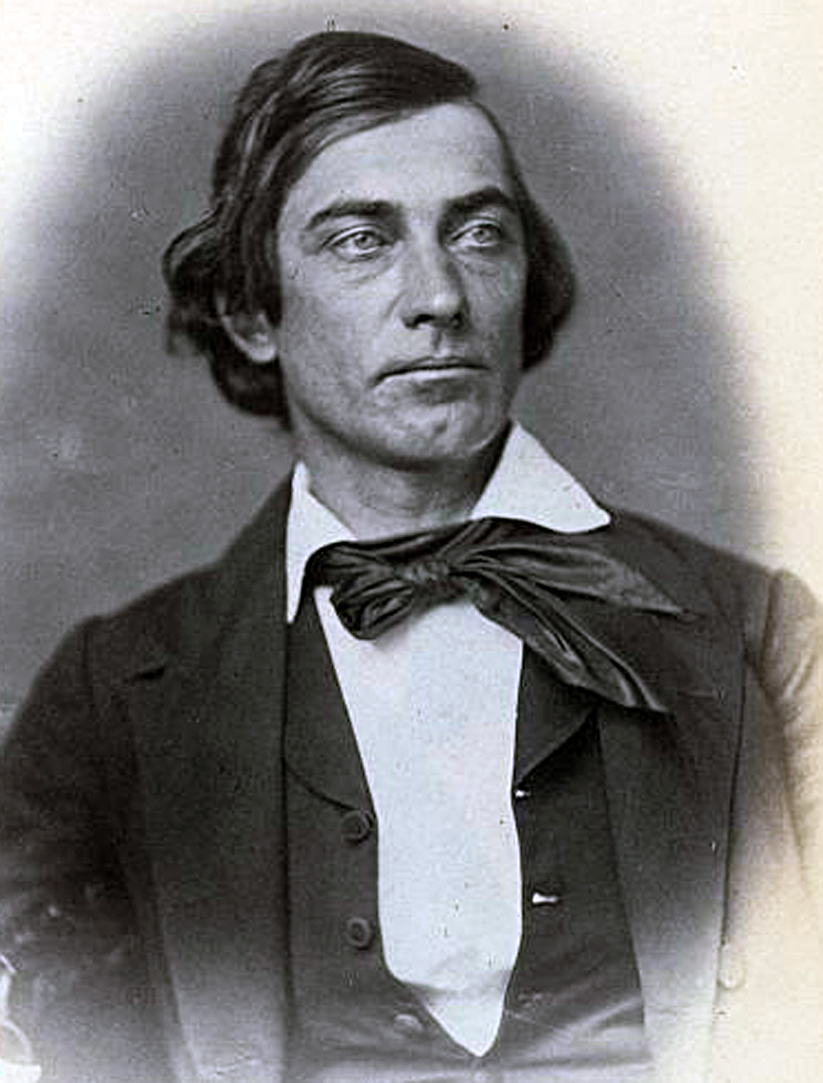
Historical · U.S. House · Indiana · District 8
James Wilson
Former U.S. Representative · Indiana District 8 · 1857–1861 · Republican
James Wilson represented Indiana's District 8 in the United States House of Representatives (1857–1861) for the Republican party. The page below collects sourced biographical facts, term history, committee roles, and provenance for Wilson.
Bioguide ID: W000589
Key facts
- Full name
- James Wilson
- State
- Indiana
- District
- District 8
- Party
- Republican
- House service
- 1857–1861
- First House term
- 1857
- Status
- Left office
- Current term ends
- —
- Born
- 1825
- Bioguide ID
- W000589
- Committee assignments
- —
- Dataset version
- 1.20260606
Biographical narrative
840 words · sourced from the Wikipedia REST extract
James Wilson was a U.S. Representative from Indiana, serving as a member of the Republican Party during the mid-19th century. His political career spanned two terms in the House of Representatives, where he was involved in significant legislative activities during a tumultuous period in American history, including the lead-up to and the duration of the Civil War. Wilson's life was marked by his early education, military service, and subsequent political engagement, reflecting the dynamics of his time.
Early life and career
James Wilson was born on April 9, 1825, in Crawfordsville, Indiana. He pursued his education at Wabash College, located in his hometown, where he graduated in 1842 at the young age of 17. Following his undergraduate studies, Wilson continued his academic journey at Indiana University in Bloomington, where he earned a law degree in 1845. This legal education laid the foundation for his future career in law and politics.
In 1846, Wilson joined the United States military to serve in the Mexican-American War. His service lasted from June 17, 1846, to June 16, 1847. This experience not only contributed to his personal development but also provided him with insights into the challenges faced by the nation during a period of expansion and conflict. Upon returning to Crawfordsville in 1847, Wilson began working in the law office of Tilghman Howard, a prominent local attorney. He was admitted to the bar in 1848, marking the official start of his legal career.
Wilson's involvement in politics began in the mid-1850s, coinciding with the formation of the Republican Party. As a member of this new political movement, he aligned himself with the party's principles and objectives, which were centered around opposition to the expansion of slavery into the territories of the United States. In 1856, Wilson decided to run for the congressional seat representing Indiana's 8th District. His campaign was successful, and he defeated his opponent, Daniel Wolsey Voorhees, to become a member of the U.S. House of Representatives.
House tenure
James Wilson officially took office as a U.S. Representative on March 4, 1857. He served two consecutive terms in the House, during which he was a member of the Thirty-Fifth and Thirty-Sixth Congresses. His tenure in Congress coincided with a critical period in American history, marked by increasing tensions over slavery and states' rights, which would eventually lead to the Civil War.
During his time in the House, Wilson participated in various legislative discussions and decisions that shaped the nation's policies. His alignment with the Republican Party positioned him as a supporter of measures aimed at limiting the spread of slavery and promoting the rights of free states. Wilson was reelected during the congressional election of 1858, reflecting his continued support among constituents in Indiana's 8th District.
However, his congressional career came to an end on March 3, 1861, as he completed his second term. The political landscape was rapidly changing, and the onset of the Civil War would soon dominate national discourse. Following his departure from Congress, Wilson's commitment to public service continued as he took on a military role during the conflict.
Legislative focus and committees
Throughout his congressional career, James Wilson was primarily focused on issues pertinent to the Republican Party's platform, which included the opposition to the expansion of slavery and the promotion of civil rights. His legislative activities were influenced by the national climate of the time, particularly the growing divide between Northern and Southern states over the issue of slavery.
In addition to his legislative work, Wilson's military service during the Civil War further exemplified his dedication to the Union cause. He was appointed captain of Volunteers on November 26, 1862, and served in this capacity until his honorable discharge on December 6, 1865, at which point he held the rank of brevet lieutenant colonel. His military experience not only reinforced his commitment to the Union but also provided him with a unique perspective on the challenges faced by soldiers and their families during the war.
After the Civil War, Wilson returned to his law practice in Crawfordsville, where he continued to engage with the community and contribute to local legal matters. His experience in Congress and the military likely informed his approach to legal practice during this period of reconstruction and recovery for the nation.
In 1866, Wilson was appointed by President Andrew Johnson to serve as Minister Resident to Venezuela. This diplomatic role marked a significant transition in his career, allowing him to represent U.S. interests abroad. He held this position until his death in Caracas, Venezuela, on August 8, 1867. His contributions to both the legislative and diplomatic arenas reflect a life dedicated to public service and the complexities of American governance during a pivotal era.
James Wilson is interred in Oak Hill Cemetery in Crawfordsville, Indiana, where his legacy as a public servant and representative of his constituents is remembered. His life and career encapsulate the challenges and transformations of the United States during the 19th century, particularly in relation to issues of governance, civil rights, and national unity.
Notable legislation
Sponsored and co-sponsored legislation for James Wilson is pending operator curation. The biographical narrative above carries the same provenance trail until per-bill rows are written.
Sources
- [1]https://en.wikipedia.org/wiki/James_Wilson_(Indiana_politician)Wikipedia · retrieved 2026-06-06
Notable quotes
Sourced quotes for James Wilson are pending operator curation. Narrative-scope provenance remains attached below.
Sources
- [1]https://en.wikipedia.org/wiki/James_Wilson_(Indiana_politician)Wikipedia · retrieved 2026-06-06
Key positions
Curated policy positions for James Wilson are pending operator review. The biographical narrative above carries the same provenance trail until per-topic positions are written.
Sources
- [1]https://en.wikipedia.org/wiki/James_Wilson_(Indiana_politician)Wikipedia · retrieved 2026-06-06
Terms served
- 1857–1859U.S. House · Term 1 · Republican
- 1859–1861U.S. House · Term 2 · Republican
Sources & provenance
Every attributable claim above carries a per-section [N] marker that resolves to the corresponding URL below. Each entry records the upstream provider, the canonical URL, and the timestamp at which the source was retrieved by the ingest pipeline.
Key facts
- https://bioguide.congress.gov/search/bio/W000589bioguide · retrieved 2026-06-06
- https://www.govtrack.us/congress/members/411746govtrack · retrieved 2026-06-06
Biographical narrative
- https://en.wikipedia.org/wiki/James_Wilson_(Indiana_politician)wikipedia · retrieved 2026-06-06
Find your representative
Every U.S. state elects representatives by district. Browse Indiana’s delegation, the full former-representative roster, or explore the role and term length.
Related on The Candidate
- Preceded by Daniel MaceEarlier holder of the Indiana District 8 House seat · Ind. Republican-Democrat.Open
- Succeeded by Morton HunterLater holder of the Indiana District 8 House seat · Republican.Open
- Adam Benjamin Jr.Former U.S. Representative · Indiana District 1 · DemocraticOpen
- Alvin HoveyFormer U.S. Representative · Indiana District 1 · RepublicanOpen
- Arthur TaylorFormer U.S. Representative · Indiana District 1 · DemocraticOpen
- Benoni FullerFormer U.S. Representative · Indiana District 1 · DemocraticOpen