
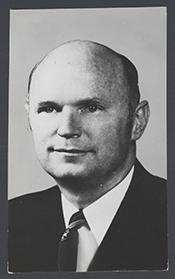
Historical · U.S. House · Indiana · District 8
Roger Zion
Former U.S. Representative · Indiana District 8 · 1967–1975 · Republican
Roger Zion represented Indiana's District 8 in the United States House of Representatives (1967–1975) for the Republican party. The page below collects sourced biographical facts, term history, committee roles, and provenance for Zion.
Bioguide ID: Z000010
Key facts
- Full name
- Roger Zion
- State
- Indiana
- District
- District 8
- Party
- Republican
- House service
- 1967–1975
- First House term
- 1967
- Status
- Left office
- Current term ends
- —
- Born
- 1921
- Bioguide ID
- Z000010
- Committee assignments
- —
- Dataset version
- 1.20260605
Biographical narrative
985 words · sourced from the Wikipedia REST extract
Roger H. Zion was an American politician and World War II veteran who served as a U.S. Representative for Indiana's 8th congressional district from 1967 until 1975. A member of the Republican Party, Zion's political career was marked by his involvement in key issues of the time, including the Vietnam War. His tenure in Congress was characterized by a commitment to his constituents and a focus on various legislative matters. After leaving office, he continued to engage in professional pursuits and remained active in his community until his passing in 2019.
Early life and career
Roger Herschel Zion was born on September 17, 1921, in Escanaba, Michigan. He spent his formative years in Milwaukee, Wisconsin, and Evansville, Indiana, where he attended public schools. Zion graduated from Benjamin Bosse High School, an achievement that marked the beginning of his educational journey. Notably, he became an Eagle Scout in 1932, reflecting his early commitment to leadership and community service.
Zion pursued higher education at the University of Wisconsin–Madison, where he earned a Bachelor of Arts degree in 1943. His academic achievements were interrupted by the outbreak of World War II, during which he served in the United States Navy from 1943 to 1946. His military service took him to the Asia-Pacific region, where he held the rank of lieutenant. This experience not only shaped his character but also instilled in him a sense of duty and patriotism that would later influence his political career.
Following his military service, Zion sought further education at the Harvard Graduate School of Business Administration, attending from 1944 to 1945. This advanced training equipped him with valuable skills that he later applied in the business sector. After completing his studies, he joined Mead Johnson & Company, a prominent pharmaceutical and nutrition company, where he worked from 1946 until 1965. Over the years, he rose through the ranks to become the director of training and professional relations, a position that underscored his expertise in corporate management and professional development.
House tenure
Zion's political career began in earnest when he was encouraged to run for Congress by D. Mead Johnson, the chief of Mead Johnson & Company. In 1964, he entered the race as a Republican candidate for Indiana's 8th congressional district but was unsuccessful, losing to the incumbent Democrat Winfield K. Denton. However, he persevered and ran again in the 1966 election, successfully unseating Denton. His first term in the House of Representatives began on January 3, 1967, marking the start of a significant chapter in his life.
During his time in Congress, Zion was re-elected to three additional terms, serving a total of four consecutive terms until January 3, 1975. His tenure coincided with a tumultuous period in American history, characterized by social upheaval and political challenges, particularly related to the Vietnam War. Zion's views on the war were notably controversial; he publicly labeled anti-Vietnam War protesters as "traitors" and advocated for severe consequences for those engaging in illegal activities related to the protests. This stance reflected the polarized political climate of the era and highlighted the contentious debates surrounding U.S. involvement in Vietnam.
Zion's congressional career was also marked by his participation in various legislative initiatives and discussions. While specific details of the bills he sponsored or supported are not provided, it is clear that he was an active participant in the legislative process during a time of significant national change. His engagement in Congress was not limited to legislative duties; he also took part in various activities outside of the political arena, including bridge tournaments against notable figures such as Warren Buffett and members of the British Parliament. These events showcased his interests beyond politics and highlighted his ability to connect with influential individuals across different sectors.
Despite his initial successes, Zion faced challenges in his later political career. In 1974, he ran for re-election to the 94th Congress but was defeated by state Senator Philip H. Hayes. This loss was part of a broader trend of frequent turnover in the district, which became known for its competitive electoral landscape, often referred to as the "Bloody Eighth." Zion's defeat marked the end of his congressional tenure, but his impact on the district and his constituents remained significant.
Legislative focus and committees
Throughout his time in the House of Representatives, Roger Zion's legislative focus encompassed a range of issues pertinent to his constituents and the nation. While specific legislative achievements are not detailed, his involvement in Congress during a period of considerable social and political change suggests that he addressed various matters, including those related to the Vietnam War, civil rights, and economic policies.
Zion's participation in committees would have played a crucial role in shaping his legislative agenda and priorities. Although the specific committees he served on are not mentioned, members of Congress typically engage in committees that align with their interests and the needs of their constituents. These committees are instrumental in reviewing legislation, conducting hearings, and overseeing government operations, allowing representatives to influence policy decisions effectively.
In addition to his legislative work, Zion's post-congressional career included leadership roles in the private sector. After leaving Congress, he became the president of Resources Development Inc. in Washington, D.C., where he continued to apply his business acumen and leadership skills. His professional endeavors after politics reflect a commitment to contributing to society in various capacities.
Roger H. Zion passed away on September 24, 2019, in Evansville, Indiana, just one week after celebrating his 98th birthday. He was survived by his wife, Marjorie Emma Knauss, whom he had been married to for 74 years, and their three children. Zion's life and career exemplify the journey of a dedicated public servant whose experiences in the military, business, and politics shaped his contributions to his community and the nation. His legacy continues to be remembered by those who knew him and by the constituents he served during his time in Congress.
Notable legislation
Sponsored and co-sponsored legislation for Roger Zion is pending operator curation. The biographical narrative above carries the same provenance trail until per-bill rows are written.
Sources
- [1]https://en.wikipedia.org/wiki/Roger_H._ZionWikipedia · retrieved 2026-06-05
Notable quotes
Sourced quotes for Roger Zion are pending operator curation. Narrative-scope provenance remains attached below.
Sources
- [1]https://en.wikipedia.org/wiki/Roger_H._ZionWikipedia · retrieved 2026-06-05
Key positions
Curated policy positions for Roger Zion are pending operator review. The biographical narrative above carries the same provenance trail until per-topic positions are written.
Sources
- [1]https://en.wikipedia.org/wiki/Roger_H._ZionWikipedia · retrieved 2026-06-05
Terms served
- 1967–1969U.S. House · Term 1 · Republican
- 1969–1971U.S. House · Term 2 · Republican
- 1971–1973U.S. House · Term 3 · Republican
- 1973–1975U.S. House · Term 4 · Republican
Sources & provenance
Every attributable claim above carries a per-section [N] marker that resolves to the corresponding URL below. Each entry records the upstream provider, the canonical URL, and the timestamp at which the source was retrieved by the ingest pipeline.
Key facts
- https://bioguide.congress.gov/search/bio/Z000010bioguide · retrieved 2026-06-05
- https://www.govtrack.us/congress/members/412003govtrack · retrieved 2026-06-05
Biographical narrative
- https://en.wikipedia.org/wiki/Roger_H._Zionwikipedia · retrieved 2026-06-05
Find your representative
Every U.S. state elects representatives by district. Browse Indiana’s delegation, the full former-representative roster, or explore the role and term length.
Related on The Candidate
- Preceded by Winfield DentonEarlier holder of the Indiana District 8 House seat · Democratic.Open
- Succeeded by Philip HayesLater holder of the Indiana District 8 House seat · Democratic.Open
- Adam Benjamin Jr.Former U.S. Representative · Indiana District 1 · DemocraticOpen
- Alvin HoveyFormer U.S. Representative · Indiana District 1 · RepublicanOpen
- Arthur TaylorFormer U.S. Representative · Indiana District 1 · DemocraticOpen
- Benoni FullerFormer U.S. Representative · Indiana District 1 · DemocraticOpen