
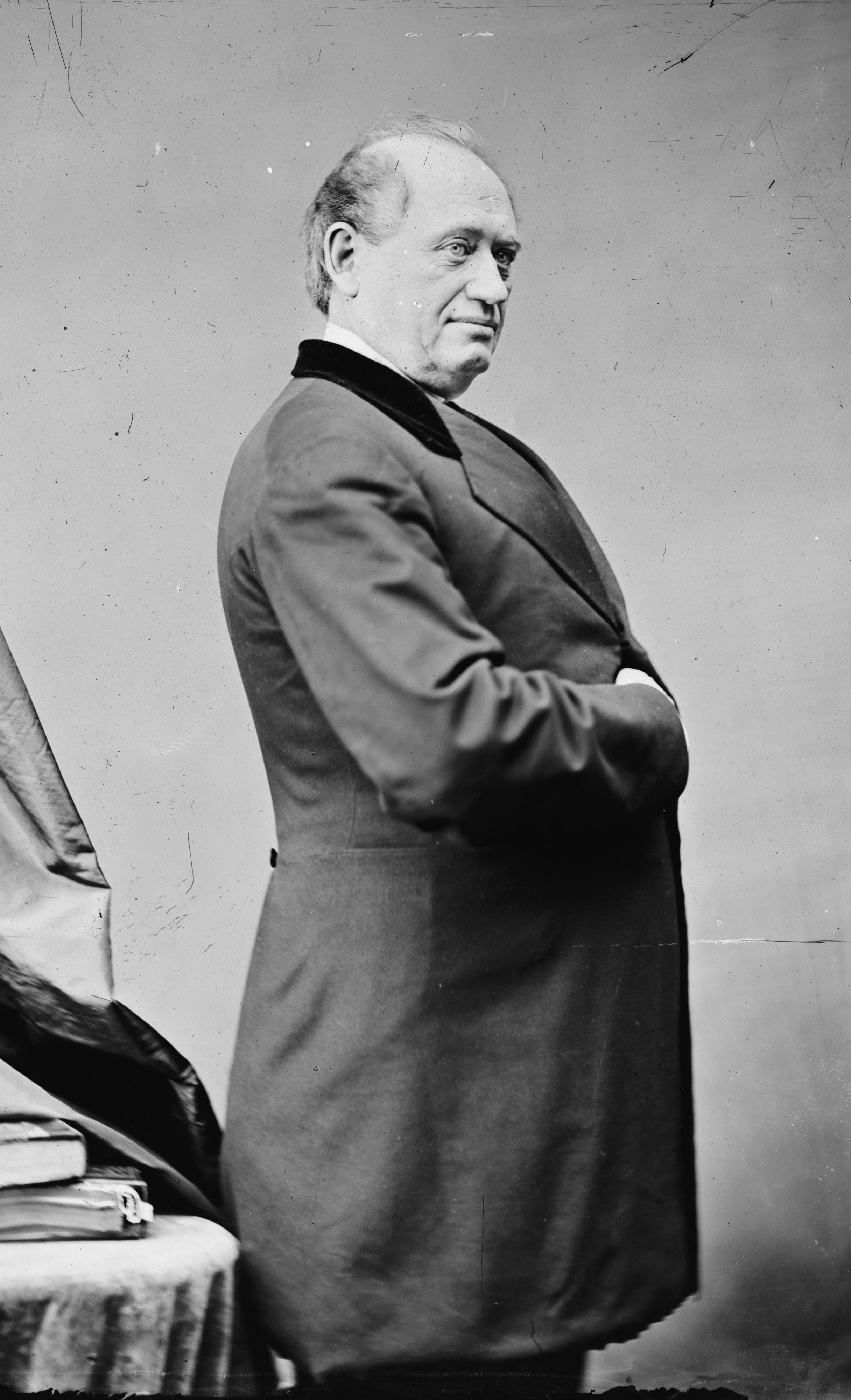
Historical · U.S. House · Indiana · District 9
Godlove Orth
Former U.S. Representative · Indiana District 9 · 1863–1883 · Republican
Godlove Orth represented Indiana's District 9 in the United States House of Representatives (1863–1883) for the Republican party. The page below collects sourced biographical facts, term history, committee roles, and provenance for Orth.
Bioguide ID: O000106
Key facts
- Full name
- Godlove Orth
- State
- Indiana
- District
- District 9
- Party
- Republican
- House service
- 1863–1883
- First House term
- 1863
- Status
- Left office
- Current term ends
- —
- Born
- 1817
- Bioguide ID
- O000106
- Committee assignments
- —
- Dataset version
- 1.20260606
Biographical narrative
862 words · sourced from the Wikipedia REST extract
Godlove Orth was a prominent U.S. Representative from Indiana, serving in the House of Representatives for a total of seven terms between 1863 and 1883. A member of the Republican Party, Orth's political career spanned significant periods in American history, including the Civil War and Reconstruction. He was known for his ability to navigate the complexities of political life in a changing landscape, as well as for his advocacy on issues of racial equality towards the end of his career.
Early life and career
Godlove Stein Orth was born on April 22, 1817, in Lebanon County, Pennsylvania, to a family of German descent. He received his early education at Pennsylvania College in Gettysburg, where he studied for approximately one year before transitioning to legal studies. Orth began his legal career after being admitted to the bar in 1839, having trained under the guidance of James Cooper.
Orth's political engagement began in the early 1840s when he delivered public speeches in support of William Henry Harrison's presidential campaign in 1840. Initially a member of the Whig Party, Orth's political affiliations shifted as the party began to dissolve. He briefly aligned with the Know-Nothing movement, also known as the American Party, before ultimately joining the Republican Party as it emerged in the mid-1850s. His early political career included a tenure in the Indiana Senate from 1843 to 1849, during which he gained valuable experience in governance and public service. In 1845, Orth served as the acting Lieutenant Governor of Indiana, further solidifying his political credentials.
House tenure
Orth's congressional career began when he was elected to the U.S. House of Representatives in 1863, representing Indiana's 9th congressional district. Over the course of his political life, he served multiple non-consecutive terms, with his initial tenure lasting until 1871. After a brief hiatus, he returned to Congress from 1873 to 1875 and again from 1879 until his final term, which ended in 1883.
Throughout his time in the House, Orth was known for his political acumen and ability to maintain his position despite the challenges posed by local rivalries and factionalism within his party. His re-election campaigns were often marked by intense competition, requiring him to cultivate relationships with key constituents and party leaders. He was particularly adept at utilizing the franking privilege to communicate with voters, sending out public documents and his own speeches to a carefully curated list of constituents.
Orth's political style was characterized by a blend of conservatism and pragmatism. During the administration of President Andrew Johnson, he supported Reconstruction efforts while also advocating for a reconciliation between the President and Congress. His role on the House Foreign Affairs Committee positioned him as a significant player in foreign policy discussions, particularly during the Grant Administration. He was involved in managing a resolution that aimed to establish a fact-finding commission for potential annexation of Santo Domingo.
Despite his earlier affiliations with the Know-Nothing movement, Orth's later years in Congress were marked by a commitment to racial equality. He took a stand against the Chinese Exclusion Act of 1882, expressing his opposition to legislation based on race or color. This stance highlighted his evolution as a politician and his willingness to advocate for civil rights at a time when such views were not universally held.
Legislative focus and committees
During his time in the House, Orth's legislative focus encompassed a range of issues, reflecting the complexities of the era in which he served. His involvement in the House Foreign Affairs Committee allowed him to engage with international matters, particularly those related to U.S. interests in the Caribbean and Latin America. His work in this committee was indicative of his broader commitment to American expansionism and foreign policy.
Orth's reputation as a reliable member of the Republican Party was built on his ability to navigate the political landscape effectively. He was often seen as a second-string leader within the party, particularly during the late 1860s, when he played a crucial role in supporting the party's initiatives. His approach to governance was characterized by a focus on broad principles rather than specific local issues, which sometimes earned him both praise and criticism from his contemporaries.
In addition to his legislative work, Orth's political strategy included meticulous attention to constituent relations. He maintained detailed records of party leaders and constituents, which enabled him to tailor his communications and outreach efforts effectively. This level of organization was essential for his political survival, especially in a time when local rivalries could significantly impact a congressman's re-election prospects.
Orth's career came to a close when he lost his re-election bid in 1882. Following his departure from Congress, he was appointed as Envoy Extraordinary and Minister Plenipotentiary to Austria, a position he held briefly before resigning in 1876. His resignation was influenced by political controversies and challenges related to his candidacy for governor, which ultimately did not materialize.
Orth passed away on December 16, 1882, in Lafayette, Indiana, shortly after his defeat in the election. He is interred at Greenbush Cemetery in Lafayette. His life and career reflect the complexities of American politics during a transformative period in the nation's history, marked by significant social and political changes.
Notable legislation
Sponsored and co-sponsored legislation for Godlove Orth is pending operator curation. The biographical narrative above carries the same provenance trail until per-bill rows are written.
Sources
- [1]https://en.wikipedia.org/wiki/Godlove_S._OrthWikipedia · retrieved 2026-06-06
Notable quotes
Sourced quotes for Godlove Orth are pending operator curation. Narrative-scope provenance remains attached below.
Sources
- [1]https://en.wikipedia.org/wiki/Godlove_S._OrthWikipedia · retrieved 2026-06-06
Key positions
Curated policy positions for Godlove Orth are pending operator review. The biographical narrative above carries the same provenance trail until per-topic positions are written.
Sources
- [1]https://en.wikipedia.org/wiki/Godlove_S._OrthWikipedia · retrieved 2026-06-06
Terms served
- 1863–1865U.S. House · Term 1 · Republican
- 1865–1867U.S. House · Term 2 · Republican
- 1867–1869U.S. House · Term 3 · Republican
- 1869–1871U.S. House · Term 4 · Republican
- 1873–1875U.S. House · Term 5 · Republican
- 1879–1881U.S. House · Term 6 · Republican
- 1881–1883U.S. House · Term 7 · Republican
Sources & provenance
Every attributable claim above carries a per-section [N] marker that resolves to the corresponding URL below. Each entry records the upstream provider, the canonical URL, and the timestamp at which the source was retrieved by the ingest pipeline.
Key facts
- https://bioguide.congress.gov/search/bio/O000106bioguide · retrieved 2026-06-06
- https://www.govtrack.us/congress/members/408363govtrack · retrieved 2026-06-06
Biographical narrative
- https://en.wikipedia.org/wiki/Godlove_S._Orthwikipedia · retrieved 2026-06-06
Find your representative
Every U.S. state elects representatives by district. Browse Indiana’s delegation, the full former-representative roster, or explore the role and term length.
Related on The Candidate
- Preceded by Norman EddyEarlier holder of the Indiana District 9 House seat · Democratic.Open
- Succeeded by Thomas WardLater holder of the Indiana District 9 House seat · Democratic.Open
- Adam Benjamin Jr.Former U.S. Representative · Indiana District 1 · DemocraticOpen
- Alvin HoveyFormer U.S. Representative · Indiana District 1 · RepublicanOpen
- Arthur TaylorFormer U.S. Representative · Indiana District 1 · DemocraticOpen
- Benoni FullerFormer U.S. Representative · Indiana District 1 · DemocraticOpen