
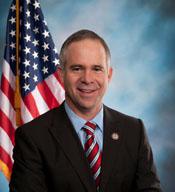
Historical · U.S. House · Kansas · District 1
Tim Huelskamp
Former U.S. Representative · Kansas District 1 · 2011–2017 · Republican
Tim Huelskamp represented Kansas's District 1 in the United States House of Representatives (2011–2017) for the Republican party. The page below collects sourced biographical facts, term history, committee roles, and provenance for Huelskamp.
Bioguide ID: H001057
Key facts
- Full name
- Tim Huelskamp
- State
- Kansas
- District
- District 1
- Party
- Republican
- House service
- 2011–2017
- First House term
- 2011
- Status
- Left office
- Current term ends
- —
- Born
- 1968
- Bioguide ID
- H001057
- Committee assignments
- —
- Dataset version
- 1.20260605
Biographical narrative
910 words · sourced from the Wikipedia REST extract
Tim Huelskamp is a former U.S. Representative who served Kansas's 1st congressional district from 2011 to 2017. A member of the Republican Party, Huelskamp is known for his social conservatism and was the chairman of the House Tea Party Caucus during his final term. Before his tenure in Congress, he represented the 38th district in the Kansas Senate from 1997 until 2011. His political career has been marked by a strong focus on agricultural issues, reflecting the interests of his constituents in a predominantly rural district.
Early life and career
Tim Huelskamp was born on November 11, 1968, and grew up on his family's farm in Fowler, Kansas, located south of Dodge City. The farm, established by his grandparents in 1926, is involved in the cultivation of various crops, including corn, wheat, milo, and soybeans, as well as cattle farming. Huelskamp's upbringing on the farm instilled in him a deep understanding of agricultural issues, which would later influence his political career.
He received his primary and secondary education in Fowler, where he was actively involved in community and agricultural organizations. Huelskamp participated in 4-H and the Future Farmers of America, and he was recognized as a Farm Bureau Youth Leader. His commitment to his faith is reflected in his membership at St. Anthony's Parish.
Following high school, Huelskamp pursued higher education, beginning with two years at a seminary in Santa Fe, New Mexico. He then transferred to the College of Santa Fe, where he earned a Bachelor of Arts degree in social science education in 1991. Huelskamp continued his academic journey at American University, where he obtained a Ph.D. in political science, focusing on agricultural policy, in 1995. This educational background laid the foundation for his future political endeavors, particularly in advocating for agricultural interests.
House tenure
Huelskamp entered the U.S. House of Representatives after winning the Republican primary in 2010 for Kansas's 1st congressional district. This election was triggered by the decision of long-serving Congressman Jerry Moran to run for the U.S. Senate. In a competitive primary field, Huelskamp emerged as the frontrunner, securing approximately 34.8 percent of the vote. His victory in the general election was decisive, as he garnered 73 percent of the vote against Democratic nominee Alan Jilka and Libertarian candidate Jack W. Warner. This significant win established him as a prominent political figure in Kansas, particularly given the district's vast geographic size, which covers more than half of the state's landmass and spans two time zones.
Huelskamp was re-elected in subsequent elections, running unopposed in 2012. However, in 2014, he faced a challenge in the Republican primary from Alan LaPolice, alongside Democratic contenders Jim Sherow and Bryan Whitney. Huelskamp narrowly won the primary with 55 percent of the vote, despite criticism regarding his collaborative efforts in Congress and his opposition to the Farm Bill. He ultimately won the general election with 68 percent of the vote.
In 2016, Huelskamp's political career faced a significant challenge when he was defeated in the Republican primary by Roger Marshall. Marshall's campaign focused on the perception that Huelskamp's confrontational style had alienated key stakeholders in the agricultural community, which is vital in a farm-centric state like Kansas. Huelskamp's removal from the House Agriculture Committee in 2012 further complicated his standing among agricultural voters. His defeat marked a notable shift in the district's representation, as he became only the second person to serve the "Big First" without later representing Kansas in the U.S. Senate.
Legislative focus and committees
During his time in the House, Huelskamp was known for his strong advocacy of social conservative values and agricultural policies. He served on several committees, including the House Budget Committee, where he was vocal about fiscal issues and the national debt. In early 2012, he introduced legislation aimed at protecting the rights of military chaplains, ensuring they would not be compelled to perform ceremonies that conflicted with their religious beliefs. This legislation was particularly relevant in the context of discussions surrounding same-sex marriage on military installations.
Huelskamp was also active in addressing the national debt crisis, warning of potential economic repercussions similar to those experienced in Europe during a contentious hearing with Treasury Secretary Timothy Geithner. His criticisms of the Obama administration's handling of fiscal policy reflected his broader concerns regarding government spending and economic stability.
In addition to his legislative initiatives, Huelskamp's leadership role as chairman of the House Tea Party Caucus from February 2015 until the end of his term highlighted his alignment with the movement's principles, which emphasize limited government and fiscal conservatism. His tenure in this role underscored his commitment to the values of the Tea Party, which resonated with a segment of the Republican base.
Throughout his congressional career, Huelskamp's focus on agricultural issues remained a central theme. His background and experience in farming informed his legislative priorities, as he sought to represent the interests of his constituents in a district heavily reliant on agriculture. His efforts in Congress were characterized by a blend of social conservatism and a commitment to addressing the needs of rural communities.
In summary, Tim Huelskamp's political career has been shaped by his early life on a family farm, his educational background in political science, and his commitment to representing the interests of Kansas's 1st congressional district. His tenure in the U.S. House of Representatives was marked by a focus on agricultural policy, fiscal conservatism, and social issues, reflecting the values of his constituents and the broader Republican Party.
Notable legislation
Sponsored and co-sponsored legislation for Tim Huelskamp is pending operator curation. The biographical narrative above carries the same provenance trail until per-bill rows are written.
Sources
- [1]https://en.wikipedia.org/wiki/Tim_HuelskampWikipedia · retrieved 2026-06-05
Notable quotes
Sourced quotes for Tim Huelskamp are pending operator curation. Narrative-scope provenance remains attached below.
Sources
- [1]https://en.wikipedia.org/wiki/Tim_HuelskampWikipedia · retrieved 2026-06-05
Key positions
Curated policy positions for Tim Huelskamp are pending operator review. The biographical narrative above carries the same provenance trail until per-topic positions are written.
Sources
- [1]https://en.wikipedia.org/wiki/Tim_HuelskampWikipedia · retrieved 2026-06-05
Terms served
- 2011–2013U.S. House · Term 1 · Republican
- 2013–2015U.S. House · Term 2 · Republican
- 2015–2017U.S. House · Term 3 · Republican
Sources & provenance
Every attributable claim above carries a per-section [N] marker that resolves to the corresponding URL below. Each entry records the upstream provider, the canonical URL, and the timestamp at which the source was retrieved by the ingest pipeline.
Key facts
- https://bioguide.congress.gov/search/bio/H001057bioguide · retrieved 2026-06-05
- http://huelskamp.house.govhouse.gov · retrieved 2026-06-05
Biographical narrative
- https://en.wikipedia.org/wiki/Tim_Huelskampwikipedia · retrieved 2026-06-05
Find your representative
Every U.S. state elects representatives by district. Browse Kansas’s delegation, the full former-representative roster, or explore the role and term length.
Related on The Candidate
- Preceded by Keith SebeliusEarlier holder of the Kansas District 1 House seat · Republican.Open
- Abel WilderFormer U.S. Representative · Kansas District 1 · RepublicanOpen
- Albert ColeFormer U.S. Representative · Kansas District 1 · RepublicanOpen
- Case BroderickFormer U.S. Representative · Kansas District 1 · RepublicanOpen
- Daniel Anthony Jr.Former U.S. Representative · Kansas District 1 · RepublicanOpen
- Republican PartyFederal candidates and office holders on the Republican line.Open