
Historical · U.S. House · Kansas · District 2
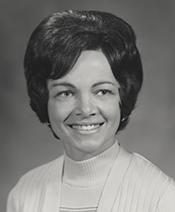
Martha Keys
Former U.S. Representative · Kansas District 2 · 1975–1979 · Democratic
Martha Keys represented Kansas's District 2 in the United States House of Representatives (1975–1979) for the Democratic party. The page below collects sourced biographical facts, term history, committee roles, and provenance for Keys.
Bioguide ID: K000162
Key facts
- Full name
- Martha Keys
- State
- Kansas
- District
- District 2
- Party
- Democratic
- House service
- 1975–1979
- First House term
- 1975
- Status
- Left office
- Current term ends
- —
- Born
- 1930
- Bioguide ID
- K000162
- Committee assignments
- —
- Dataset version
- 1.20260605
Biographical narrative
932 words · sourced from the Wikipedia REST extract
Martha E. Keys was an American politician who served as a U.S. Representative for Kansas's 2nd congressional district from 1975 to 1979. A member of the Democratic Party, Keys was notable for her role in Congress during a time of significant political and social change in the United States. Her legislative career followed a background in political campaigning and advocacy, reflecting her commitment to public service and her engagement with the issues of her time. After her tenure in the House, she continued to contribute to public policy and education through various roles until her later years.
Early life and career
Martha Elizabeth Keys was born on August 10, 1930, in Hutchinson, Kansas. She was the daughter of Clara Krey and S.T. Ludwig. Growing up in Kansas, Keys received her early education in the local school system, culminating in her graduation from Paseo High School in Kansas City, Missouri, in 1945. Following high school, she pursued higher education at Olivet College for a brief period before transferring to the University of Missouri–Kansas City, where she earned a Bachelor of Arts degree in 1951. This educational foundation provided her with the skills and knowledge that would later support her political ambitions.
Keys began her political career as a campaigner for the Democratic Party, becoming actively involved in various political efforts during the 1960s. She played a significant role in the 1964 and 1968 election campaigns, where she honed her skills in political organization and advocacy. Her involvement in politics deepened when she managed the Kansas campaign for George McGovern during the 1972 presidential election. This experience not only solidified her commitment to the Democratic Party but also established her as a capable leader within the political landscape of Kansas.
In 1974, following the retirement of U.S. Congressman Bill Roy, Keys was encouraged to run for his seat by her brother-in-law, Senator Gary Hart, a prominent figure in the Democratic Party from Colorado. This familial connection provided her with additional support and visibility as she entered the race for the U.S. House of Representatives. Keys successfully won the election, marking the beginning of her congressional career.
House tenure
Martha Keys was elected to the United States House of Representatives in 1974, representing Kansas's 2nd congressional district. Her first term began in January 1975, and she served a total of two terms in the House before her defeat in the 1978 election. During her time in office, Keys was part of a Congress that faced numerous challenges, including economic issues, civil rights movements, and debates over social policies. Her election was significant, as she was one of the few women serving in Congress at that time, contributing to the growing representation of women in American politics.
Throughout her tenure, Keys was involved in various legislative initiatives and discussions that reflected the priorities of her constituents and the Democratic Party. Her work in Congress coincided with a period of significant political change in the United States, including the aftermath of the Watergate scandal and the evolving landscape of American social policies. Keys's legislative focus included issues related to education, health, and welfare, which were critical areas of concern during the 1970s.
While serving in Congress, Keys experienced personal changes as well. She went through a divorce from her first husband and later remarried fellow Congressman Andrew Jacobs Jr. This personal transition occurred alongside her professional responsibilities, highlighting the complexities of balancing public service with personal life. However, her marriage to Jacobs was short-lived, as the couple separated in 1981 and eventually divorced.
Despite her defeat in the 1978 election, Keys's contributions to Congress and her advocacy for her constituents left a lasting impact. Her tenure ended on January 3, 1979, but her commitment to public service continued beyond her time in the House.
Legislative focus and committees
During her time in the U.S. House of Representatives, Martha Keys focused on several key areas that were important to her constituents and aligned with her Democratic values. Education, health, and welfare were among the primary issues she championed, reflecting the broader concerns of the American public during the 1970s. Keys's legislative efforts were indicative of the Democratic Party's focus on social programs and support for vulnerable populations during this era.
Following her congressional service, Keys continued her involvement in public policy. From February 1979 to May 1980, she served as a special adviser to the Secretary of Health, Education, and Welfare, where she utilized her experience and knowledge to influence policy decisions at a national level. Subsequently, she held the position of assistant secretary of education from June 1980 to January 1981, further demonstrating her commitment to educational issues and her expertise in the field.
In 1982, Keys was elected to the Common Cause National Governing Board, an organization focused on promoting transparency and accountability in government. This role allowed her to continue advocating for democratic principles and reform in the political process. Additionally, she worked as a consultant and served as the director of the Center for a New Democracy from 1985 to 1986, where she contributed to discussions on democratic governance and civic engagement.
Martha Keys's career reflects the evolving role of women in politics and the importance of representation in legislative bodies. Her legacy includes not only her contributions to the U.S. House of Representatives but also her ongoing commitment to public service and advocacy for education and social welfare. Keys passed away on December 19, 2024, at the age of 94, leaving behind a history of engagement in American politics and a dedication to the principles of democracy and public service.
Notable legislation
Sponsored and co-sponsored legislation for Martha Keys is pending operator curation. The biographical narrative above carries the same provenance trail until per-bill rows are written.
Sources
- [1]https://en.wikipedia.org/wiki/Martha_KeysWikipedia · retrieved 2026-06-05
Notable quotes
Sourced quotes for Martha Keys are pending operator curation. Narrative-scope provenance remains attached below.
Sources
- [1]https://en.wikipedia.org/wiki/Martha_KeysWikipedia · retrieved 2026-06-05
Key positions
Curated policy positions for Martha Keys are pending operator review. The biographical narrative above carries the same provenance trail until per-topic positions are written.
Sources
- [1]https://en.wikipedia.org/wiki/Martha_KeysWikipedia · retrieved 2026-06-05
Terms served
- 1975–1977U.S. House · Term 1 · Democratic
- 1977–1979U.S. House · Term 2 · Democratic
Sources & provenance
Every attributable claim above carries a per-section [N] marker that resolves to the corresponding URL below. Each entry records the upstream provider, the canonical URL, and the timestamp at which the source was retrieved by the ingest pipeline.
Key facts
- https://bioguide.congress.gov/search/bio/K000162bioguide · retrieved 2026-06-05
- https://www.govtrack.us/congress/members/406326govtrack · retrieved 2026-06-05
Biographical narrative
- https://en.wikipedia.org/wiki/Martha_Keyswikipedia · retrieved 2026-06-05
Find your representative
Every U.S. state elects representatives by district. Browse Kansas’s delegation, the full former-representative roster, or explore the role and term length.
Related on The Candidate
- Preceded by William RoyEarlier holder of the Kansas District 2 House seat · Democratic.Open
- Succeeded by James JeffriesLater holder of the Kansas District 2 House seat · Republican.Open
- Abel WilderFormer U.S. Representative · Kansas District 1 · RepublicanOpen
- Albert ColeFormer U.S. Representative · Kansas District 1 · RepublicanOpen
- Case BroderickFormer U.S. Representative · Kansas District 1 · RepublicanOpen
- Daniel Anthony Jr.Former U.S. Representative · Kansas District 1 · RepublicanOpen