
Historical · U.S. House · Kansas · District 2
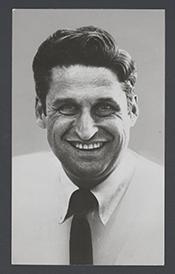
William Roy
Former U.S. Representative · Kansas District 2 · 1971–1975 · Democratic
William Roy represented Kansas's District 2 in the United States House of Representatives (1971–1975) for the Democratic party. The page below collects sourced biographical facts, term history, committee roles, and provenance for Roy.
Bioguide ID: R000484
Key facts
- Full name
- William Roy
- State
- Kansas
- District
- District 2
- Party
- Democratic
- House service
- 1971–1975
- First House term
- 1971
- Status
- Left office
- Current term ends
- —
- Born
- 1926
- Bioguide ID
- R000484
- Committee assignments
- —
- Dataset version
- 1.20260605
Biographical narrative
819 words · sourced from the Wikipedia REST extract
William R. Roy, commonly known as Bill Roy, was a physician and Democratic politician who served as a U.S. Representative for Kansas's 2nd congressional district from 1971 to 1975. Born on February 23, 1926, in Bloomington, Illinois, Roy had a diverse career that included military service, medical practice, and political engagement. He was also a columnist for The Topeka Capital-Journal, where he expressed his views on various political and social issues. After his tenure in Congress, he continued to influence public discourse through his writing until his passing on May 26, 2014.
Early life and career
William R. Roy was raised in Bloomington, Illinois, and attended public schools in the nearby town of Lexington. He pursued higher education at Illinois Wesleyan University, where he earned a Bachelor of Science degree in 1945. Following this, he enrolled at Northwestern University Medical School in Chicago, obtaining a Bachelor of Medicine in 1948 and a Doctor of Medicine degree in 1949. In addition to his medical training, Roy later earned a Juris Doctor degree from Washburn University Law School in Topeka, Kansas, in 1970.
After completing his medical education, Roy undertook his residency in obstetrics and gynecology at Detroit Receiving Hospital. His career in medicine was briefly interrupted by his service in the United States Air Force from 1953 to 1955, where he served as a military doctor at Forbes Air Force Base in Topeka. He was discharged with the rank of captain and subsequently returned to civilian life, establishing a medical practice in Topeka, Kansas, where he worked from 1955 until 1970.
In the political arena, Roy's journey began when he switched his party affiliation to the Democratic Party in 1970. This decision marked a significant shift in his career, as he sought to represent the interests of his constituents in Congress. His medical background and military experience likely informed his perspectives on various issues, shaping his approach to public service.
House tenure
Roy was elected to the U.S. House of Representatives during the Ninety-second Congress, beginning his first term on January 3, 1971. He was re-elected for a second term in the Ninety-third Congress, which lasted until January 3, 1975. Throughout his time in office, Roy focused on issues pertinent to his constituents and the broader national landscape. His medical expertise may have influenced his legislative priorities, particularly in areas related to healthcare and public health.
In 1974, Roy chose not to seek re-election to the House. Instead, he opted to run for the United States Senate, challenging incumbent Republican Senator Bob Dole. This race was characterized by its competitiveness, with Roy losing by a narrow margin, which was noted as one of the closest in Dole's political career. The outcome of this election underscored the political dynamics of Kansas during that period and highlighted Roy's significant presence in the state's political landscape.
Following his Senate bid, Roy ran for the Senate again in 1978, this time facing Nancy Kassebaum. However, he was unsuccessful in this attempt as well. After his political campaigns, Roy returned to his medical practice in Topeka, where he continued to work until 1989. His engagement in politics did not end with his congressional tenure; he remained active in public life and continued to contribute to discussions on important issues.
Legislative focus and committees
During his time in the House of Representatives, Roy's legislative focus reflected his background in medicine and his commitment to public service. While specific details about the committees he served on during his congressional tenure are not provided, it is reasonable to infer that his medical expertise would have positioned him well for involvement in health-related committees or initiatives. His experiences as a physician likely informed his views on healthcare policy, public health initiatives, and related legislative matters.
In addition to his work in Congress, Roy's political engagement extended beyond his time in office. He served on the Kansas Board of Regents, contributing to the governance of higher education in the state. His involvement in education policy further demonstrated his commitment to public service and the welfare of his community.
After leaving Congress, Roy became a columnist for The Topeka Capital-Journal, where he shared his perspectives on various political and social issues. His writings often reflected a liberal viewpoint, advocating for causes such as abortion rights and expressing opposition to certain policies of the George W. Bush administration. His columns served as a platform for him to engage with the public and influence discourse on critical issues facing Kansas and the nation.
Roy's legacy is marked by his contributions to both medicine and politics, as well as his commitment to public service. He remained an active participant in civic life until his passing on May 26, 2014, due to congestive heart failure. His career exemplifies the intersection of healthcare and politics, highlighting the role of medical professionals in shaping public policy and advocating for the needs of their communities.
Notable legislation
Sponsored and co-sponsored legislation for William Roy is pending operator curation. The biographical narrative above carries the same provenance trail until per-bill rows are written.
Sources
- [1]https://en.wikipedia.org/wiki/William_R._RoyWikipedia · retrieved 2026-06-05
Notable quotes
Sourced quotes for William Roy are pending operator curation. Narrative-scope provenance remains attached below.
Sources
- [1]https://en.wikipedia.org/wiki/William_R._RoyWikipedia · retrieved 2026-06-05
Key positions
Curated policy positions for William Roy are pending operator review. The biographical narrative above carries the same provenance trail until per-topic positions are written.
Sources
- [1]https://en.wikipedia.org/wiki/William_R._RoyWikipedia · retrieved 2026-06-05
Terms served
- 1971–1973U.S. House · Term 1 · Democratic
- 1973–1975U.S. House · Term 2 · Democratic
Sources & provenance
Every attributable claim above carries a per-section [N] marker that resolves to the corresponding URL below. Each entry records the upstream provider, the canonical URL, and the timestamp at which the source was retrieved by the ingest pipeline.
Key facts
- https://bioguide.congress.gov/search/bio/R000484bioguide · retrieved 2026-06-05
- https://www.govtrack.us/congress/members/409445govtrack · retrieved 2026-06-05
Biographical narrative
- https://en.wikipedia.org/wiki/William_R._Roywikipedia · retrieved 2026-06-05
Find your representative
Every U.S. state elects representatives by district. Browse Kansas’s delegation, the full former-representative roster, or explore the role and term length.
Related on The Candidate
- Preceded by Chester MizeEarlier holder of the Kansas District 2 House seat · Republican.Open
- Succeeded by Martha KeysLater holder of the Kansas District 2 House seat · Democratic.Open
- Abel WilderFormer U.S. Representative · Kansas District 1 · RepublicanOpen
- Albert ColeFormer U.S. Representative · Kansas District 1 · RepublicanOpen
- Case BroderickFormer U.S. Representative · Kansas District 1 · RepublicanOpen
- Daniel Anthony Jr.Former U.S. Representative · Kansas District 1 · RepublicanOpen