
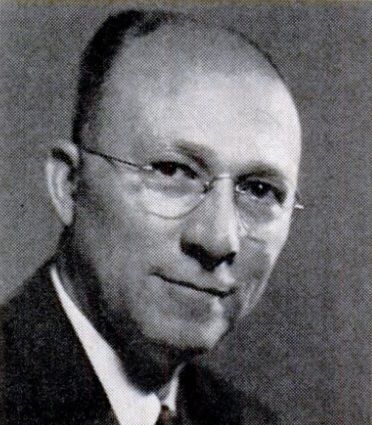
Historical · U.S. House · Kansas · District 2
Newell George
Former U.S. Representative · Kansas District 2 · 1959–1961 · Democratic
Newell George represented Kansas's District 2 in the United States House of Representatives (1959–1961) for the Democratic party. The page below collects sourced biographical facts, term history, committee roles, and provenance for George.
Bioguide ID: G000130
Key facts
- Full name
- Newell George
- State
- Kansas
- District
- District 2
- Party
- Democratic
- House service
- 1959–1961
- First House term
- 1959
- Status
- Left office
- Current term ends
- —
- Born
- 1904
- Bioguide ID
- G000130
- Committee assignments
- —
- Dataset version
- 1.20260605
Biographical narrative
956 words · sourced from the Wikipedia REST extract
Newell George was a U.S. Representative from Kansas, serving as a member of the Democratic Party. His tenure in the House of Representatives spanned from January 3, 1959, until January 3, 1961. Following his time in Congress, he continued to serve in a legal capacity as the United States Attorney for the District of Kansas. George's career was marked by his involvement in various legal and governmental roles, reflecting a commitment to public service that extended beyond his congressional term.
Early life and career
Newell Adolphus George was born on September 24, 1904, in Kansas City, Missouri. His early education took place in the public schools of Kansas City, Kansas, where he laid the foundation for his future academic pursuits. He furthered his education at Wentworth Military Academy in Lexington, Missouri, which provided him with a disciplined environment and a strong educational background. George then attended Park College in Parkville, Missouri, before transferring to the University of Kansas School of Law. His legal education culminated in his graduation from George Washington University in Washington, D.C., in 1935.
Upon completing his education, George was admitted to the District of Columbia bar in the same year, marking the beginning of his professional legal career. He later gained admission to the Kansas bar in 1941, allowing him to practice law in his home state. George commenced his legal practice in Kansas City, Kansas, where he built a reputation as a competent attorney.
In addition to his legal practice, George's career included significant public service roles. He worked as a member of the staff for United States Senator George McGill of Kansas during the early 1930s, specifically in 1933 and 1934. This experience in the Senate provided him with insights into the legislative process and the workings of federal government. His career in public service continued as he served as the regional attorney for the Bureau of Employment Security from 1941 to 1945, a role that involved overseeing employment-related legal matters during a critical period in American history marked by World War II.
During the war, George held the position of chief legal counsel for the Regional War Manpower Commission, where he contributed to efforts aimed at managing labor resources for the war effort. After the war, he continued his public service as a legal advisor within the Federal Security Agency from 1947 to 1953. In 1953, he became the first assistant Wyandotte County attorney, a role he held until 1958. His extensive experience in legal and governmental roles equipped him with the skills necessary for his future political career.
House tenure
George's political career reached a significant milestone when he was elected as a Democrat to the Eighty-sixth Congress, beginning his term on January 3, 1959. His election to the House of Representatives represented a culmination of his previous experiences in law and public service, allowing him to influence legislation at the federal level. During his time in Congress, he participated in various legislative discussions and initiatives, contributing to the Democratic agenda of the era.
George's tenure in the House lasted until January 3, 1961. Despite his efforts and involvement in congressional activities, he was not successful in his bid for reelection in 1960 to the Eighty-seventh Congress. His single term in the House was marked by the challenges and complexities of legislative work during a time of significant social and political change in the United States.
Following his departure from Congress, George transitioned back into a legal role, demonstrating his continued commitment to public service. On March 28, 1961, he was appointed as the United States Attorney for the District of Kansas. In this capacity, he oversaw federal legal matters within the state, serving in this role until June 20, 1968. His appointment as U.S. Attorney allowed him to leverage his legal expertise and experience in a position of significant responsibility within the federal judicial system.
Legislative focus and committees
During his time in the House of Representatives, George's legislative focus was likely influenced by his background in law and public service. While specific details regarding the committees he served on or the legislation he supported are not provided, it can be inferred that his legal expertise would have informed his contributions to discussions on various issues, particularly those related to employment, labor, and legal matters.
As a member of the Democratic Party, George would have aligned with the party's priorities during the late 1950s, a period characterized by significant social change and legislative initiatives aimed at addressing civil rights, economic development, and social welfare. His role as a delegate to the Democratic National Convention in 1960 further underscores his active engagement in the political landscape of the time, as he participated in shaping the party's platform and direction.
George's legal background and experience in public service likely positioned him to address the concerns of his constituents effectively. His work in the Bureau of Employment Security and as chief legal counsel for the Regional War Manpower Commission would have provided him with insights into the challenges faced by workers and employers, which could have influenced his legislative priorities.
In summary, Newell George's career reflects a dedication to public service through various legal and governmental roles, culminating in his time as a U.S. Representative. His experiences in law, combined with his commitment to the Democratic Party, shaped his contributions to the legislative process during a transformative period in American history. After leaving Congress, he continued to serve the public as the United States Attorney for the District of Kansas, further exemplifying his lifelong commitment to the legal profession and public service. George remained a resident of Kansas City, Kansas, until his passing on October 22, 1992, leaving behind a legacy of public service and legal advocacy.
Notable legislation
Sponsored and co-sponsored legislation for Newell George is pending operator curation. The biographical narrative above carries the same provenance trail until per-bill rows are written.
Sources
- [1]https://en.wikipedia.org/wiki/Newell_A._GeorgeWikipedia · retrieved 2026-06-05
Notable quotes
Sourced quotes for Newell George are pending operator curation. Narrative-scope provenance remains attached below.
Sources
- [1]https://en.wikipedia.org/wiki/Newell_A._GeorgeWikipedia · retrieved 2026-06-05
Key positions
Curated policy positions for Newell George are pending operator review. The biographical narrative above carries the same provenance trail until per-topic positions are written.
Sources
- [1]https://en.wikipedia.org/wiki/Newell_A._GeorgeWikipedia · retrieved 2026-06-05
Terms served
- 1959–1961U.S. House · Term 1 · Democratic
Sources & provenance
Every attributable claim above carries a per-section [N] marker that resolves to the corresponding URL below. Each entry records the upstream provider, the canonical URL, and the timestamp at which the source was retrieved by the ingest pipeline.
Key facts
- https://bioguide.congress.gov/search/bio/G000130bioguide · retrieved 2026-06-05
- https://www.govtrack.us/congress/members/404500govtrack · retrieved 2026-06-05
Biographical narrative
- https://en.wikipedia.org/wiki/Newell_A._Georgewikipedia · retrieved 2026-06-05
Find your representative
Every U.S. state elects representatives by district. Browse Kansas’s delegation, the full former-representative roster, or explore the role and term length.
Related on The Candidate
- Preceded by Errett ScrivnerEarlier holder of the Kansas District 2 House seat · Republican.Open
- Succeeded by Chester MizeLater holder of the Kansas District 2 House seat · Republican.Open
- Abel WilderFormer U.S. Representative · Kansas District 1 · RepublicanOpen
- Albert ColeFormer U.S. Representative · Kansas District 1 · RepublicanOpen
- Case BroderickFormer U.S. Representative · Kansas District 1 · RepublicanOpen
- Daniel Anthony Jr.Former U.S. Representative · Kansas District 1 · RepublicanOpen