
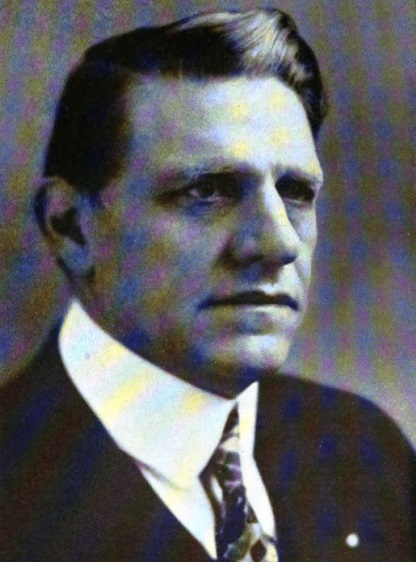
Historical · U.S. House · Kansas · District 2
Ulysses Guyer
Former U.S. Representative · Kansas District 2 · 1923–1945 · Republican
Ulysses Guyer represented Kansas's District 2 in the United States House of Representatives (1923–1945) for the Republican party. The page below collects sourced biographical facts, term history, committee roles, and provenance for Guyer.
Bioguide ID: G000538
Key facts
- Full name
- Ulysses Guyer
- State
- Kansas
- District
- District 2
- Party
- Republican
- House service
- 1923–1945
- First House term
- 1923
- Status
- Left office
- Current term ends
- —
- Born
- 1868
- Bioguide ID
- G000538
- Committee assignments
- —
- Dataset version
- 1.20260605
Biographical narrative
822 words · sourced from the Wikipedia REST extract
Ulysses Guyer was a prominent American politician who served as a U.S. Representative from Kansas, representing the state's second congressional district. A member of the Republican Party, he had a lengthy career in the House of Representatives, spanning over two decades. His tenure was marked by significant political events and responsibilities, including participation in impeachment proceedings. Guyer was born in the late 19th century and had a diverse professional background that included law and local governance before entering federal politics.
Early life and career
Ulysses Guyer was born on December 13, 1868, near Paw Paw, Illinois. His early education took place in public schools, where he laid the groundwork for his future academic and professional pursuits. Seeking higher education, Guyer attended Lane University located in Lecompton, Kansas, and later enrolled at the University of Kansas School of Law in Lawrence, Kansas. His legal education culminated in his admission to the bar in 1902, which allowed him to begin his legal practice in Kansas City, Kansas.
Guyer’s legal career was complemented by his involvement in local government. He served as the judge of the first division city court of Kansas City from 1907 to 1909, a role that provided him with valuable experience in the judicial system and governance. Following his judicial tenure, he was elected mayor of Kansas City, Kansas, serving from 1909 to 1910. His time as mayor likely enhanced his understanding of public administration and community issues, equipping him for future political endeavors.
After his term as mayor, Guyer returned to his legal practice. His initial foray into politics came when he was elected as a Republican to the Sixty-eighth Congress to fill a vacancy caused by the death of Edward C. Little. He served in this capacity from November 4, 1924, to March 3, 1925. However, he did not seek election for the full term in 1924, instead choosing to resume his law practice in Kansas City.
House tenure
Ulysses Guyer's significant political career in the U.S. House of Representatives began in earnest when he was re-elected to the Seventieth Congress and subsequently served in eight additional Congresses. His congressional service extended from March 4, 1927, until his death on January 3, 1945. Over the course of his ten terms in the House, Guyer became a well-known figure in Kansas politics and developed a reputation for his legislative work.
During his time in Congress, Guyer participated in various legislative activities and was involved in numerous discussions and debates that shaped national policy. His experience as a lawyer and former judge likely influenced his approach to legislation and governance. He was appointed as one of the managers by the House of Representatives in 1933 to conduct impeachment proceedings against Harold Louderback, a judge of the United States District Court for the Northern District of California. This role underscored his involvement in significant legal and constitutional matters during his congressional career.
Guyer’s political career was characterized by a commitment to his constituents and an understanding of the complexities of governance. His long tenure in the House allowed him to build relationships with fellow lawmakers and engage in the legislative process effectively. His ability to navigate the political landscape of the time contributed to his sustained presence in Congress.
Legislative focus and committees
Throughout his congressional career, Ulysses Guyer was involved in various legislative initiatives and served on several committees, although specific details regarding his committee assignments and the legislation he supported are not provided in the available records. His legal background likely informed his legislative priorities, and he may have focused on issues pertinent to his constituents in Kansas.
As a member of the Republican Party during a time of significant national change, Guyer’s legislative actions would have been influenced by the political climate of the era. The 1930s and 1940s were marked by the Great Depression and World War II, which necessitated a range of federal responses to economic and social challenges. While specific legislative achievements are not detailed, it can be inferred that Guyer participated in discussions and decisions that addressed the pressing issues of his time.
Guyer’s long service in the House allowed him to witness and contribute to the evolution of American policy during a transformative period in U.S. history. His involvement in impeachment proceedings indicates a willingness to engage with complex legal matters, reflecting his background in law and governance. The breadth of his experience, from local government to federal representation, positioned him as a knowledgeable figure in the political landscape of Kansas and the nation.
Ulysses Guyer passed away on June 5, 1943, in Bethesda, Maryland. His estate included a 40-volume personal diary that he had maintained over the years, providing a glimpse into his thoughts and experiences throughout his life and career. His legacy as a long-serving U.S. Representative from Kansas remains a part of the state's political history, illustrating the impact of dedicated public service on local and national levels.
Notable legislation
Sponsored and co-sponsored legislation for Ulysses Guyer is pending operator curation. The biographical narrative above carries the same provenance trail until per-bill rows are written.
Sources
- [1]https://en.wikipedia.org/wiki/U._S._GuyerWikipedia · retrieved 2026-06-05
Notable quotes
Sourced quotes for Ulysses Guyer are pending operator curation. Narrative-scope provenance remains attached below.
Sources
- [1]https://en.wikipedia.org/wiki/U._S._GuyerWikipedia · retrieved 2026-06-05
Key positions
Curated policy positions for Ulysses Guyer are pending operator review. The biographical narrative above carries the same provenance trail until per-topic positions are written.
Sources
- [1]https://en.wikipedia.org/wiki/U._S._GuyerWikipedia · retrieved 2026-06-05
Terms served
- 1923–1925U.S. House · Term 1 · Republican
- 1927–1929U.S. House · Term 2 · Republican
- 1929–1931U.S. House · Term 3 · Republican
- 1931–1933U.S. House · Term 4 · Republican
- 1933–1935U.S. House · Term 5 · Republican
- 1935–1937U.S. House · Term 6 · Republican
- 1937–1939U.S. House · Term 7 · Republican
- 1939–1941U.S. House · Term 8 · Republican
- 1941–1943U.S. House · Term 9 · Republican
- 1943–1945U.S. House · Term 10 · Republican
Sources & provenance
Every attributable claim above carries a per-section [N] marker that resolves to the corresponding URL below. Each entry records the upstream provider, the canonical URL, and the timestamp at which the source was retrieved by the ingest pipeline.
Key facts
- https://bioguide.congress.gov/search/bio/G000538bioguide · retrieved 2026-06-05
- https://www.govtrack.us/congress/members/404881govtrack · retrieved 2026-06-05
Biographical narrative
- https://en.wikipedia.org/wiki/U._S._Guyerwikipedia · retrieved 2026-06-05
Find your representative
Every U.S. state elects representatives by district. Browse Kansas’s delegation, the full former-representative roster, or explore the role and term length.
Related on The Candidate
- Preceded by Joseph TaggartEarlier holder of the Kansas District 2 House seat · Democratic.Open
- Succeeded by William AveryLater holder of the Kansas District 2 House seat · Republican.Open
- Abel WilderFormer U.S. Representative · Kansas District 1 · RepublicanOpen
- Albert ColeFormer U.S. Representative · Kansas District 1 · RepublicanOpen
- Case BroderickFormer U.S. Representative · Kansas District 1 · RepublicanOpen
- Daniel Anthony Jr.Former U.S. Representative · Kansas District 1 · RepublicanOpen