
Historical · U.S. House · Kansas · District 2
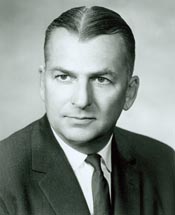
William Avery
Former U.S. Representative · Kansas District 2 · 1955–1965 · Republican
William Avery represented Kansas's District 2 in the United States House of Representatives (1955–1965) for the Republican party. The page below collects sourced biographical facts, term history, committee roles, and provenance for Avery.
Bioguide ID: A000228
Key facts
- Full name
- William Avery
- State
- Kansas
- District
- District 2
- Party
- Republican
- House service
- 1955–1965
- First House term
- 1955
- Status
- Left office
- Current term ends
- —
- Born
- 1911
- Bioguide ID
- A000228
- Committee assignments
- —
- Dataset version
- 1.20260605
Biographical narrative
916 words · sourced from the Wikipedia REST extract
William Avery was an American politician affiliated with the Republican Party who served as a U.S. Representative for Kansas's 2nd congressional district from 1955 until 1965. He was born on August 11, 1911, near Wakefield, Kansas, and had a notable political career that included serving as the 37th governor of Kansas from 1965 to 1967. Avery's political journey began at the local level and progressed through various roles, reflecting his deep engagement with the issues affecting his constituents and the state of Kansas.
Early life and career
William Avery was born into a family that valued education; both of his parents were college graduates, which influenced his own academic pursuits. He attended the University of Kansas, where he graduated in 1934. During his time at the university, he became a member of the Delta Upsilon fraternity. After completing his education, Avery returned to his family farm, where he became involved in local political issues, particularly concerning water management and land use. His initial foray into politics was sparked by opposition to the construction of the Tuttle Creek Dam, which threatened the homes and livelihoods of many residents in the area.
Avery's political career began in earnest when he was encouraged by local citizens from Clay Center, Kansas, to run for a position in the Kansas House of Representatives. He agreed to run on the condition that he would not face a primary challenge, which was successfully arranged. His background as a third-generation farmer and his education made him a favorable candidate in a predominantly Republican region. He was elected to the Kansas House of Representatives, where he served from 1951 to 1955. His tenure in the state legislature helped him build a reputation as a representative who listened to the concerns of his constituents.
In 1954, Avery sought to advance his political career by running for the U.S. House of Representatives. He faced competition in the Republican primary but ultimately secured his nomination and went on to win the general election. His victory was facilitated by the strong Republican leanings of his district, which allowed him to capitalize on his local connections and political experience.
House tenure
William Avery's congressional career began in 1955, when he was elected to represent Kansas's 2nd congressional district. He served a total of five terms in the House of Representatives, during which time he participated in various legislative initiatives and contributed to discussions on key issues facing the nation. His tenure in Congress coincided with a period of significant political and social change in the United States, including the civil rights movement and the Cold War.
During his time in the House, Avery was involved in a range of legislative matters, focusing on issues pertinent to his constituents and the broader interests of Kansas. He worked on agricultural policies, infrastructure development, and other initiatives that aimed to benefit the residents of his district. His experience as a farmer and his understanding of rural issues informed his legislative priorities, allowing him to advocate effectively for the needs of his constituents.
Avery's time in Congress was marked by his ability to navigate the political landscape of the 1950s and 1960s, a period characterized by intense partisanship and shifting political allegiances. He was known for his outgoing personality and his capacity to connect with voters, which contributed to his electoral success. After serving five terms, Avery concluded his congressional career in January 1965, when he transitioned to the role of governor of Kansas.
Legislative focus and committees
Throughout his congressional tenure, William Avery's legislative focus was shaped by his background as a farmer and his commitment to the interests of his constituents. He was particularly attentive to agricultural issues, advocating for policies that supported farmers and rural communities. His firsthand experience in farming provided him with unique insights into the challenges faced by those in the agricultural sector, allowing him to effectively represent their interests in Congress.
In addition to agricultural policies, Avery was involved in discussions related to infrastructure development, particularly concerning water management and flood control. His early political activism against the Tuttle Creek Dam highlighted his commitment to addressing local concerns, and this focus continued during his time in the House. He recognized the importance of infrastructure in supporting economic growth and ensuring the safety of residents in his district.
Avery served on various committees during his time in Congress, which allowed him to influence legislation and engage with a wide range of issues. His committee assignments provided him with opportunities to collaborate with fellow lawmakers and advocate for the needs of Kansas. His ability to build relationships across party lines was an asset in navigating the complexities of legislative processes.
After leaving Congress, Avery continued his public service by becoming the governor of Kansas, where he furthered his commitment to the state and its residents. His political career, spanning local, state, and federal levels, reflects a dedication to public service and a focus on the issues that mattered most to the people of Kansas. Avery's legacy includes his contributions to agricultural policy and infrastructure development, as well as his role in shaping the political landscape of Kansas during a transformative period in American history.
William Avery passed away on November 4, 2009, at the age of 98, leaving behind a legacy of public service and political engagement that spanned several decades. His life and career serve as a testament to the impact of local leadership on broader political dynamics and the importance of representation in government.
Notable legislation
Sponsored and co-sponsored legislation for William Avery is pending operator curation. The biographical narrative above carries the same provenance trail until per-bill rows are written.
Sources
- [1]https://en.wikipedia.org/wiki/William_H._Avery_(politician)Wikipedia · retrieved 2026-06-05
Notable quotes
Sourced quotes for William Avery are pending operator curation. Narrative-scope provenance remains attached below.
Sources
- [1]https://en.wikipedia.org/wiki/William_H._Avery_(politician)Wikipedia · retrieved 2026-06-05
Key positions
Curated policy positions for William Avery are pending operator review. The biographical narrative above carries the same provenance trail until per-topic positions are written.
Sources
- [1]https://en.wikipedia.org/wiki/William_H._Avery_(politician)Wikipedia · retrieved 2026-06-05
Terms served
- 1955–1957U.S. House · Term 1 · Republican
- 1957–1959U.S. House · Term 2 · Republican
- 1959–1961U.S. House · Term 3 · Republican
- 1961–1963U.S. House · Term 4 · Republican
- 1963–1965U.S. House · Term 5 · Republican
Sources & provenance
Every attributable claim above carries a per-section [N] marker that resolves to the corresponding URL below. Each entry records the upstream provider, the canonical URL, and the timestamp at which the source was retrieved by the ingest pipeline.
Key facts
- https://bioguide.congress.gov/search/bio/A000228bioguide · retrieved 2026-06-05
- https://www.govtrack.us/congress/members/400997govtrack · retrieved 2026-06-05
Biographical narrative
- https://en.wikipedia.org/wiki/William_H._Avery_(politician)wikipedia · retrieved 2026-06-05
Find your representative
Every U.S. state elects representatives by district. Browse Kansas’s delegation, the full former-representative roster, or explore the role and term length.
Related on The Candidate
- Preceded by Ulysses GuyerEarlier holder of the Kansas District 2 House seat · Republican.Open
- Succeeded by Chester MizeLater holder of the Kansas District 2 House seat · Republican.Open
- Abel WilderFormer U.S. Representative · Kansas District 1 · RepublicanOpen
- Albert ColeFormer U.S. Representative · Kansas District 1 · RepublicanOpen
- Case BroderickFormer U.S. Representative · Kansas District 1 · RepublicanOpen
- Daniel Anthony Jr.Former U.S. Representative · Kansas District 1 · RepublicanOpen