
Historical · U.S. House · Kansas · District 4
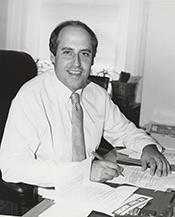
Daniel Glickman
Former U.S. Representative · Kansas District 4 · 1977–1995 · Democratic
Daniel Glickman represented Kansas's District 4 in the United States House of Representatives (1977–1995) for the Democratic party. The page below collects sourced biographical facts, term history, committee roles, and provenance for Glickman.
Bioguide ID: G000240
Key facts
- Full name
- Daniel Glickman
- State
- Kansas
- District
- District 4
- Party
- Democratic
- House service
- 1977–1995
- First House term
- 1977
- Status
- Left office
- Current term ends
- —
- Born
- 1944
- Bioguide ID
- G000240
- Committee assignments
- —
- Dataset version
- 1.20260605
Biographical narrative
947 words · sourced from the Wikipedia REST extract
Daniel Robert Glickman is a former American politician, lawyer, and nonprofit leader who served as a U.S. Representative for Kansas's 4th congressional district from 1977 until 1995. A member of the Democratic Party, Glickman held office for nine consecutive terms, during which he was involved in various legislative initiatives, particularly in the areas of agriculture and aviation. After leaving Congress, he continued his public service career as the U.S. Secretary of Agriculture under President Bill Clinton and later took on leadership roles in several organizations, including the Motion Picture Association of America.
Early life and career
Dan Glickman was born on November 24, 1944, in Wichita, Kansas, to Gladys A. and Milton Glickman, a Jewish family with a history in the scrap metal business. The Glickman family operated Glickman Inc., a full-service scrap metal operation founded in 1915, as well as Kansas Metal, an automobile and appliance shredder established in 1994. Following the death of his father in 1999, Glickman and his siblings managed the family business until its sale in 2002.
Glickman completed his secondary education at Wichita Southeast High School, graduating in 1962. He pursued higher education at the University of Michigan, where he earned a Bachelor of Arts degree in history in 1966. He later attended The George Washington University Law School, receiving his Juris Doctor in 1969. Glickman began his professional career as a trial attorney for the U.S. Securities and Exchange Commission from 1969 to 1970. He subsequently became a partner in a law firm, Sargent, Klenda and Glickman.
Glickman's initial foray into public service began with his election to the Wichita School Board, where he served from 1973 to 1976, including a term as President. This experience laid the groundwork for his subsequent political career.
House tenure
In 1976, Glickman was elected to the U.S. House of Representatives, representing Kansas's 4th congressional district. He took office on January 3, 1977, and remained in Congress until January 3, 1995. Throughout his tenure, he was re-elected eight times, demonstrating a consistent level of support from his constituents.
During his time in the House, Glickman was known for his active involvement in various legislative issues. He played a significant role in aviation policy, co-authoring the General Aviation Revitalization Act (GARA), which provided product liability protections for small airplane manufacturers. This legislation was particularly relevant to his district, which was a significant producer of light aircraft.
Glickman also focused on agricultural issues, which were vital to his district's economy. He served on the House Agriculture Committee and held the position of chair of the subcommittee responsible for federal farm policy for six years. As a principal author of the 1990 Farm Bill, he worked to address the needs of farmers and the agricultural community.
In addition to his work on agriculture, Glickman was appointed as one of the House impeachment managers in 1986 during the impeachment trial of Judge Harry E. Claiborne. The Senate ultimately found Claiborne guilty, leading to his removal from the federal bench. Glickman's involvement in this high-profile case highlighted his role in significant legislative matters beyond his district's immediate concerns.
In 1993, Glickman was appointed chair of the House Permanent Select Committee on Intelligence, where he served for one term. His leadership during this period included holding open hearings to examine the intelligence community's activities in the post-Cold War era and initiating an investigation into the Aldrich Ames espionage case. His colleagues recognized his careful and measured approach to leadership, which was characterized by a lack of grandstanding.
Glickman's voting record reflected a complex stance on various issues. For instance, he voted for the Hyde Amendment, which restricted federal funding for abortion, while also generally accommodating abortion rights. His nuanced position on this contentious issue illustrated the balancing act many legislators face on matters of personal and public concern.
Despite his long tenure and active engagement in legislative affairs, Glickman faced a significant challenge in the 1994 elections, which were marked by a Republican landslide known as the Republican Revolution. In this context, he was unexpectedly defeated by Republican candidate Todd Tiahrt, ending his congressional career after 18 years.
Legislative focus and committees
Throughout his time in the House of Representatives, Glickman was particularly focused on issues related to agriculture and aviation, both of which were crucial to the economy of Kansas's 4th congressional district. His contributions to agricultural policy included advocating for farmers and working on legislation that affected the agricultural sector, such as the 1990 Farm Bill. His leadership on the House Agriculture Committee and as chair of the subcommittee overseeing federal farm policy positioned him as a key figure in shaping agricultural legislation during his tenure.
In addition to his work on agriculture, Glickman's involvement in aviation policy was significant. The General Aviation Revitalization Act (GARA), which he co-authored, was a landmark piece of legislation that provided essential protections for small aircraft manufacturers. This legislation was particularly relevant to his district, which had a strong presence in the aviation industry.
Glickman's leadership as chair of the House Permanent Select Committee on Intelligence allowed him to address national security issues and the operations of the intelligence community. His efforts to bring transparency to intelligence activities and investigate espionage cases underscored his commitment to oversight and accountability.
After leaving Congress, Glickman continued to influence public policy through various roles, including serving as the U.S. Secretary of Agriculture from 1995 to 2001. He later took on leadership positions in nonprofit organizations and think tanks, focusing on issues such as public health, national security, and economic policy. His extensive experience in public service and advocacy has allowed him to remain an influential figure in American politics and policy discussions.
Notable legislation
Sponsored and co-sponsored legislation for Daniel Glickman is pending operator curation. The biographical narrative above carries the same provenance trail until per-bill rows are written.
Sources
- [1]https://en.wikipedia.org/wiki/Dan_GlickmanWikipedia · retrieved 2026-06-05
Notable quotes
Sourced quotes for Daniel Glickman are pending operator curation. Narrative-scope provenance remains attached below.
Sources
- [1]https://en.wikipedia.org/wiki/Dan_GlickmanWikipedia · retrieved 2026-06-05
Key positions
Curated policy positions for Daniel Glickman are pending operator review. The biographical narrative above carries the same provenance trail until per-topic positions are written.
Sources
- [1]https://en.wikipedia.org/wiki/Dan_GlickmanWikipedia · retrieved 2026-06-05
Terms served
- 1977–1979U.S. House · Term 1 · Democratic
- 1979–1981U.S. House · Term 2 · Democratic
- 1981–1983U.S. House · Term 3 · Democratic
- 1983–1985U.S. House · Term 4 · Democratic
- 1985–1987U.S. House · Term 5 · Democratic
- 1987–1989U.S. House · Term 6 · Democratic
- 1989–1991U.S. House · Term 7 · Democratic
- 1991–1993U.S. House · Term 8 · Democratic
- 1993–1995U.S. House · Term 9 · Democratic
Sources & provenance
Every attributable claim above carries a per-section [N] marker that resolves to the corresponding URL below. Each entry records the upstream provider, the canonical URL, and the timestamp at which the source was retrieved by the ingest pipeline.
Key facts
- https://bioguide.congress.gov/search/bio/G000240bioguide · retrieved 2026-06-05
- https://www.govtrack.us/congress/members/404602govtrack · retrieved 2026-06-05
Biographical narrative
- https://en.wikipedia.org/wiki/Dan_Glickmanwikipedia · retrieved 2026-06-05
Find your representative
Every U.S. state elects representatives by district. Browse Kansas’s delegation, the full former-representative roster, or explore the role and term length.
Related on The Candidate
- Preceded by Garner ShriverEarlier holder of the Kansas District 4 House seat · Republican.Open
- Succeeded by Todd TiahrtLater holder of the Kansas District 4 House seat · Republican.Open
- Abel WilderFormer U.S. Representative · Kansas District 1 · RepublicanOpen
- Albert ColeFormer U.S. Representative · Kansas District 1 · RepublicanOpen
- Case BroderickFormer U.S. Representative · Kansas District 1 · RepublicanOpen
- Daniel Anthony Jr.Former U.S. Representative · Kansas District 1 · RepublicanOpen